Artwork
Martyrdom of St. Thomas
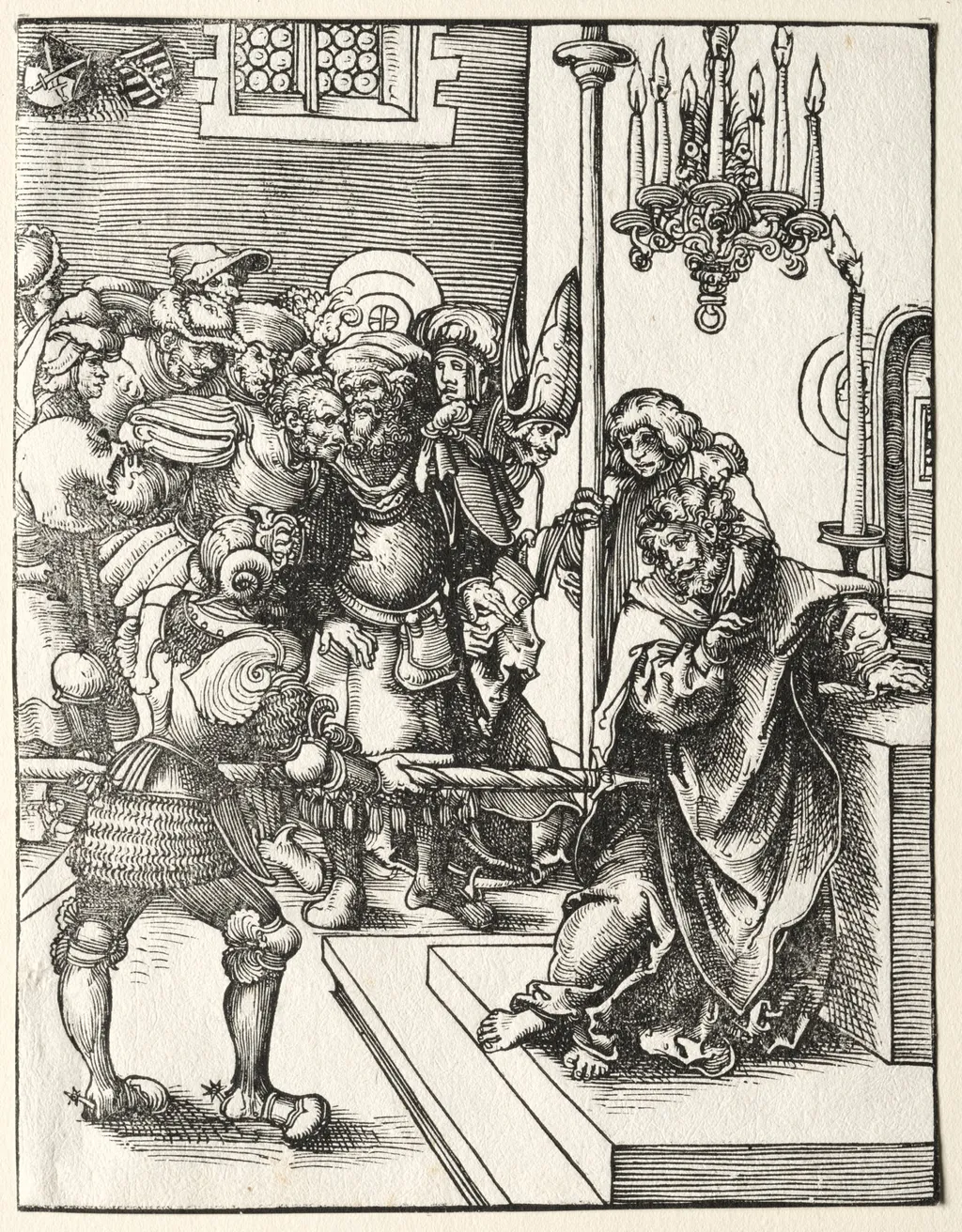
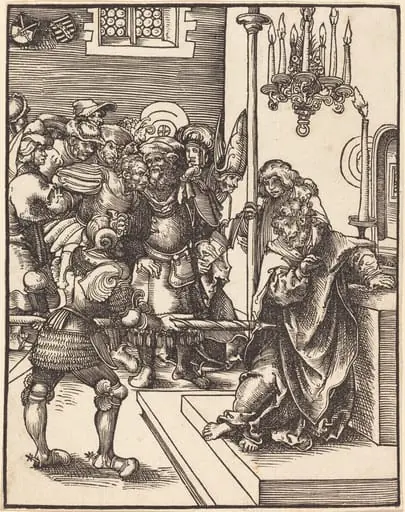
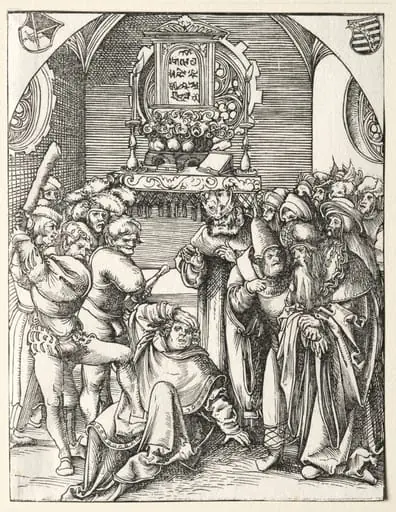
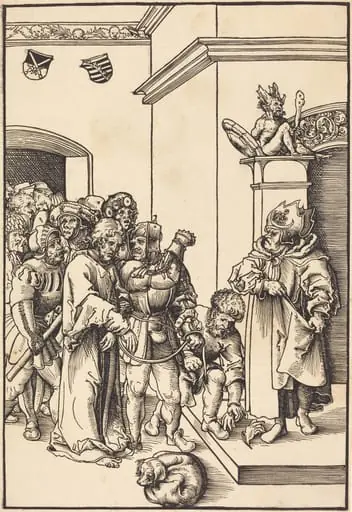
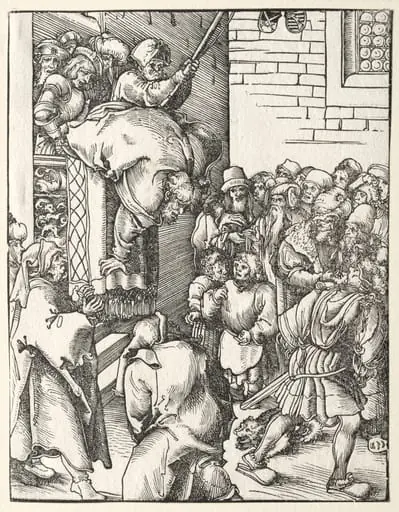
Martyrdom of St. Thomas is a print by Lucas Cranach the Elder. It dates from 1522 and is held in the collection of the Cleveland Museum of Art.
About this work
Overview
This work belongs to a series of prints and paintings he made to support Protestant theological themes, emphasizing martyrdom as a testament of faith.
Created around 1522, this print by Lucas Cranach the Elder illustrates the death of St. Thomas the Apostle. As court painter to the Saxon electors, Cranach produced numerous religious images during the early Reformation, often blending biblical narratives with contemporary visual language. This work belongs to a series of prints and paintings he made to support Protestant theological themes, emphasizing martyrdom as a testament of faith.
Subject & Meaning
The scene depicts St. Thomas being killed by a spear-wielding assailant amid a crowd of onlookers in an urban setting. His calm posture contrasts with the violence around him, underscoring the theme of steadfast faith under persecution. The inclusion of a cityscape and diverse figures suggests the public nature of his death, reinforcing the Protestant emphasis on individual conviction and the cost of bearing witness to scripture.
Technique & Style
Cranach rendered the scene with precise linear detail and restrained tonal variation, using a muted palette of browns, grays, and ochres. Figures are arranged in a shallow space, with sharp contours and minimal modeling to emphasize clarity over naturalism. The background architecture and crowd are rendered with economical strokes, directing focus to the central act while maintaining narrative context without excessive ornamentation.
History & Provenance
The work entered the Cleveland Museum of Art’s collection through documented acquisitions in the 20th century, tracing back to early 20th-century German collections. It was likely produced as part of a broader print campaign commissioned by Protestant patrons seeking visual tools for religious instruction. Its survival in good condition reflects its significance as both devotional object and artistic artifact of the Reformation era.
Context
Painted during the height of the Protestant Reformation, the image aligns with Lutheran efforts to depict saints not as intercessors but as moral exemplars. Cranach’s depiction avoids Catholic iconographic traditions, instead framing Thomas’s death as a civic event witnessed by ordinary people. This shift reflects the broader theological move toward scriptural authority and the rejection of saintly veneration.
Legacy
Cranach’s *Martyrdom of St. Thomas* contributed to a new visual vocabulary for Protestant religious imagery, influencing later printmakers and reform-minded artists. Its clarity, emotional restraint, and narrative focus became models for didactic religious art in northern Europe. Though less celebrated than his portraits, this work remains a key example of how art served ideological transformation in the 16th century.
Artist & collection
Artist
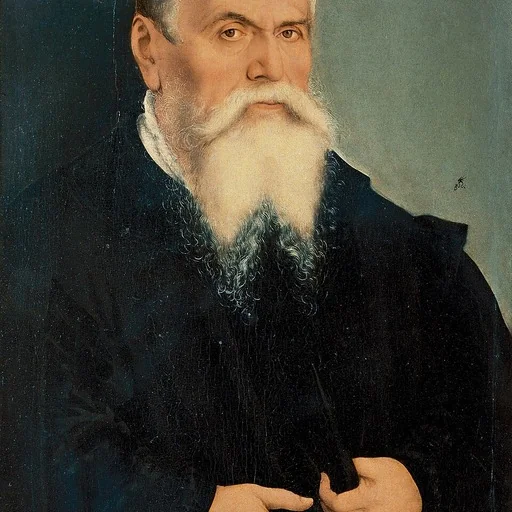
Lucas Cranach the Elder was a German Renaissance painter and printmaker in woodcut and engraving.