Artwork
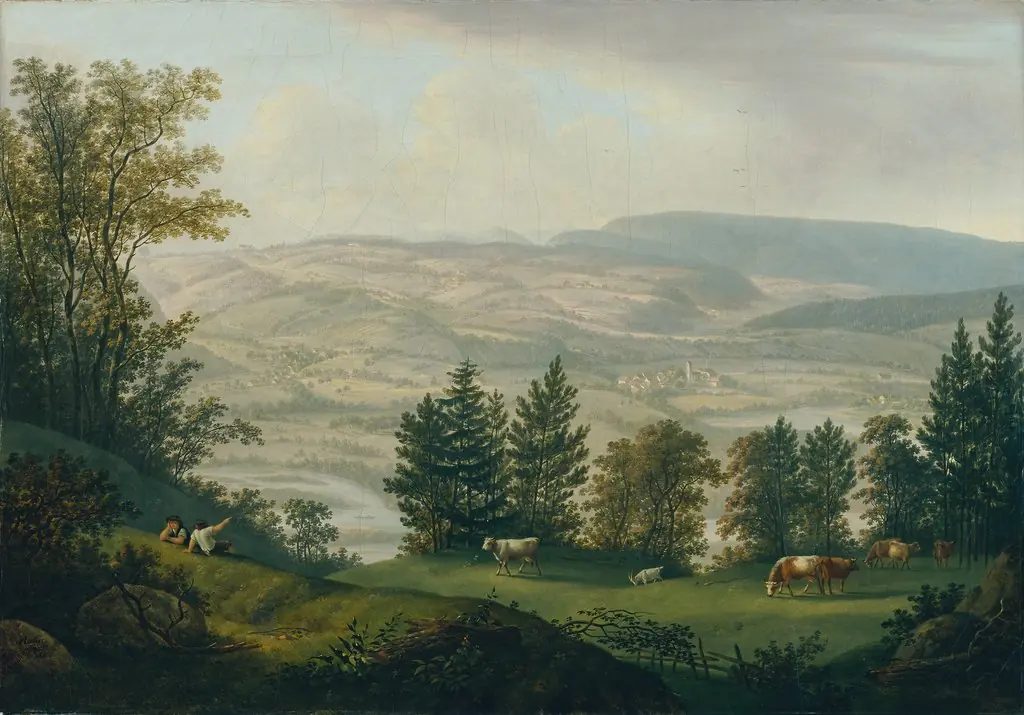
Südliche Landschaft mit Vesuv
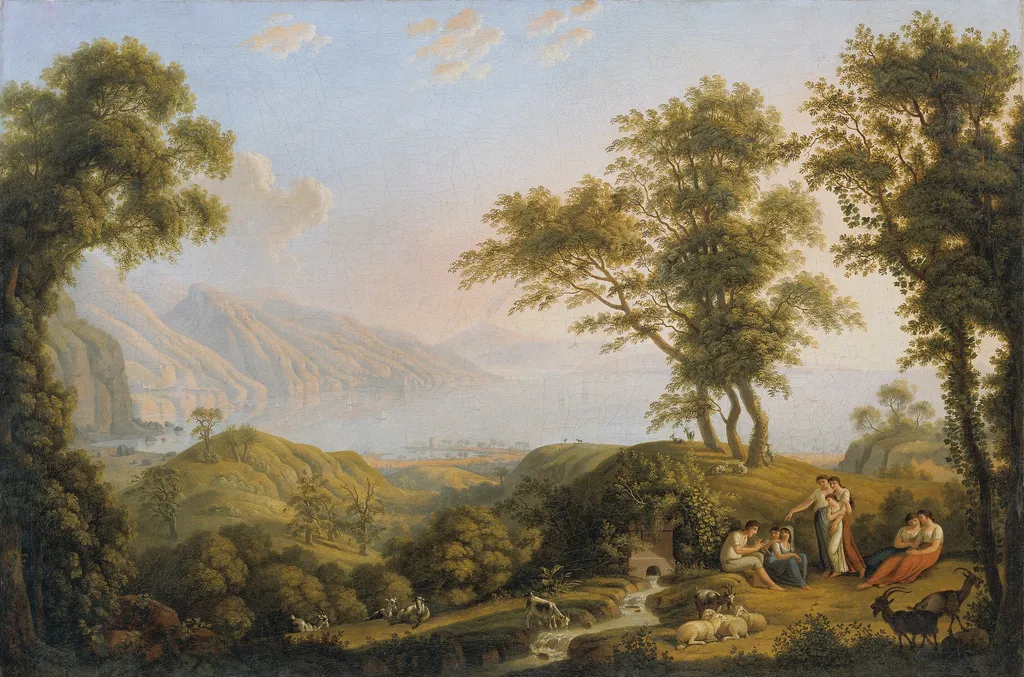
Südliche Landschaft mit Vesuv is an oil painting by Ludwig Philipp Strack. It dates from 1820 and is held in the collection of the Kunsthistorisches Museum.
About this work
Overview
Südliche Landschaft mit Vesuv is an 1820 oil painting by Ludwig Philipp Strack, currently held in the collection of the Kunsthistorisches Museum in Vienna.
Südliche Landschaft mit Vesuv is an 1820 oil painting by Ludwig Philipp Strack, currently held in the collection of the Kunsthistorisches Museum in Vienna. The work presents a tranquil southern landscape, blending natural elements with quiet human activity. Though the title references Vesuvius, the volcano is not prominently depicted; instead, the focus lies in the harmonious interplay of terrain, light, and figures.
Subject & Meaning
The foreground features a small group of figures—likely peasants or travelers—engaged in mundane tasks near a stream, accompanied by livestock. Their simple attire and unposed demeanor suggest an emphasis on everyday rural life rather than narrative drama. The landscape, with its rolling hills and distant mountains, evokes a sense of quiet endurance, reflecting 19th-century ideals of nature as a stable, contemplative space.
Technique & Style
Strack employs a restrained palette of earthy greens, browns, and soft blues to unify the composition. Chiaroscuro is used subtly to model forms and suggest spatial depth, particularly in the hills and foliage. Brushwork remains precise yet unobtrusive, favoring atmospheric cohesion over dramatic contrast. The distant horizon and water suggest a Mediterranean setting, though the exact location remains ambiguous.
History & Provenance
Painted in 1820, the work entered the Kunsthistorisches Museum’s collection in the 19th century, likely through acquisition or donation. Strack, a German artist active in Italy, produced numerous landscapes during his travels, and this piece aligns with his documented interest in southern European scenery. Its presence in a major Viennese institution indicates early institutional recognition of his work.
Context
Created during a period when Romanticism influenced European landscape painting, the work reflects a broader trend toward idealized natural scenes as subjects of quiet reverence. Unlike grand historical or mythological themes, Strack’s focus on humble rural life aligns with emerging interest in the everyday, paralleling developments in German and Italian art of the era.
Legacy
Though not widely exhibited today, the painting remains a representative example of early 19th-century German landscape painting influenced by Italian scenery. It contributes to the understanding of how northern European artists interpreted southern environments, blending observation with a restrained aesthetic that prioritized mood over spectacle.
Own this work as a print
Artist & collection

 View of the Bay of Baja
 Italian Landscape
 Mountainous landscape
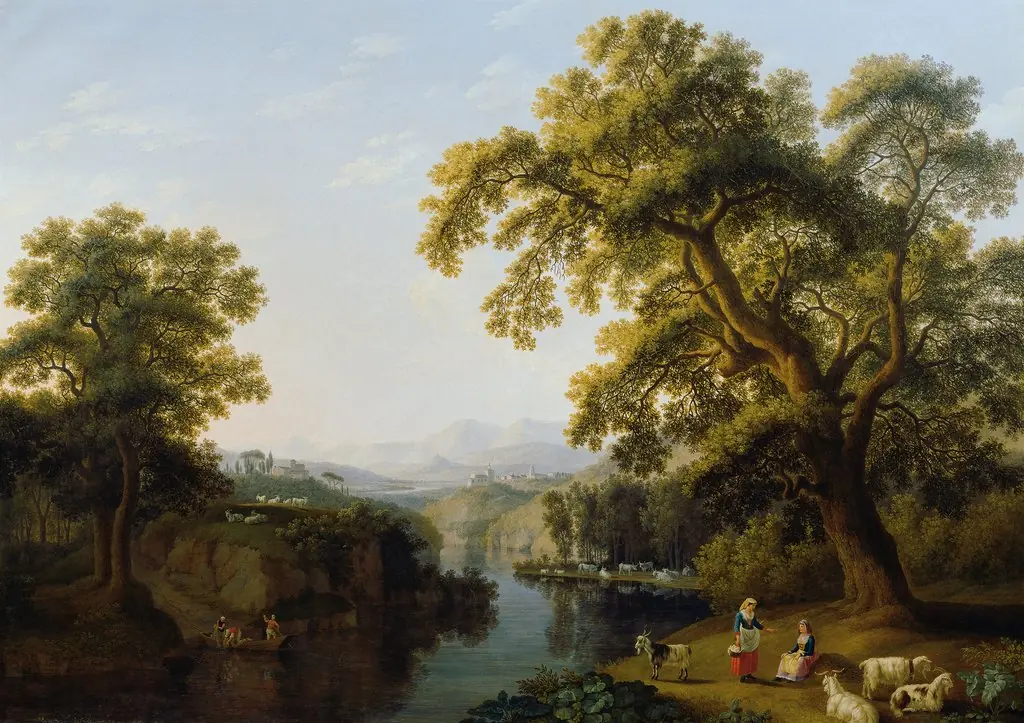 Flusstal von Isernia bei Neapel
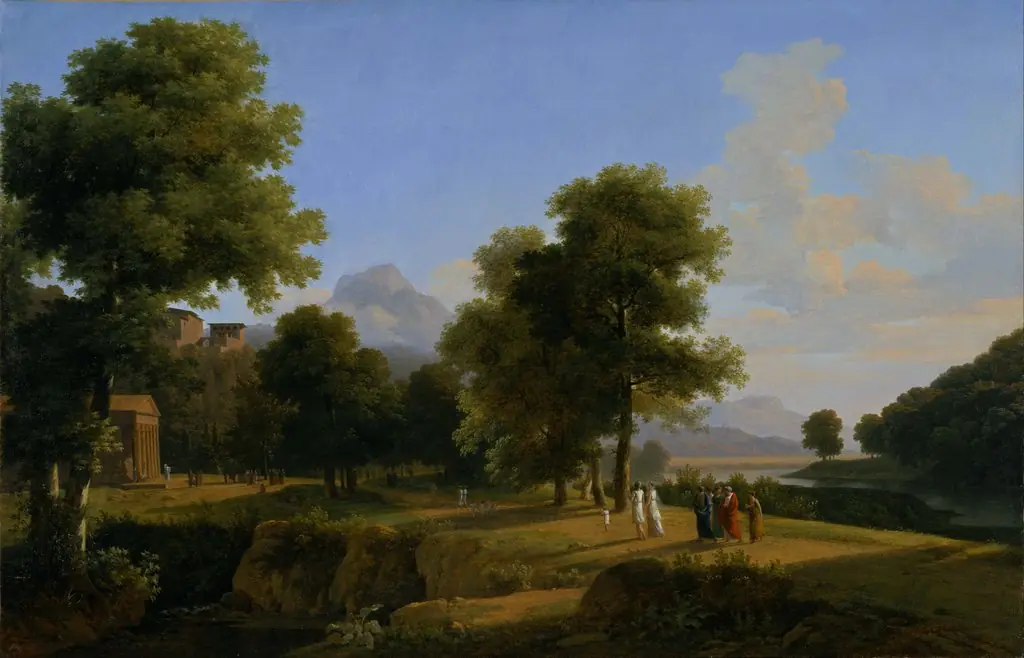 Landscape, Site of Greece (Paysage, Site de la Grèce)
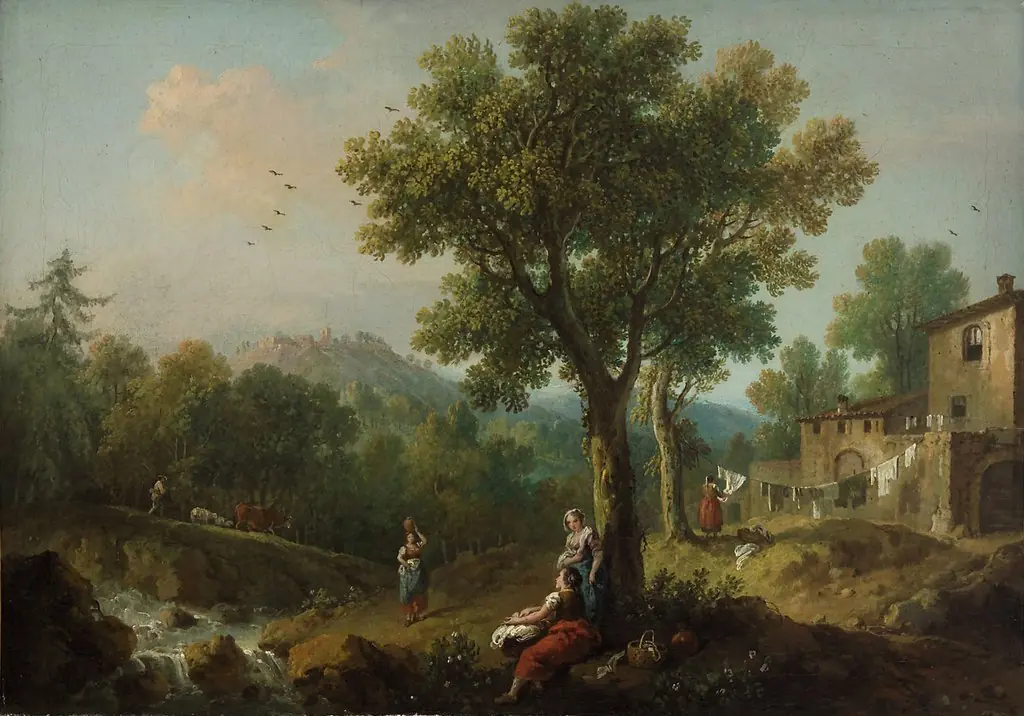 Landschaft mit Wäscherinnen
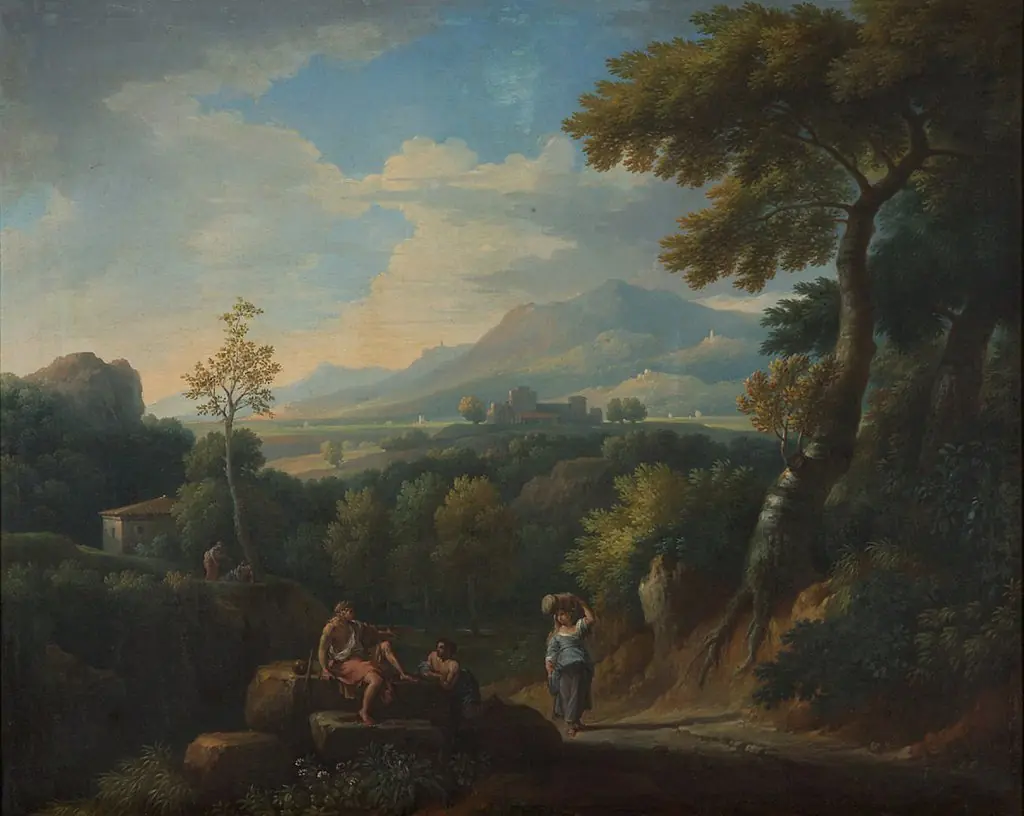 Italian Landscape
 Setting out with the Herd
 Sonnenuntergang über den Campi Flegrei gegen die Inseln Procida und Ischia
 Mountain landscape II
 Baumlandschaft mit Bauern
 Umgebung der Ruine Habsburg