Artwork
Mask of Napoleon
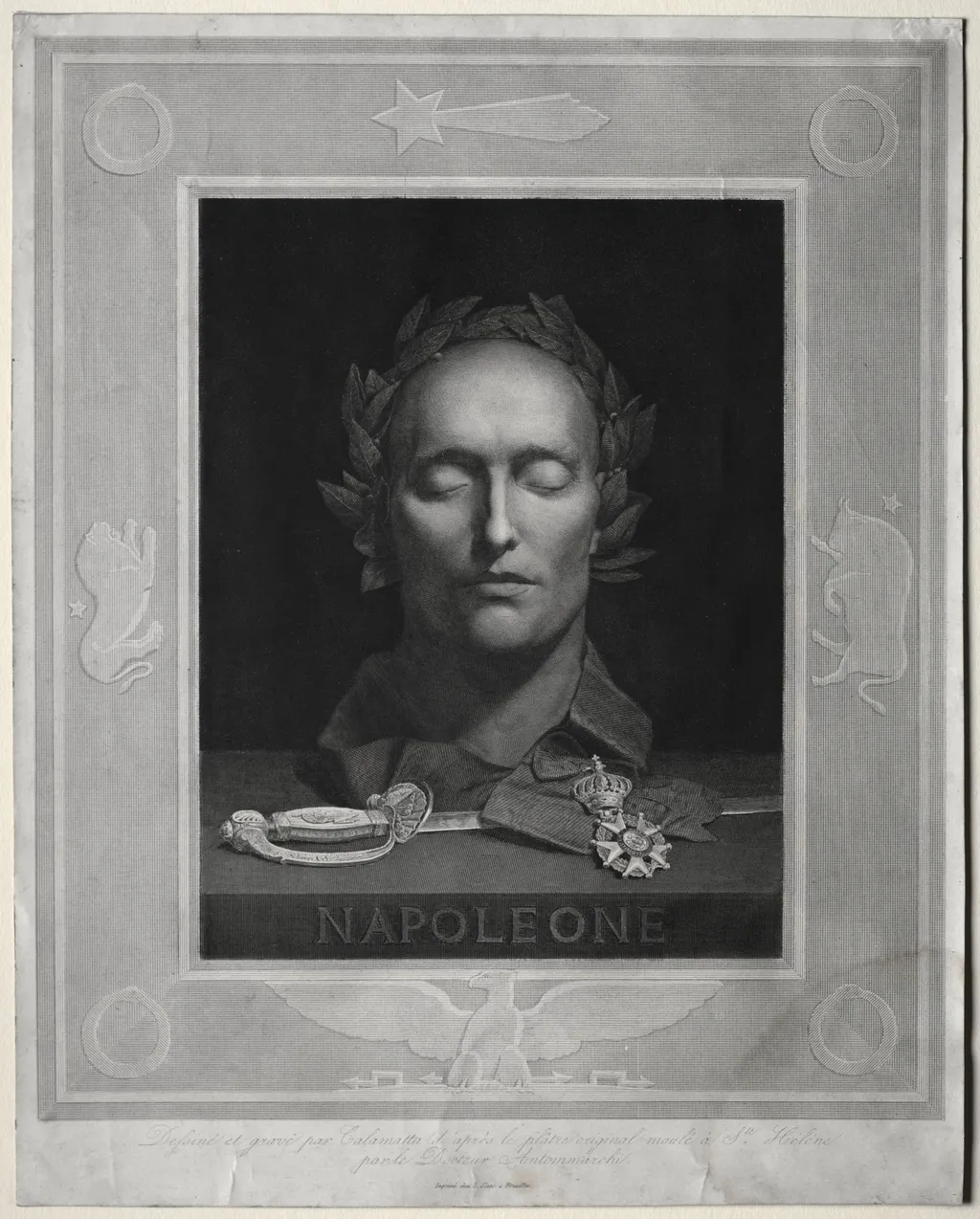
Mask of Napoleon is a print by the Romanticist artist Luigi Calamatta. It dates from 1834 and is held in the collection of the Cleveland Museum of Art.
About this work
You see a wax mask of Napoleon with a bronze crown on its head. The mask looks heavy and cold. Light hits its surface in sharp spots.
Calamatta copied the mask from Napoleon’s death mask. He worked in Rome in 1834. The face shows small wrinkles and a faint scar above the lip.
The mask feels like a ghost from history. Look it up at The Cleveland Museum of Art.
Overview
It translates a physical artifact—Napoleon’s death mask—into a precise graphic form, preserving its somber presence through line and tone.
Luigi Calamatta, an Italian engraver born in 1801 and active through mid-century Milan and Rome, produced the *Mask of Napoleon* in 1834 as a detailed copperplate print. The work is part of The Cleveland Museum of Art’s collection and exemplifies his technical command of engraving, a medium in which he gained professional recognition. It translates a physical artifact—Napoleon’s death mask—into a precise graphic form, preserving its somber presence through line and tone.
Subject & Meaning
The print reproduces the death mask of Napoleon Bonaparte, capturing the contours of his face with clinical accuracy. A bronze crown rests atop the wax-like surface, signaling his imperial status even in death. Subtle facial details—a faint scar above the lip, fine wrinkles—convey the physical toll of his later years. The image functions less as celebration than as a quiet memorial, evoking the weight of legacy through stillness and absence.
Technique & Style
Calamatta employed fine, controlled engraving lines to render the mask’s texture and surface variations. Sharp contrasts of light and shadow emphasize the mask’s cold, sculpted form, while delicate hatching suggests the grain of wax and the metallic sheen of the crown. The style is restrained and observational, aligning with 19th-century traditions of historical portraiture that prioritized fidelity over dramatization.
History & Provenance
Created in Rome during 1834, the print derives from the original death mask made shortly after Napoleon’s passing in 1821. Calamatta, known for reproducing historical and classical subjects, likely accessed the mask through scholarly or artistic networks in Italy. The print entered The Cleveland Museum of Art’s collection in the 20th century, preserving its role as a documentary artifact of Napoleonic memory.
Context
In the 1830s, Europe remained preoccupied with Napoleon’s legacy, even as his empire had collapsed. Artists and printmakers across the continent revisited his image, often through portraiture or relics like death masks. Calamatta’s work reflects this cultural fascination, offering a sober, unembellished record that contrasts with the mythologized depictions common in popular imagery of the time.
Legacy
Calamatta’s *Mask of Napoleon* endures as a precise, unadorned record of a historical figure’s final physical presence. It stands apart from celebratory or propagandistic portrayals, instead serving as a quiet testament to mortality and memory. Its continued presence in museum collections underscores its value as a material link between art, history, and the human face behind legend.
Artist & collection
Artist
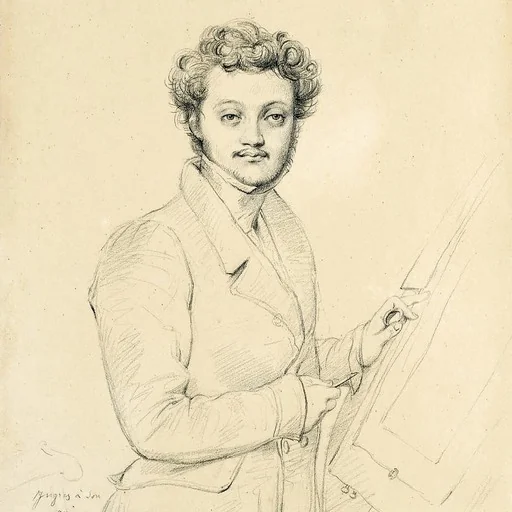
Luigi Calamatta, also known as Louis Antoine Joseph Calamatta (21 June 1801 – 8 March 1869) was an Italian painter and engraver. He was born at Civitavecchia, in the Papal States and died in Milan.