Artwork
The Misfortunes of Cephalus
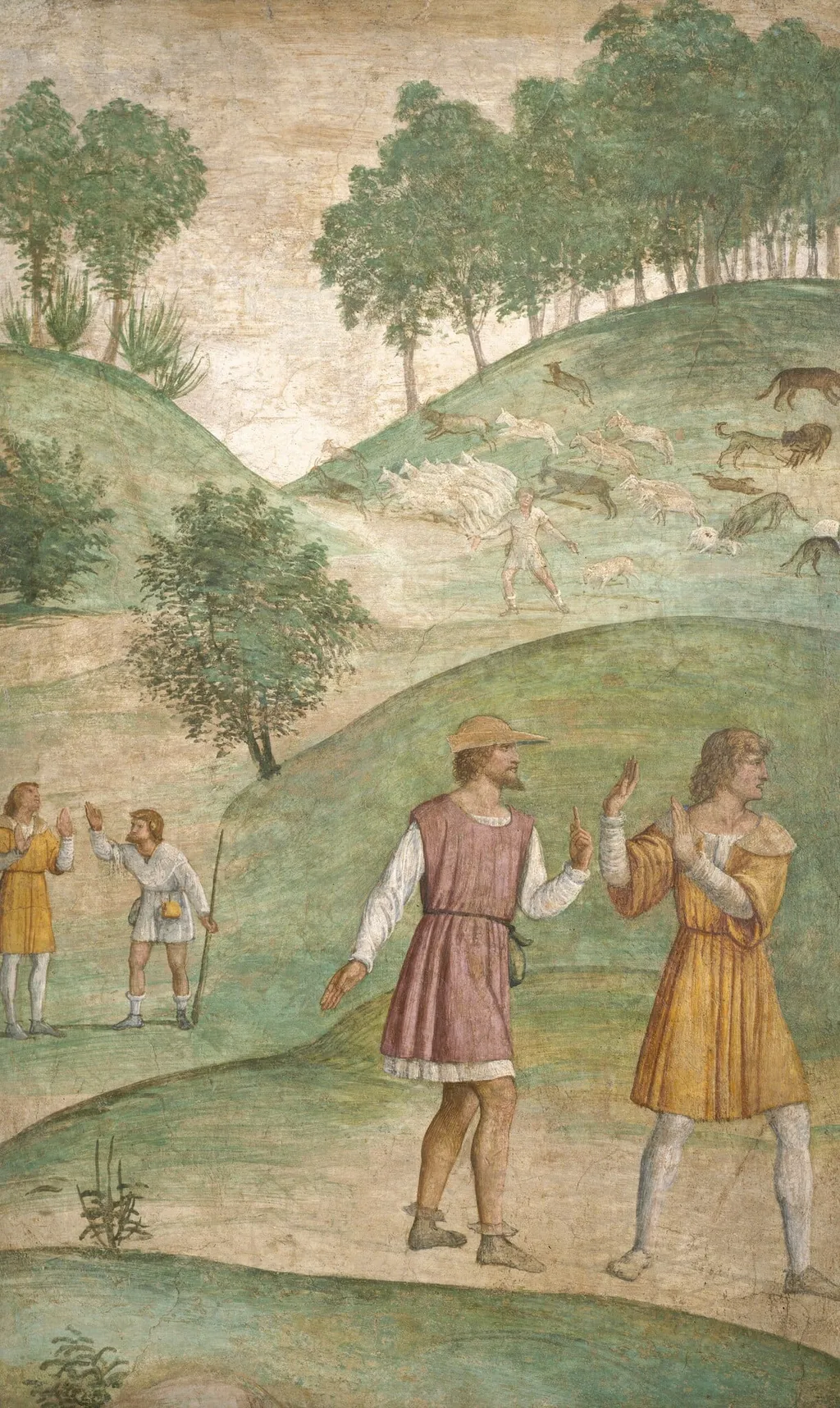
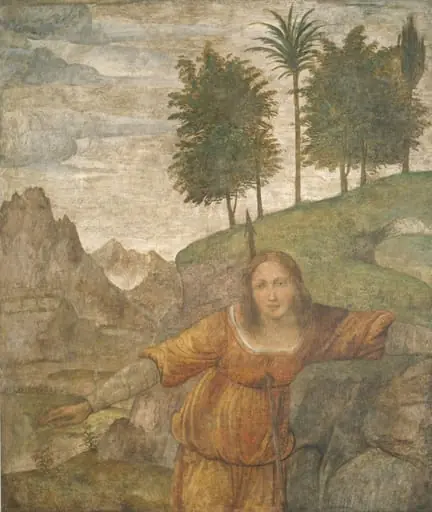
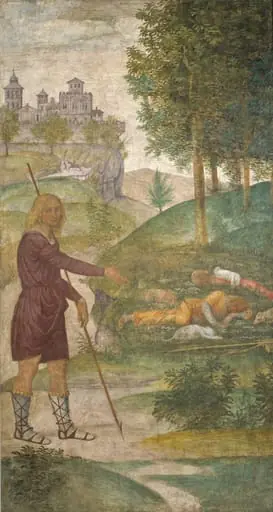
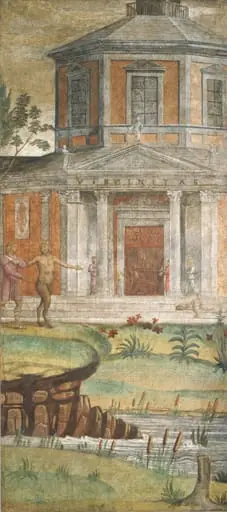
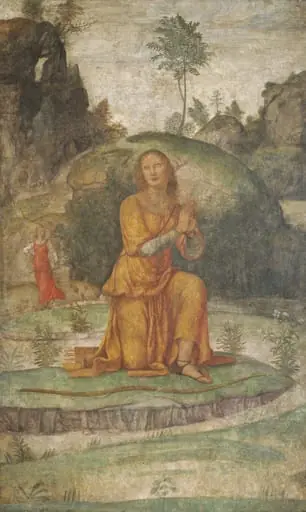
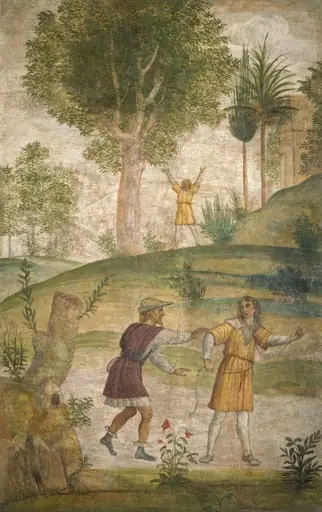
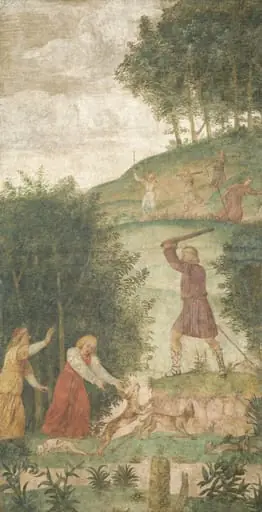
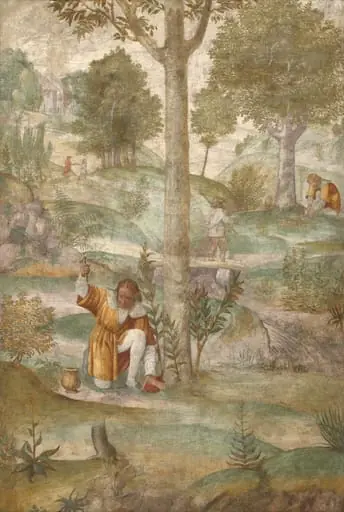
The Misfortunes of Cephalus is a fresco painting by the Mannerist artist Bernardino Luini. It dates from 1521 and is held in the collection of the National Gallery of Art.
About this work
Overview
Bernardino Luini’s fresco titled The Misfortunes of Cephalus dates from around 1521. Executed on a wall surface, the work presents a compact narrative scene set on a craggy slope, where a winged male figure brandishes a spear opposite a woman who turns away and shields herself. Dark, rolling clouds dominate the sky, suggesting an imminent storm.
Subject & Meaning
The composition draws on the classical myth of Cephalus, a hunter whose life is marred by jealousy and tragic misunderstanding. Luini captures the moment of confrontation, emphasizing the tension between the heroic, winged hunter and the vulnerable female figure, whose defensive gesture alludes to the myth’s themes of mistrust and miscommunication.
Technique & Style
Luini employs the fresco technique, applying pigment to wet plaster, which yields a matte surface that integrates with the wall. His handling of the figures combines delicately rendered facial features with sharply delineated, almost caricatural outlines, a departure from the softer, more harmonious modeling typical of early‑sixteenth‑century Italian painting.
History & Provenance
Created circa 1521, the fresco was originally intended for a devotional or private setting, though its precise original location is not documented. Over the centuries it has remained in situ, surviving successive restorations that have aimed to preserve Luini’s original palette and compositional clarity.
Context
Luini, a Lombard painter influenced by Leonardo da Vinci, worked during a period when frescoes were common in both public and private interiors. This work reflects the era’s fascination with classical mythology as moral exempla, integrating narrative content with the decorative demands of wall painting.
Legacy
The Misfortunes of Cephalus illustrates Luini’s willingness to experiment with figure rendering, offering a visual link between High Renaissance ideals and the more expressive tendencies that would emerge later. Its distinctive blend of smooth modeling and angular contour continues to attract scholarly attention for its role in the evolution of Italian fresco painting.
Artist & collection