Artwork
Maryland Heights: Siege of Harpers Ferry
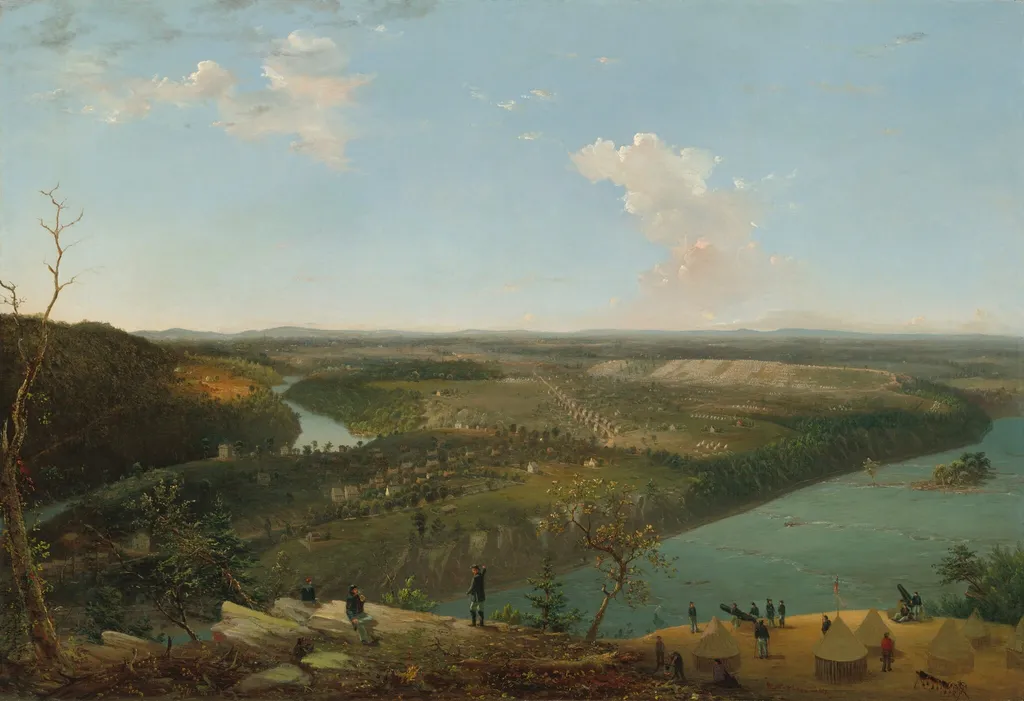
Maryland Heights: Siege of Harpers Ferry is an oil painting by the American Folk Art artist William MacLeod. It dates from 1863 and is held in the collection of the National Gallery of Art.
About this work
Overview
Maryland Heights: Siege of Harpers Ferry is an oil on canvas painted by William MacLeod in 1863. The work records a Civil‑War episode, presenting a broad landscape that includes a river, a valley and a prominent cliff. In the middle distance a sizable encampment of tents and figures can be seen, while faint smoke drifts upward from the far side of the scene.
Subject & Meaning
The composition captures a moment during the 1862 siege of Harpers Ferry, focusing on the Union forces positioned on Maryland Heights. The foreground figures on the cliff suggest observation or command, while the sprawling camp below conveys the logistical scale of the operation. The rising smoke hints at ongoing conflict and the precariousness of the defensive position.
Technique & Style
Executed in oil, MacLeod employs a realistic approach to render terrain, water and architectural elements with careful attention to light and atmospheric effects. The palette balances muted earth tones with the pale haze of smoke, creating depth across the river valley. Brushwork is controlled, emphasizing the solidity of the landscape over overtly expressive gestures.
History & Provenance
Created in the midst of the Civil War, the painting reflects contemporary interest in documenting battlefield scenes for public consumption. While specific ownership records are limited, the work has remained within American collections that focus on 19th‑century military art, serving as a visual record of the Harpers Ferry engagement.
Context
MacLeod’s work belongs to a broader tradition of 19th‑century American history painting, which sought to depict pivotal national events with a degree of documentary fidelity. The siege of Harpers Ferry was a strategic episode in the Maryland Campaign, and the painting’s emphasis on terrain and encampment aligns with the period’s interest in topographical accuracy.
Own this work as a print
Artist & collection