Artwork
Peisaj cu barcă
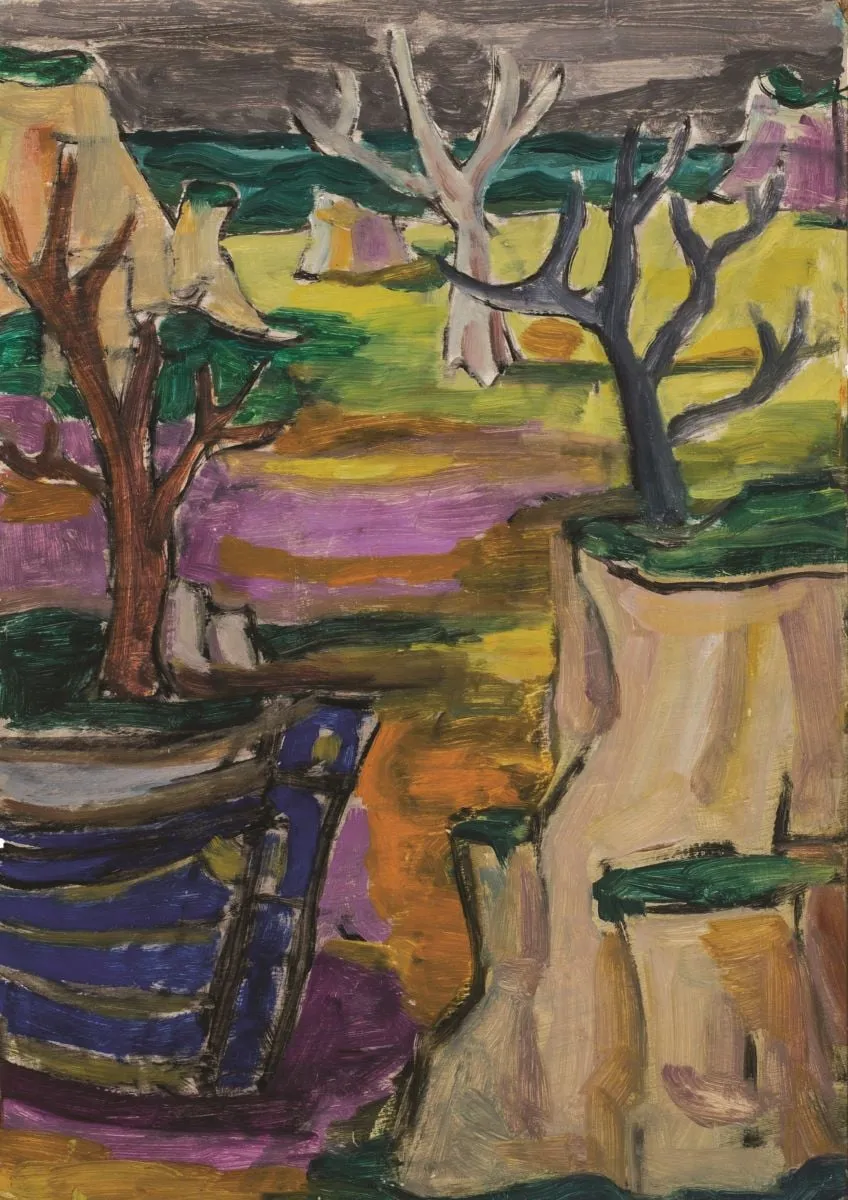
Peisaj cu barcă is an unspecified painting by Ligia Macovei. It dates from 1940 and is held in the collection of the Bucharest Municipality Museum.
About this work
Overview
The work is part of the Museum of Ethnography’s collection and reflects a departure from traditional naturalism.
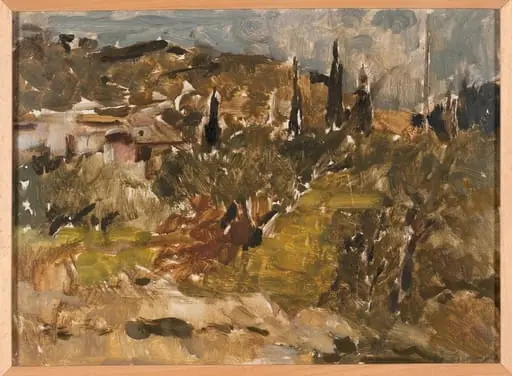
Painted in 1940 by Ligia Macovei, Peisaj cu barcă is a landscape rendered with vigorous, unrefined brushwork. The work is part of the Museum of Ethnography’s collection and reflects a departure from traditional naturalism. Its energetic application of paint and non-naturalistic color choices suggest an interest in emotional expression over literal representation, aligning with broader early 20th-century shifts in Romanian modernism.
Subject & Meaning
The composition centers on a solitary boat with a white sail, anchored on a patchwork of blue and orange ground. Two stark, leafless trees rise beside it, their forms simplified and intensified by vivid hues. The absence of human figures and the barren trees evoke a quiet solitude, while the turbulent sky suggests an inner atmosphere rather than a documented scene—hinting at mood over narrative.
Technique & Style
Macovei applied paint thickly and irregularly, using a direct, almost physical method that emphasizes texture over smoothness. The sky is built from layered strokes of yellow, green, and purple, creating a sense of vibration rather than depth. Colors are deliberately discordant, rejecting atmospheric realism in favor of expressive contrast. The technique recalls impasto, though without the formal discipline of Western European equivalents.
History & Provenance
The painting entered the Museum of Ethnography’s holdings shortly after its creation, likely through direct acquisition or donation. Its preservation within an institution focused on cultural artifacts rather than fine art suggests its significance was initially viewed through a folk or national lens. No public records of exhibition or sale prior to its museum acquisition are known.
Context
Created during a period of cultural redefinition in interwar Romania, the work reflects a broader trend among local artists to blend folk motifs with modernist experimentation. While urban centers embraced Parisian influences, Macovei’s approach remained rooted in personal expression and regional landscapes. The painting’s boldness stands apart from more academic contemporaries, signaling a quieter, rural modernism.
Legacy
Peisaj cu barcă remains a rare example of Macovei’s mature style, preserved in a public collection that underscores its cultural rather than commercial value. Though not widely exhibited, it is referenced in studies of Romanian modernist outliers. Its raw aesthetic continues to inform discussions on how regional artists adapted modern techniques outside mainstream European currents.
Artist & collection
Artist
This Romanian artist painted lively scenes and quiet moods between 1940 and the early 1970s.
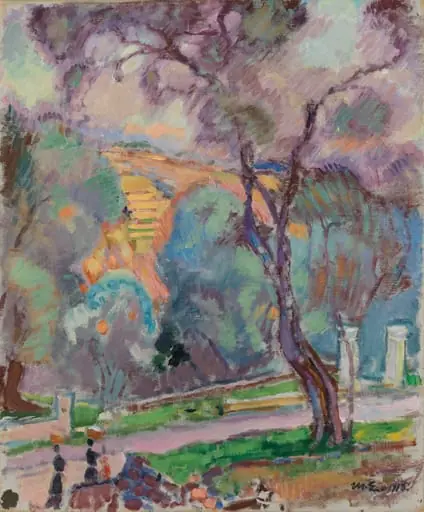 Puistokuva San Remosta
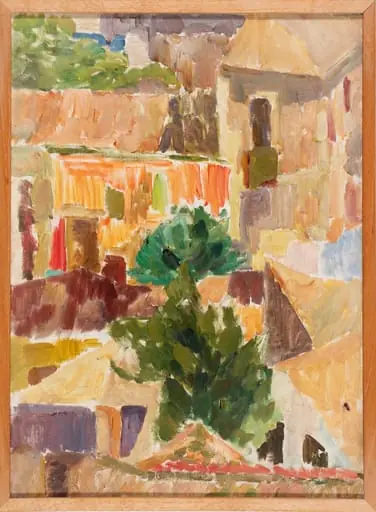 Landscape: from the Acropolis area
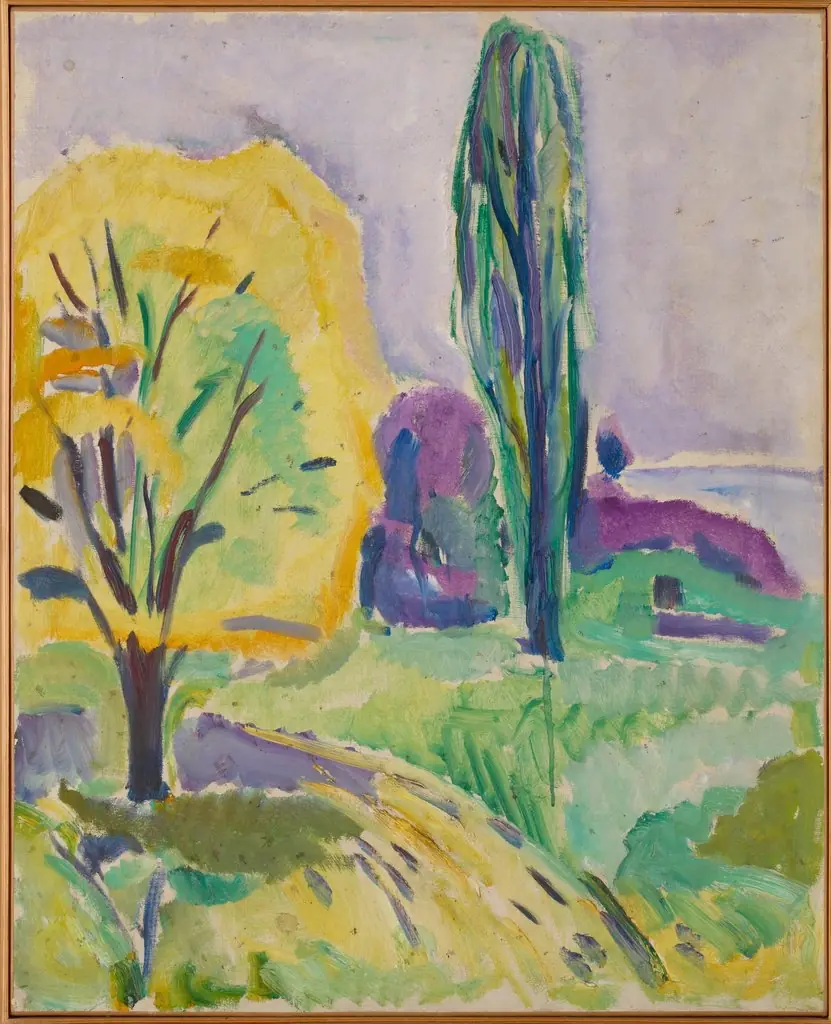 Yellow and Green Tree
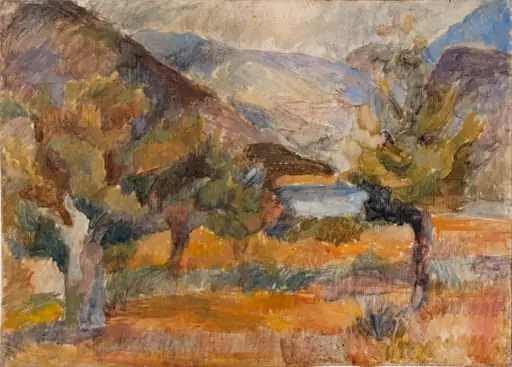 Outdoor study
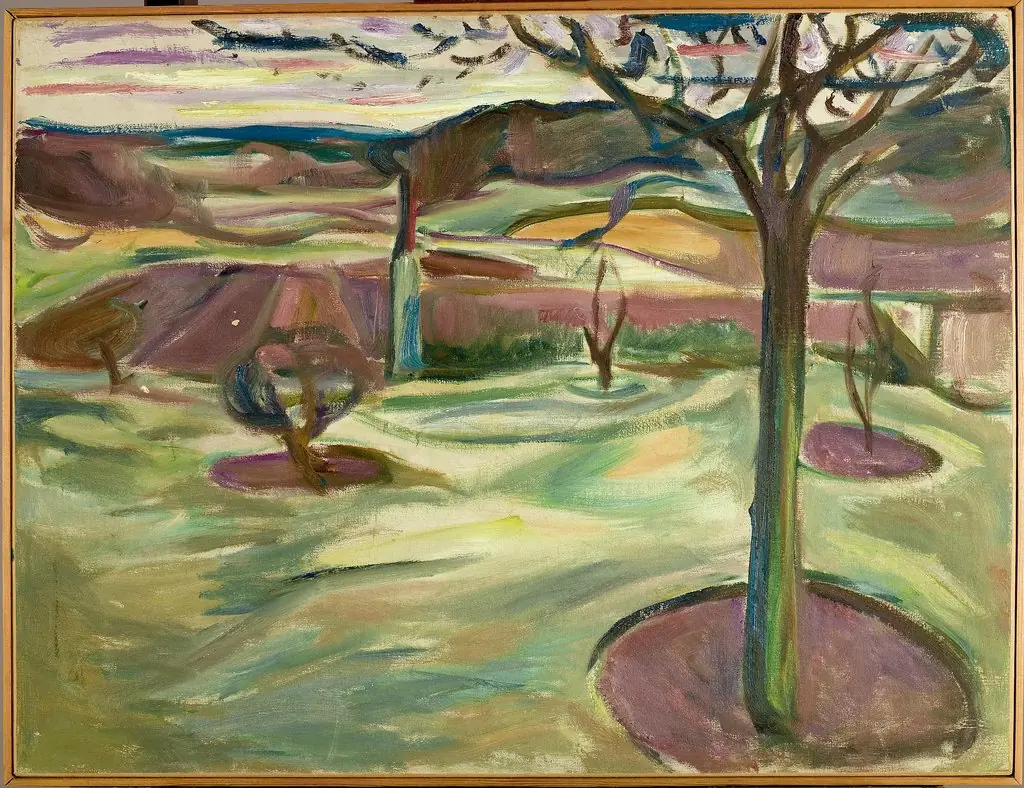 Early Spring
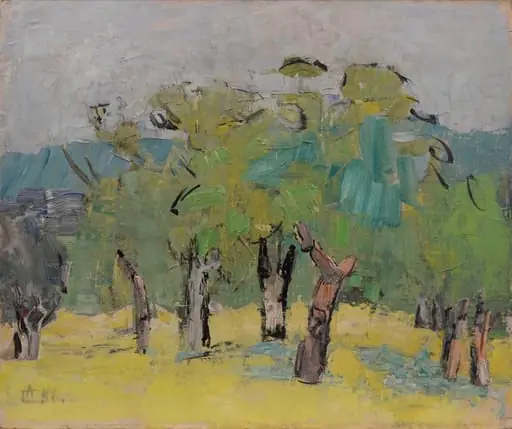 Pădure
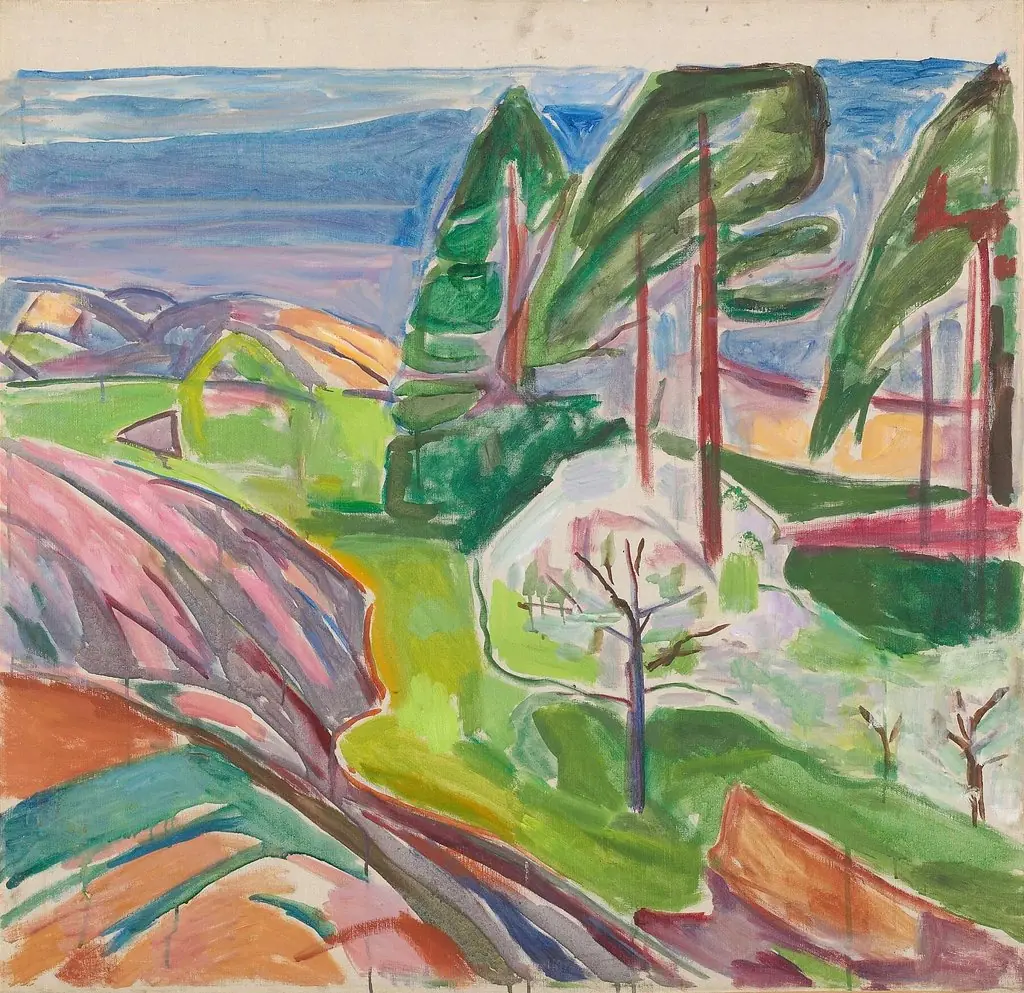 Pine Trees and Fruit Trees in Blossom
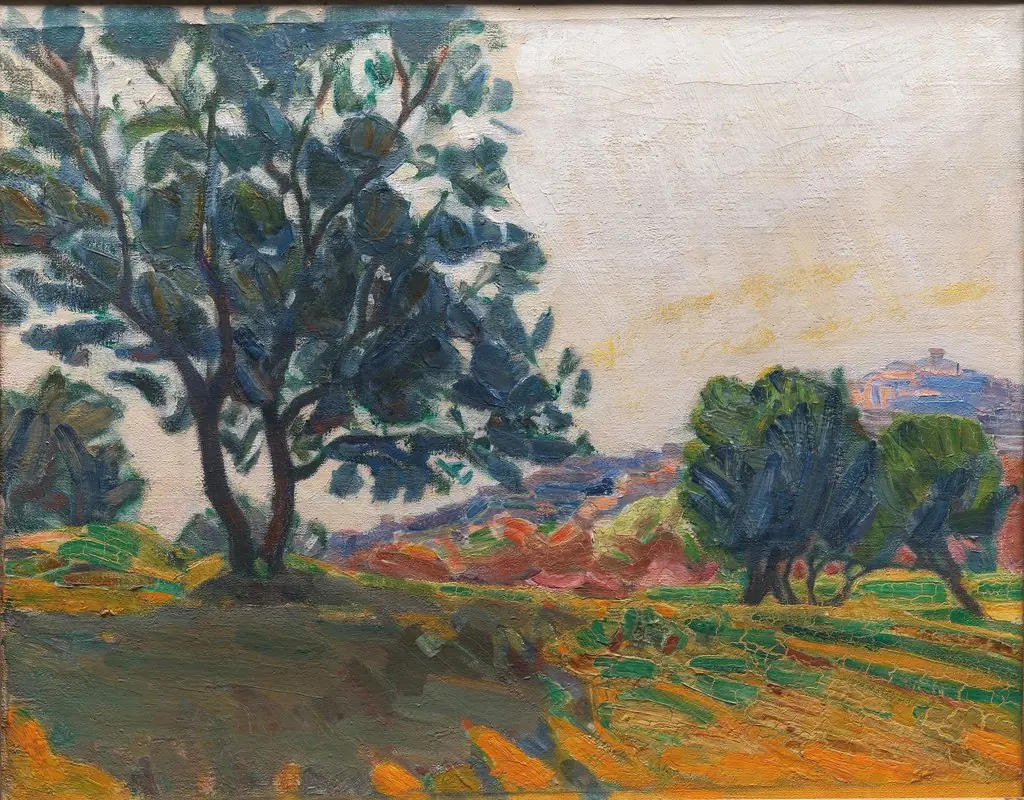 The Olive Grove. With Cagnes in the Background. Against the Light
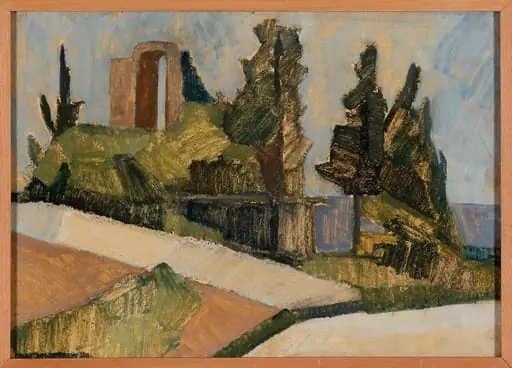 Landscape: from the Acropolis area
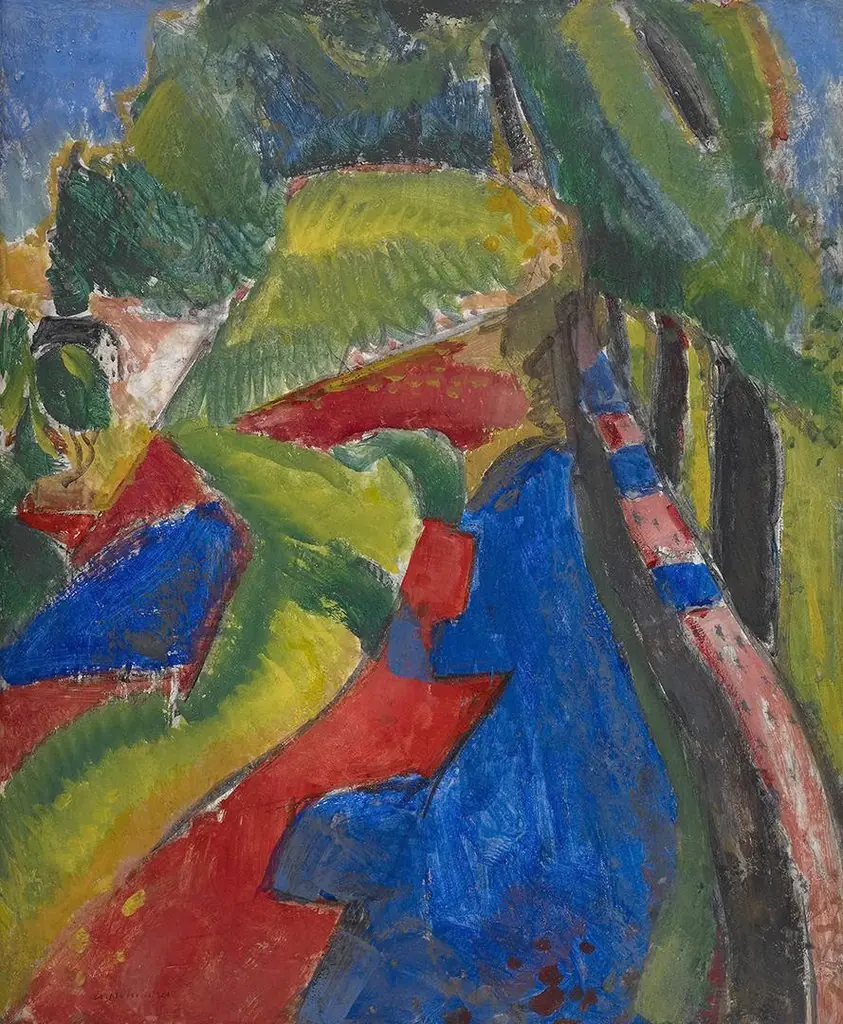 Fauve Landscape with Red and Blue
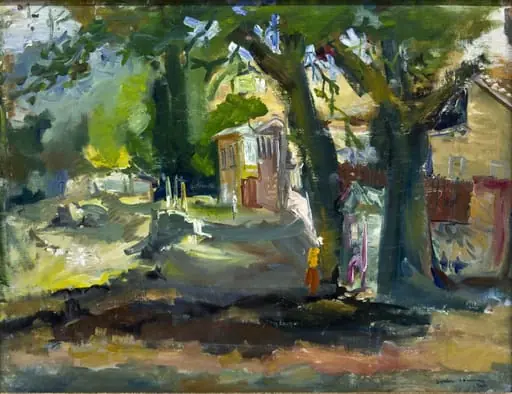 Peisaj din Crimeea
 Outdoor study