Artwork
631
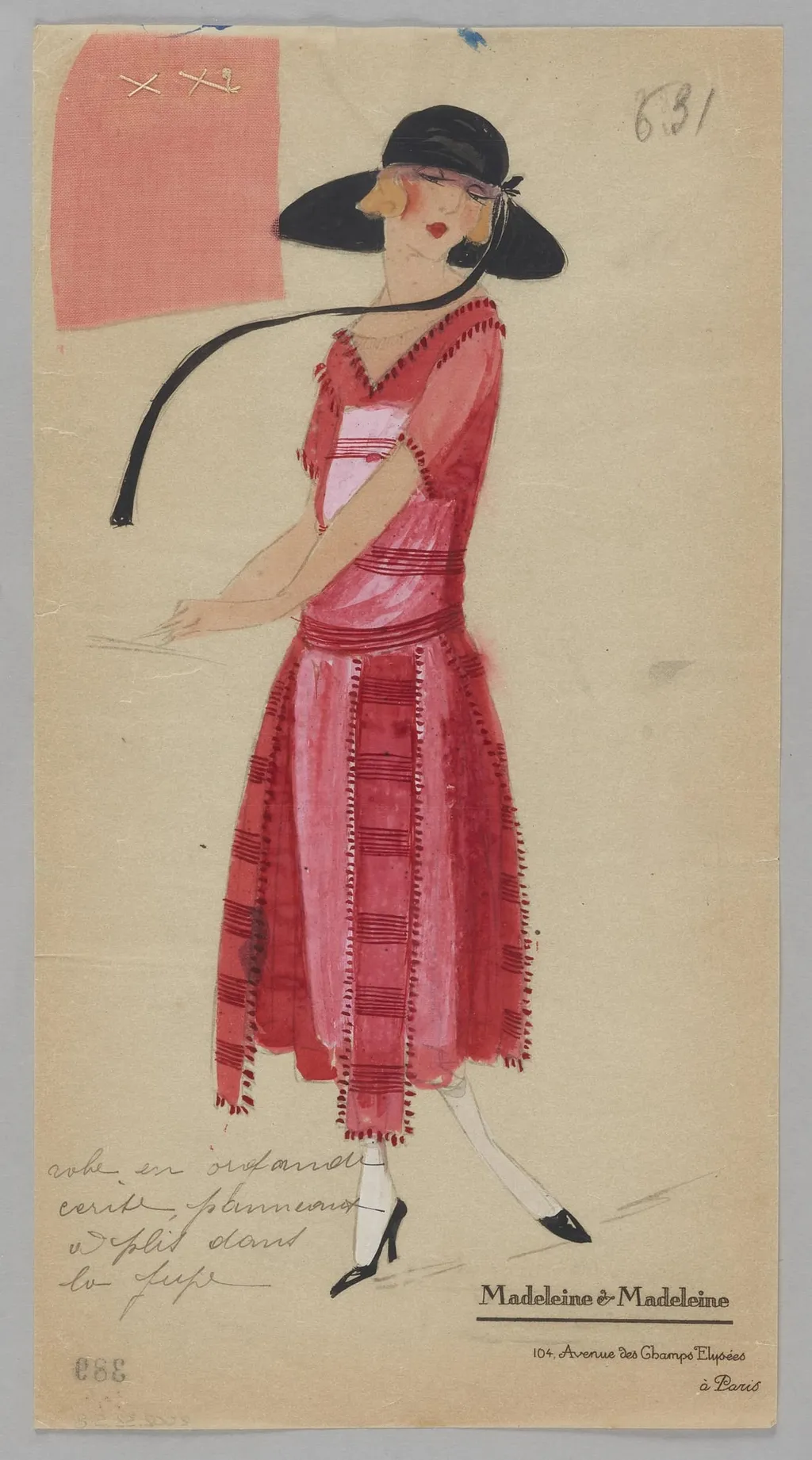
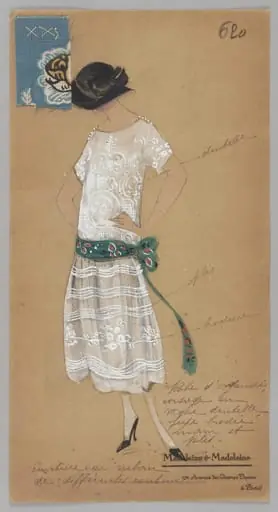
631 is a drawing by Madeleine & Madeleine. It dates from 1924 and is held in the collection of the Palais Galliera - Musée de la Mode de la Ville de Paris.
About this work
Overview
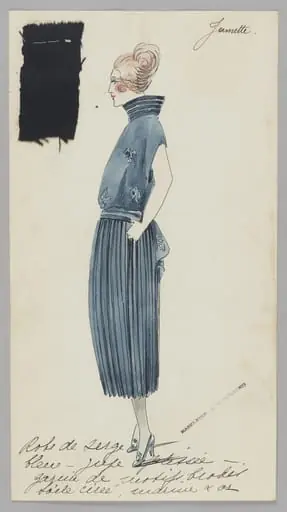
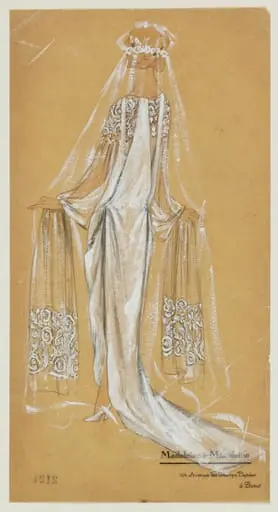
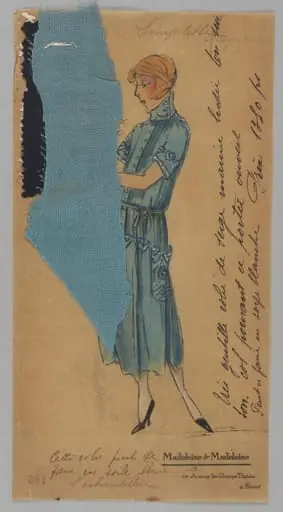
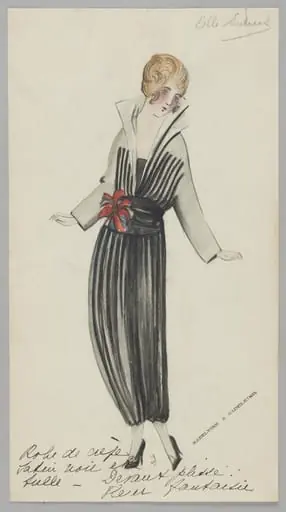
Executed in ink and watercolor, it depicts a woman in a cerise organdy dress with a pleated skirt.
Created in 1924 by the design duo Madeleine & Madeleine, this work is a fashion illustration titled 631 / robe en organdi / cerise, panneaux / à plis dans / la jupe. Executed in ink and watercolor, it depicts a woman in a cerise organdy dress with a pleated skirt. The piece is part of a larger archive of textile and garment studies held at the Museum of Ethnography, reflecting early 20th-century French fashion documentation practices.
Subject & Meaning
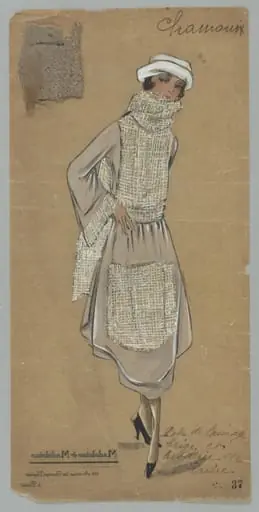
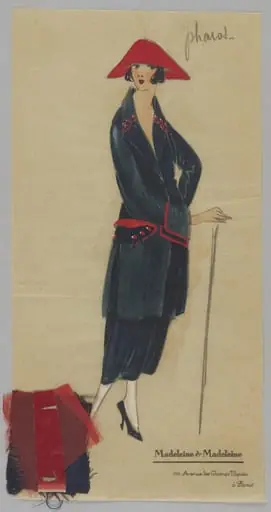
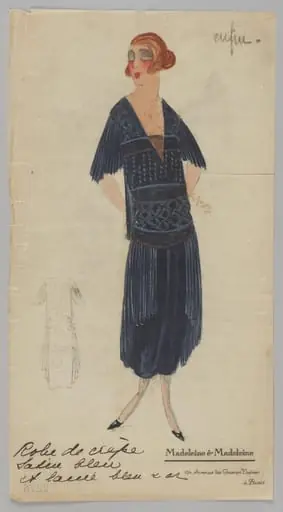
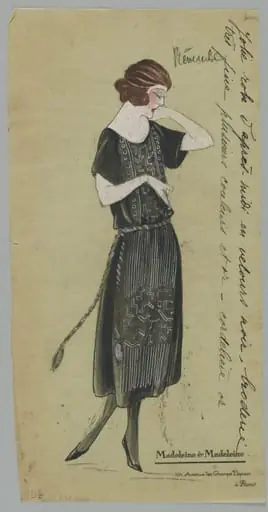
The figure, rendered in a casual standing pose, embodies a quiet modernity. Her attire—bright red organdy, long sleeves, and a wide-brimmed black hat—suggests a blend of elegance and everyday wear. The absence of facial detail universalizes the subject, shifting focus to the garment’s structure and materiality. The drawing functions less as portraiture and more as a study of fabric behavior and silhouette.
Technique & Style
The illustration employs simplified forms and flat, saturated colors rather than detailed modeling. The skirt’s striped pattern mimics fabric swatches, possibly applied as collage, emphasizing texture over realism. Loose brushwork and scribbled background elements suggest spontaneity, while the red square grounds the composition. The technique prioritizes clarity and material expression, aligning with contemporary design pedagogy of the era.
History & Provenance
The work originated in the creative output of Madeleine & Madeleine, a collaborative fashion design practice active in Paris during the 1920s. It entered the collection of the Museum of Ethnography as part of a broader acquisition of garment studies and textile designs. Its preservation reflects institutional interest in documenting fashion as cultural artifact, not merely aesthetic object.
Context
In the 1920s, Parisian fashion houses increasingly documented designs for production and client reference. Organdy, a lightweight cotton fabric, was favored for its transparency and drape, suited to the era’s lean silhouettes. This drawing aligns with a trend of schematic fashion studies that prioritized construction and material over ornamentation, responding to both industrial production and modernist aesthetics.
Legacy
The work contributes to a historical record of how fashion was studied and communicated before photographic documentation became dominant. Its emphasis on fabric behavior and structural detail influenced later design education. Today, it remains a reference point for scholars examining the intersection of textile innovation and visual representation in early modern fashion.
Artist & collection
Artist
These artists left a small but striking set of 1924 drawings and designs that mix fashion and line.
Museum
Palais Galliera - Musée de la Mode de la Ville de Paris
Continue through works from the same source collection.