Artwork
A la hâte
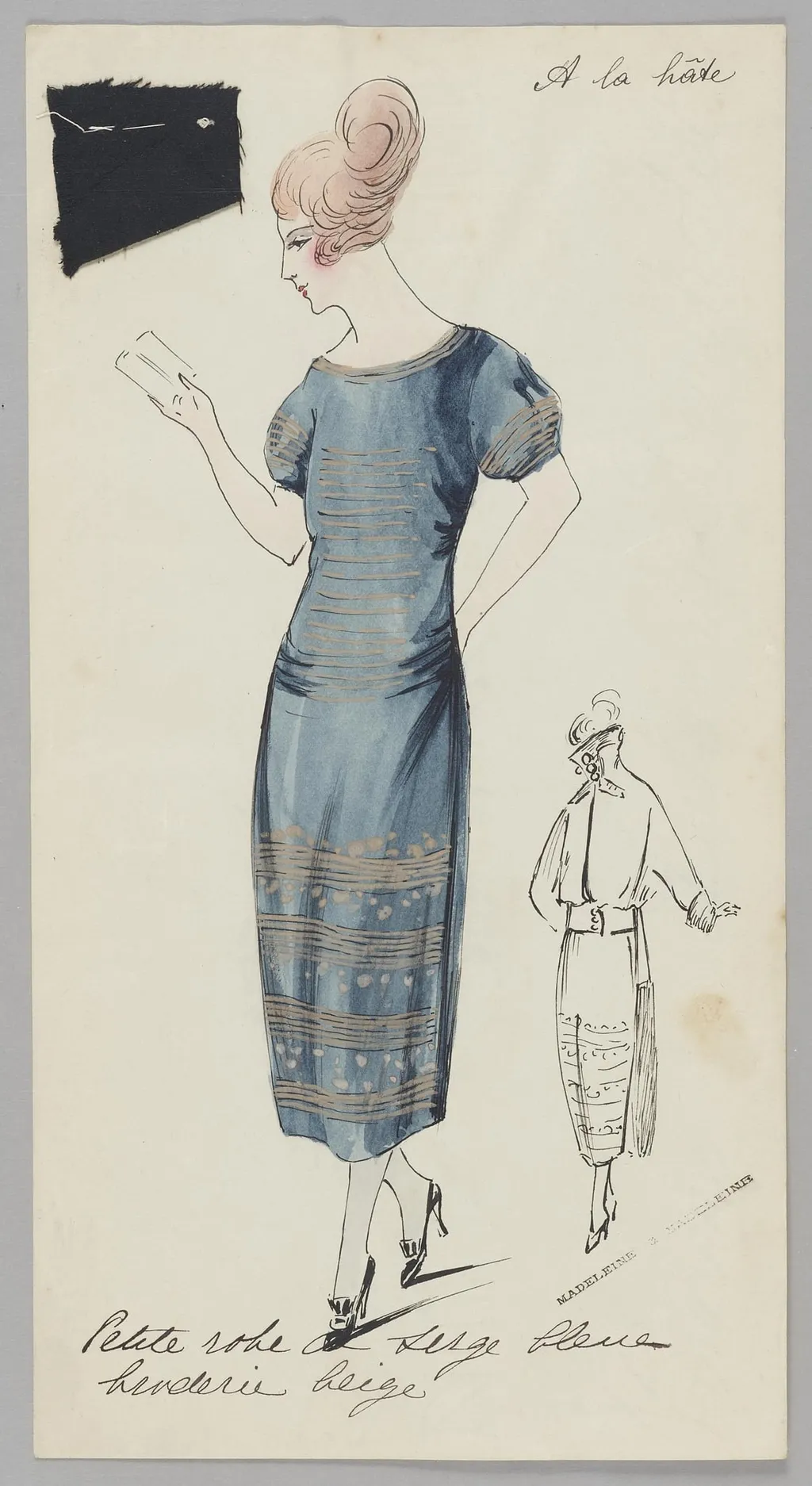
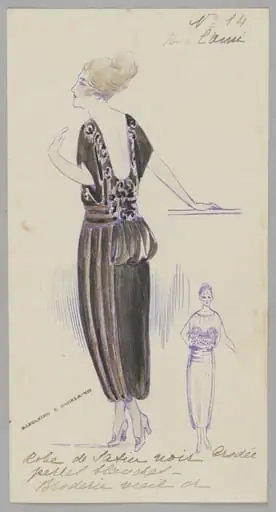
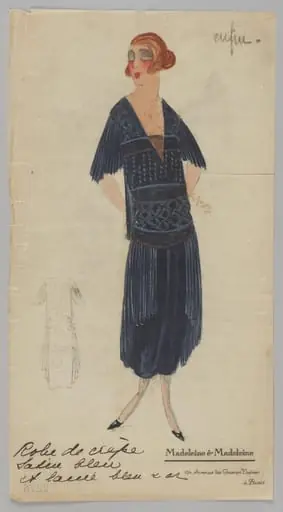
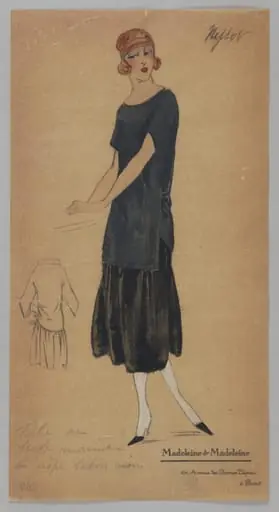
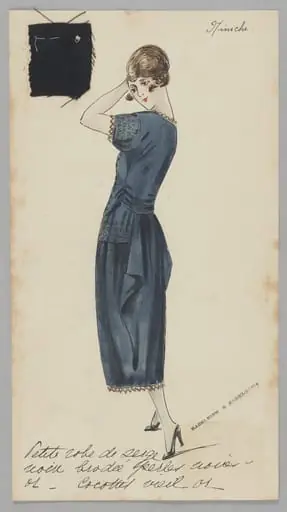
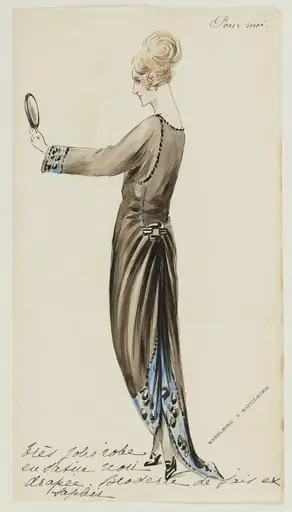
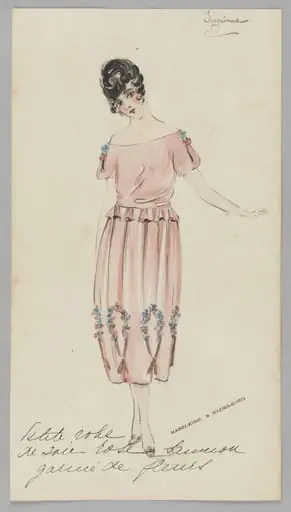
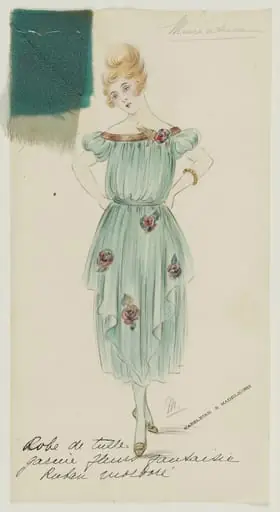
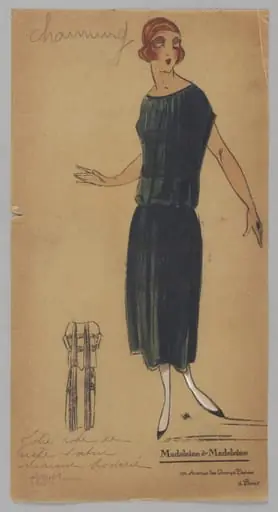
A la hâte is a drawing by Madeleine & Madeleine. It dates from 1924 and is held in the collection of the Palais Galliera - Musée de la Mode de la Ville de Paris.
About this work
Overview
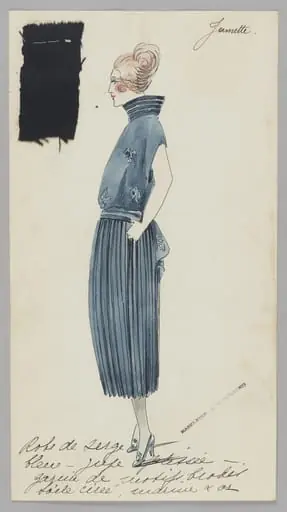
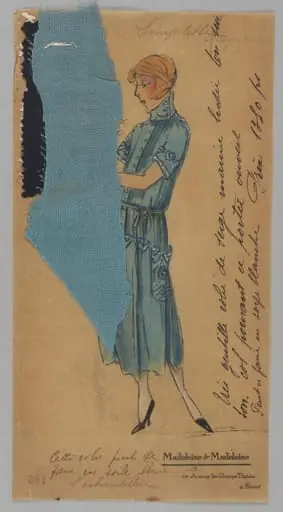
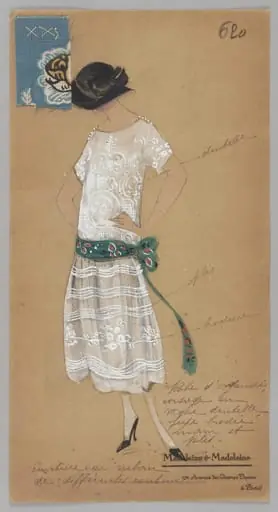
Created in 1924 by the design duo Madeleine & Madeleine, this working sketch captures a modest, knee-length dress in blue serge with beige embroidery.
Created in 1924 by the design duo Madeleine & Madeleine, this working sketch captures a modest, knee-length dress in blue serge with beige embroidery. The piece was likely used as a reference for garment construction or textile study. It is currently held in the collection of the Museum of Ethnography, where it serves as a record of early 20th-century domestic fashion practices rather than high couture.
Subject & Meaning
The figure depicted wears a simple, unadorned dress, suggesting everyday wear rather than ceremonial or formal attire. The handwritten labels — 'Petite robe serge bleue' and 'A la hâte' — imply a focus on practicality and speed in dressmaking. The inclusion of a second, smaller sketch and a fabric swatch reinforces the document’s function as a utilitarian aid, capturing fleeting moments of ordinary life through clothing.
Technique & Style
Rendered in pencil and ink, the drawing combines precise line work with minimal shading to convey form. The dress features thin beige stripes and small embroidered dots near the hem, rendered with delicate detail. The fabric swatch in the corner and the secondary sketch indicate a methodical approach to textile study, emphasizing texture and construction over aesthetic embellishment.
History & Provenance
The work originated in the collaborative studio of Madeleine & Madeleine, known for documenting regional dress and textile techniques. It entered the Museum of Ethnography’s collection shortly after its creation, likely as part of a broader archive on working-class fashion. Its survival as a sketch rather than a finished garment underscores its role as a behind-the-scenes record of design processes.
Context
In the 1920s, many women in France and beyond relied on homemade or locally tailored clothing due to economic constraints and limited access to commercial fashion. This sketch reflects a culture where dressmaking was a domestic skill, often done quickly and efficiently. The emphasis on serge — a durable, twill-woven wool — aligns with the preference for practical, long-lasting fabrics among working households.
Legacy
Today, the sketch offers insight into the quiet labor of women who shaped everyday dress before mass production. It preserves details of textile construction and regional styles that might otherwise have been lost. As a non-commercial artifact, it challenges traditional narratives of fashion history by centering utility over spectacle.
Artist & collection
Artist
These artists left a small but striking set of 1924 drawings and designs that mix fashion and line.
Museum
Palais Galliera - Musée de la Mode de la Ville de Paris
Continue through works from the same source collection.