Artwork
Byzance
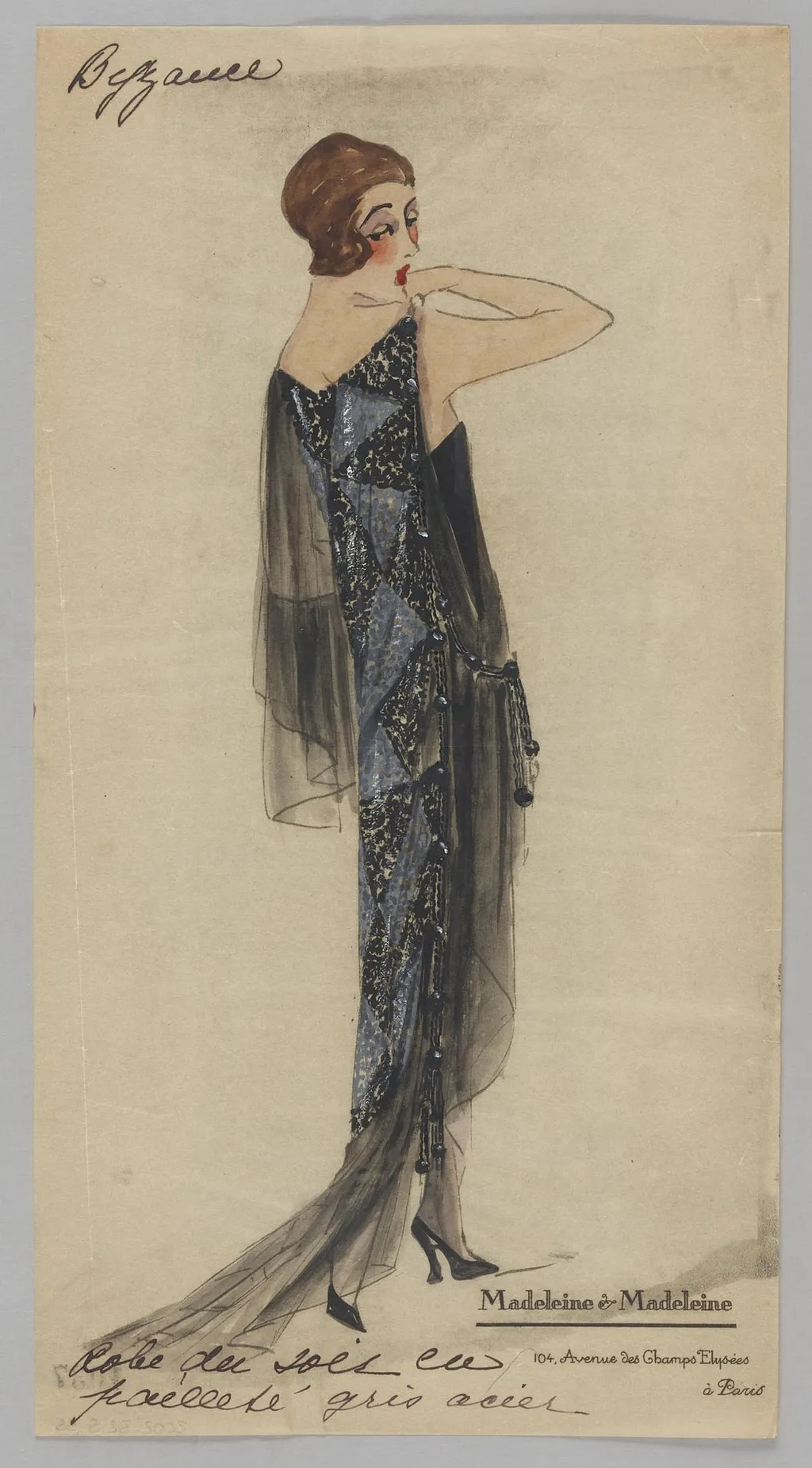
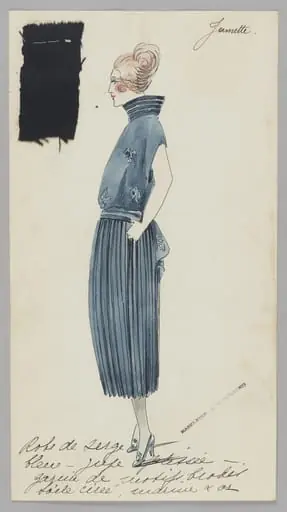
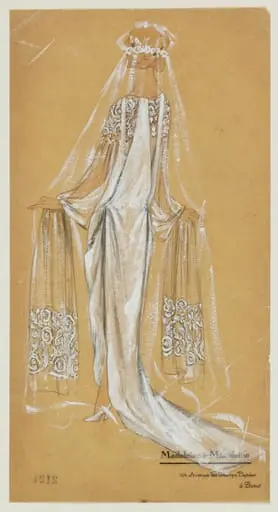
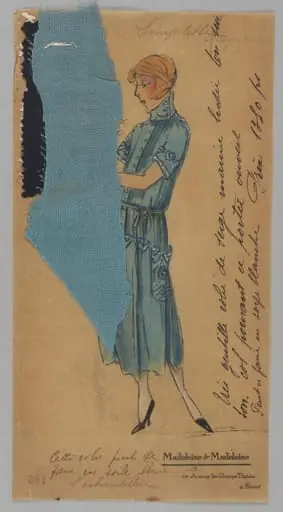
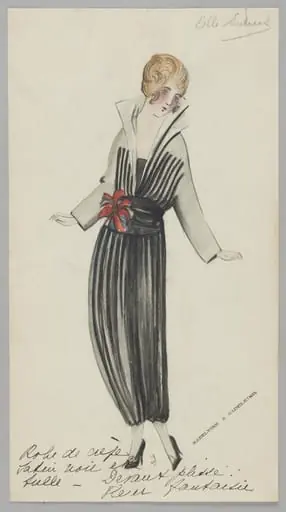
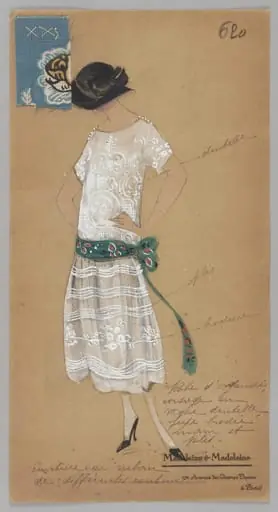
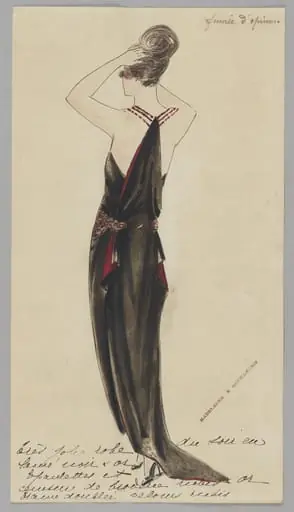
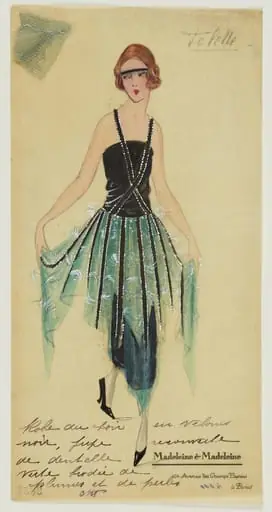
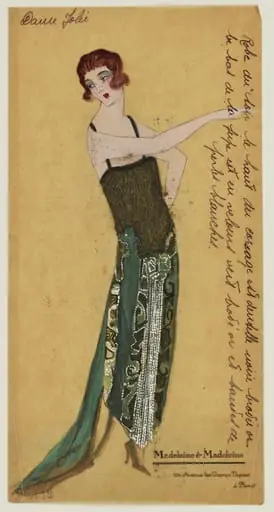
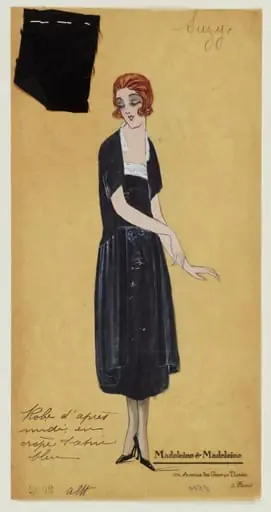
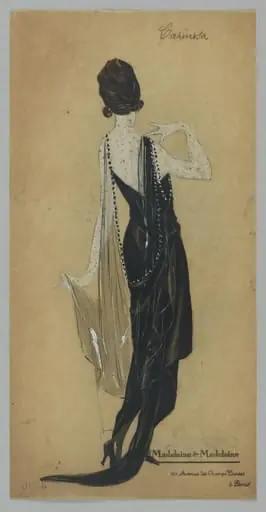
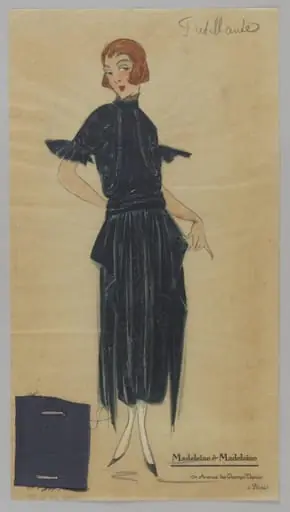
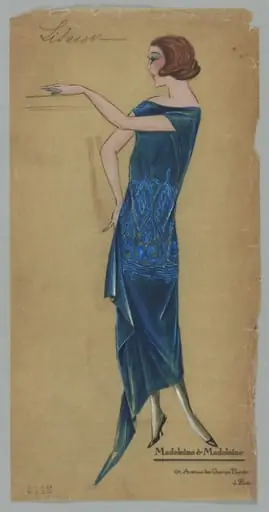
Byzance is a drawing by Madeleine & Madeleine. It dates from 1924 and is held in the collection of the Palais Galliera - Musée de la Mode de la Ville de Paris.
About this work
Overview
The work is held in the collection of the Museum of Ethnography, where it is preserved as a cultural artifact reflecting interwar fashion aesthetics.
Created in 1924 by the fashion house Madeleine & Madeleine, this drawing presents a stylized portrait of a woman in an evening gown designed for the modern woman of the 1920s. Rendered in ink and metallic pigment, it functions as a promotional illustration rather than a fine art piece. The work is held in the collection of the Museum of Ethnography, where it is preserved as a cultural artifact reflecting interwar fashion aesthetics.
Subject & Meaning
The figure embodies the era’s ideal of urban sophistication: a woman with a bob haircut, poised in a sleek silhouette, holding a cigarette holder with casual elegance. Her attire—dark gray fabric embedded with silver sequins—suggests luxury and movement, aligning with the decade’s fascination with light, rhythm, and modernity. The design avoids ornamentation in favor of subtle shimmer, signaling a shift toward minimalist glamour in post-war fashion.
Technique & Style
The drawing employs fine linework to define the figure’s form, with metallic pigments applied to simulate the reflective quality of sequins. The hem’s fringe is rendered as delicate, vertical strokes, suggesting motion. The signature 'Byzance'—likely a designer pseudonym—appears alongside the label 'Madeleine & Madeleine,' reinforcing its commercial purpose. The composition is tightly framed, focusing attention on the dress and the wearer’s detached, confident posture.
History & Provenance
The work originated as part of a promotional series for Madeleine & Madeleine’s eveningwear line, distributed to elite clientele and fashion publications. It entered the Museum of Ethnography’s collection in the mid-20th century, likely through donation or acquisition of fashion archives. Its preservation reflects growing institutional interest in fashion as a cultural record, rather than merely a commercial product.
Context
In the 1920s, Parisian fashion houses increasingly used illustrated advertisements to convey the mood and movement of their designs, anticipating the dynamism of modern life. This piece aligns with contemporaneous work by designers like Paul Iribe and Erté, who blended Art Deco geometry with feminine elegance. The cigarette holder and bob haircut mark the image as distinctly post-war, symbolizing women’s evolving social autonomy and changing codes of propriety.
Legacy
Though not widely exhibited, the drawing remains a representative example of how fashion houses visually articulated new ideals of femininity in the interwar period. Its inclusion in an ethnographic museum underscores its value as a material expression of cultural norms, rather than a standalone artistic achievement. It continues to inform scholarship on the intersection of design, gender, and consumer culture in early 20th-century Europe.
Artist & collection
Artist
These artists left a small but striking set of 1924 drawings and designs that mix fashion and line.
Museum
Palais Galliera - Musée de la Mode de la Ville de Paris
Continue through works from the same source collection.