Artwork
Claridge
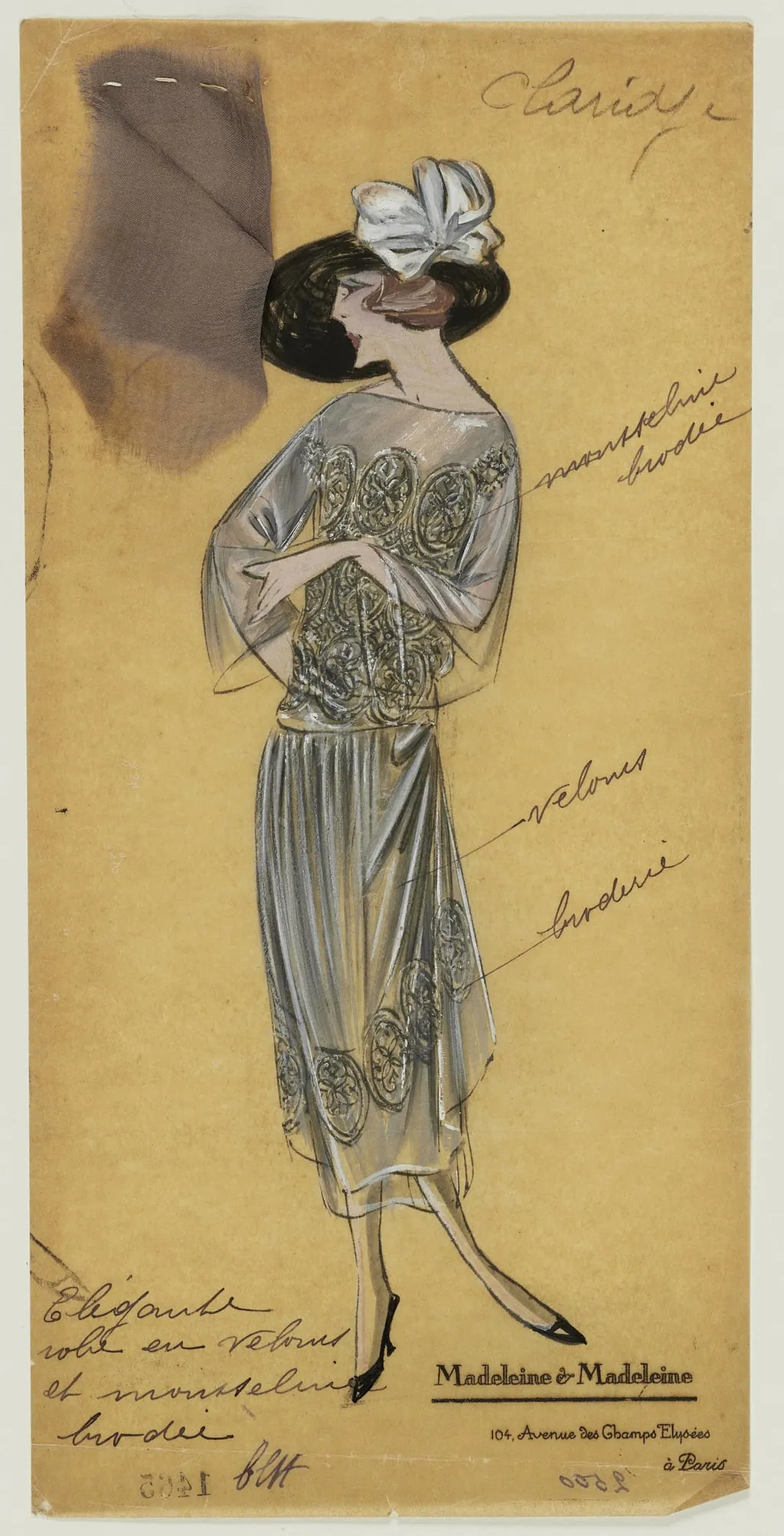
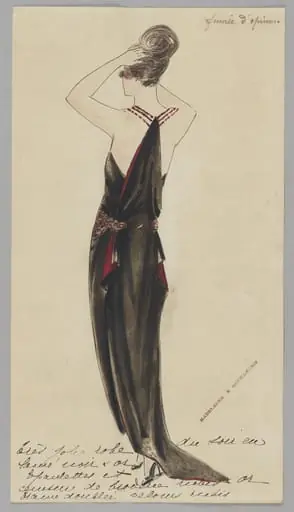
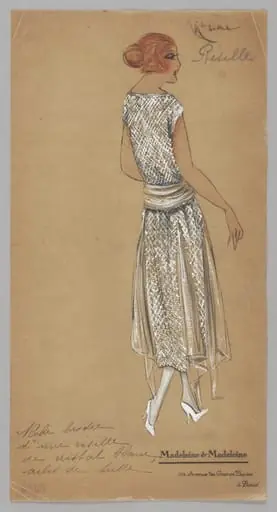
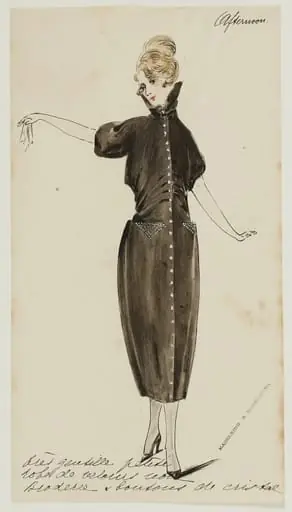
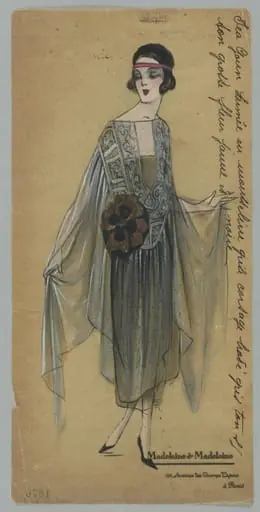
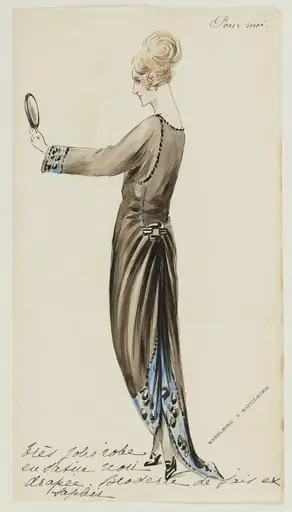
Claridge is a drawing by Madeleine & Madeleine. It dates from 1924 and is held in the collection of the Palais Galliera - Musée de la Mode de la Ville de Paris.
About this work
Overview
It is held in the collection of the Museum of Ethnography, where it serves as a record of early 20th-century textile craftsmanship and silhouette trends.
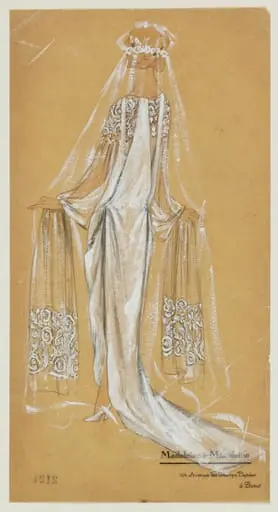
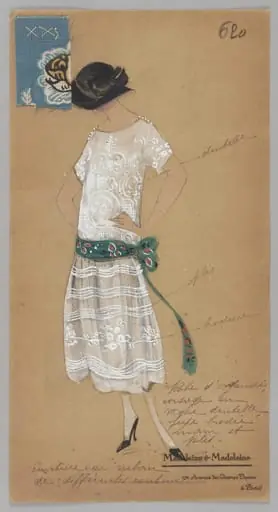
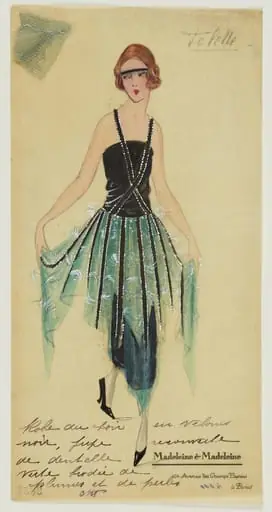
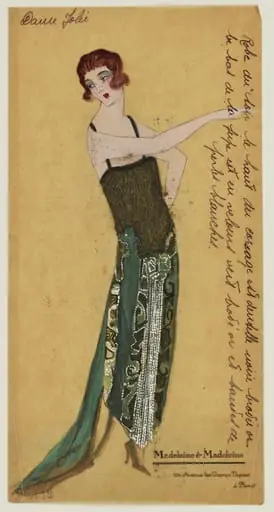
Created in 1924 by the design house Madeleine & Madeleine, this detailed fashion drawing depicts a woman viewed from behind, dressed in an elaborate evening gown. The work functions as a technical illustration, identifying fabric types and construction details. It is held in the collection of the Museum of Ethnography, where it serves as a record of early 20th-century textile craftsmanship and silhouette trends.
Subject & Meaning
The figure, rendered without a face, emphasizes the garment rather than the wearer. The high collar, voluminous sleeves, and flowing skirt reflect the transitional aesthetics of the 1920s—balancing structured elegance with emerging modernism. The labeled materials—velvet, muslin, embroidery—signal an interest in material hierarchy and artisanal detail, common in high-end fashion documentation of the period.
Technique & Style
Executed as a precise line drawing, the illustration uses clean contours to define the dress’s form and drape. Fabric textures are suggested through varied line weight and annotations, not shading. The label ‘brodée’ and other French terms indicate the drawing’s origin in Parisian atelier culture, where technical clarity was essential for production and client presentation.
History & Provenance
The drawing entered the Museum of Ethnography’s collection as part of a broader effort to document material culture beyond fine art. Its preservation reflects early 20th-century institutional interest in fashion as a cultural artifact. No record of its original commission survives, but its detail suggests it was produced for a private client or fashion house archive.
Context
In the 1920s, velvet and embroidered muslin were favored for evening wear among the European elite, combining luxury with subtle movement. Design houses like Madeleine & Madeleine produced such drawings to communicate complex constructions to tailors and clients. This piece aligns with contemporaneous fashion plates but stands out for its unembellished, instructional tone.
Legacy
The drawing remains a valuable reference for scholars studying textile use and silhouette evolution in interwar fashion. Its focus on material labels rather than ornamentation highlights a shift toward technical documentation in design practice. It contributes to understanding how fashion knowledge was transmitted before photographic catalogs became standard.
Artist & collection
Artist
These artists left a small but striking set of 1924 drawings and designs that mix fashion and line.
Museum
Palais Galliera - Musée de la Mode de la Ville de Paris
Continue through works from the same source collection.