Artwork
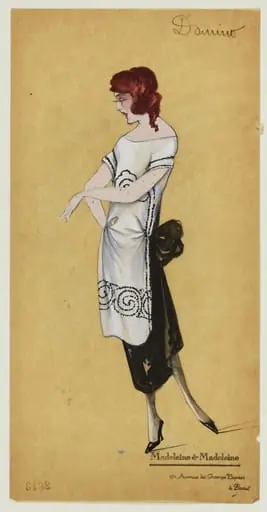
Domino
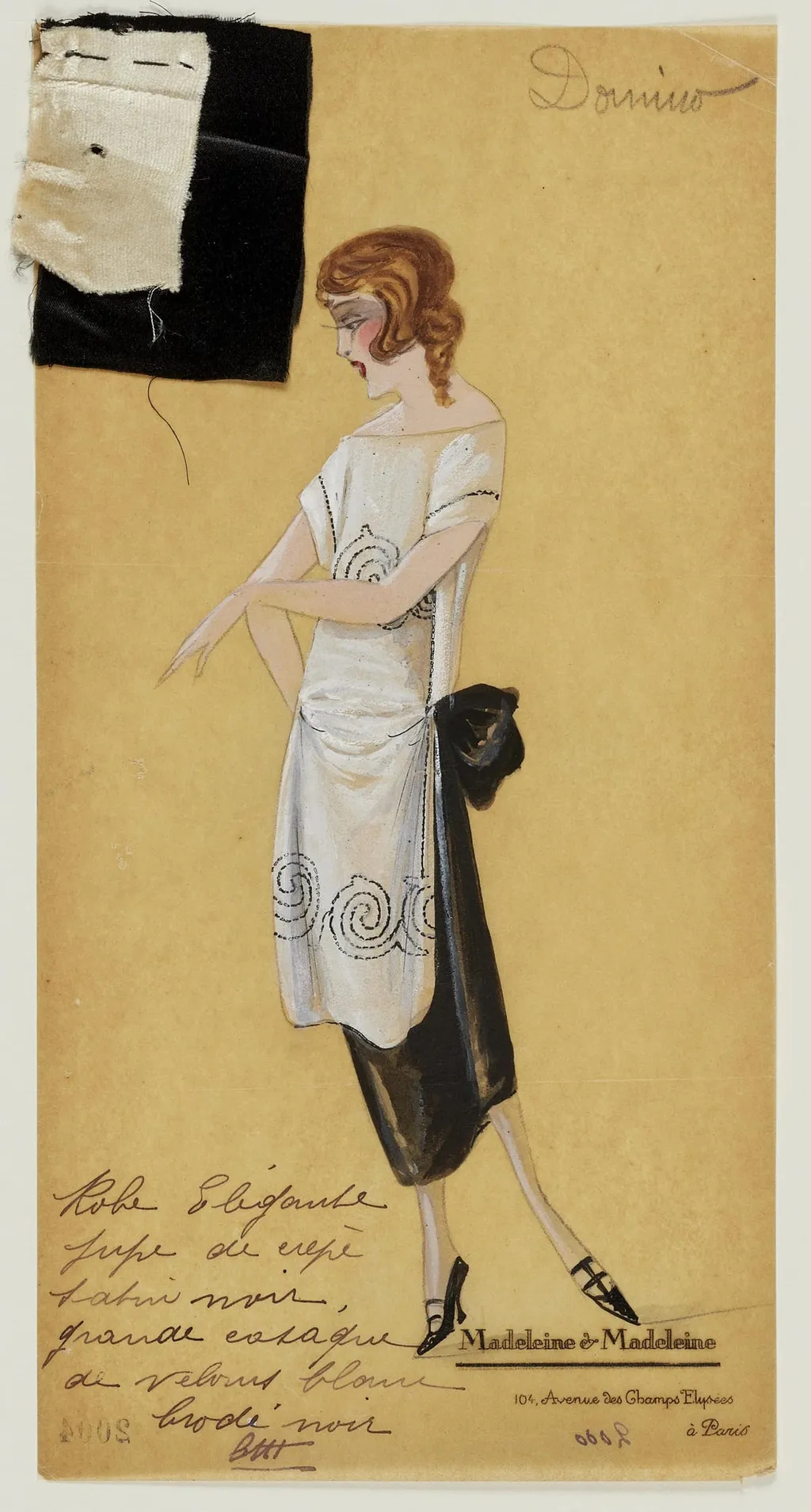
Domino is a drawing by Madeleine & Madeleine. It dates from 1924 and is held in the collection of the Palais Galliera - Musée de la Mode de la Ville de Paris.
About this work
Overview
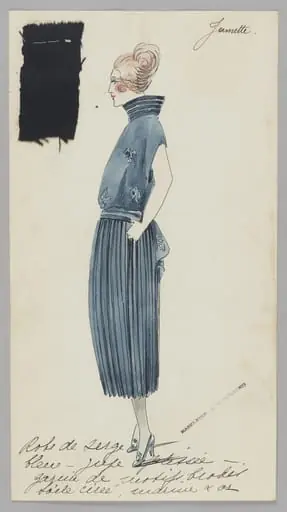
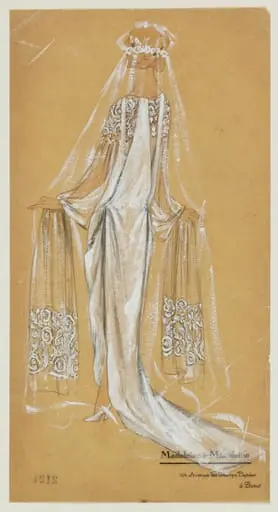
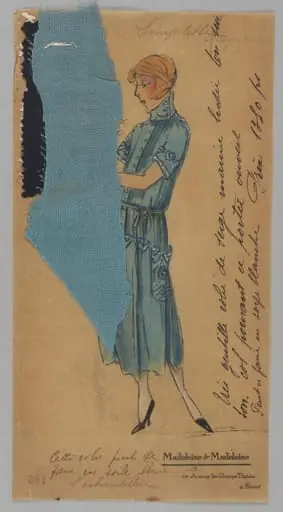
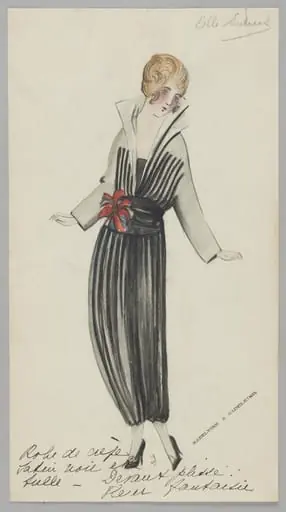
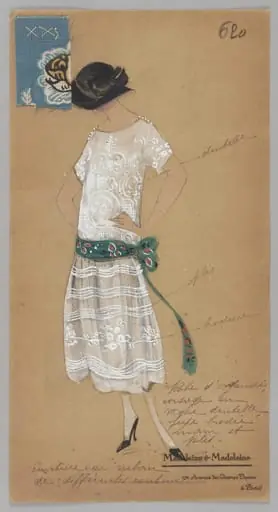
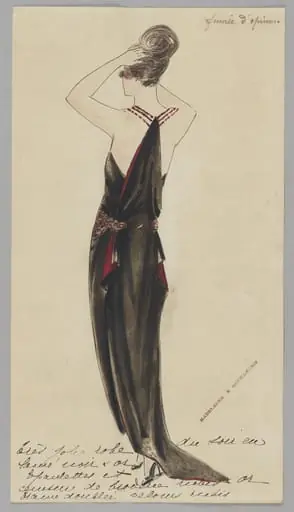
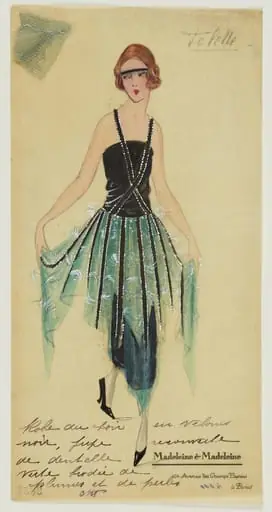
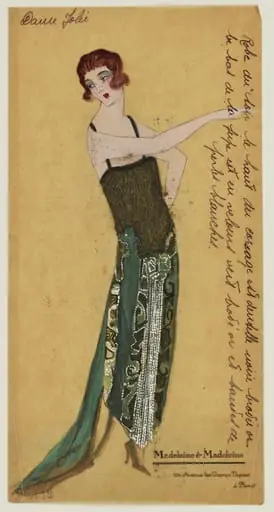
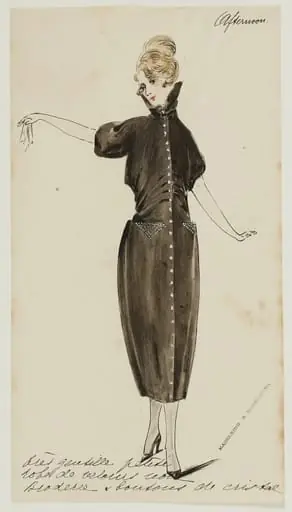
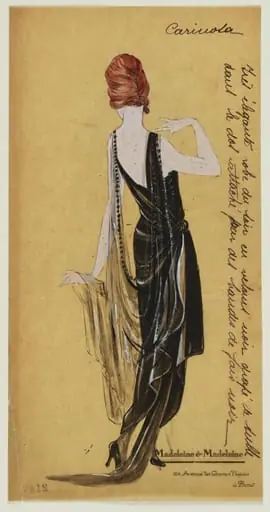
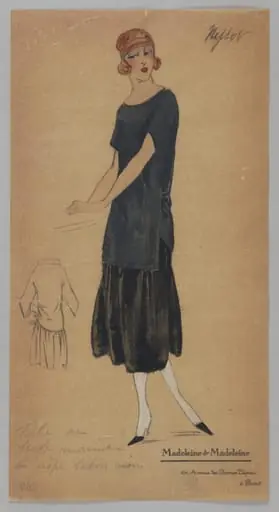
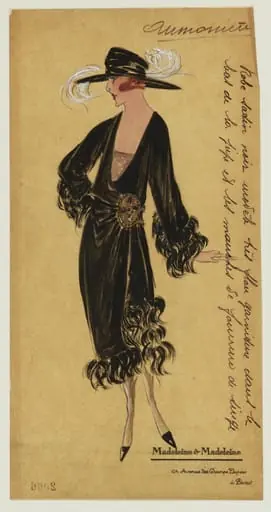
Created in 1924 by the design duo Madeleine & Madeleine, this sheet is a fashion sketch documenting an evening ensemble.
Created in 1924 by the design duo Madeleine & Madeleine, this sheet is a fashion sketch documenting an evening ensemble. It resides in the Museum of Ethnography as part of a collection focused on textile design and early 20th-century dress. The drawing combines visual representation with handwritten French technical terms, reflecting the precision and linguistic specificity of fashion ateliers of the period.
Subject & Meaning
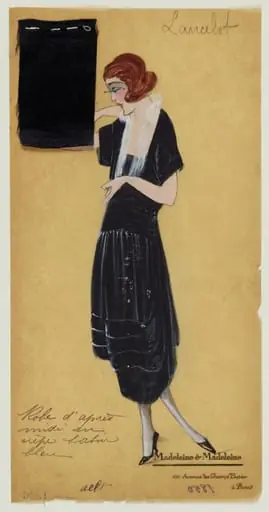
The figure depicted wears a structured black crepe skirt paired with a white velvet overdress, elaborately embroidered in black thread. The short, neat hairstyle and the folded black fabric in her hand suggest a modern, active woman of the 1920s. The outfit balances elegance with restraint, embodying the era’s shift toward streamlined silhouettes and refined ornamentation rather than excessive decoration.
Technique & Style
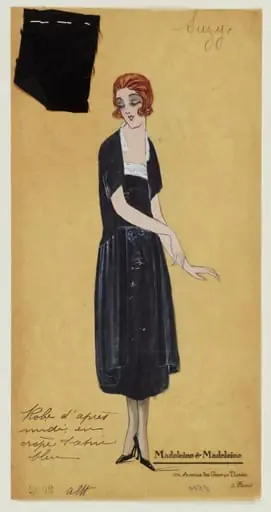
The sketch is rendered in ink with minimal shading, emphasizing clean lines and form. Handwritten annotations in French detail fabric types and construction elements, indicating its function as a working design document. A small fabric swatch pinned to the upper corner serves as a tactile reference, a common practice among designers to ensure color and texture accuracy in production.
History & Provenance
The work originates from the atelier of Madeleine & Madeleine, a lesser-known but active French fashion house in the early 1920s. It entered the Museum of Ethnography’s collection as part of a broader acquisition of design materials documenting interwar European fashion practices. Its survival as a single sheet suggests it was preserved for its technical rather than aesthetic value.
Context
In the 1920s, Parisian fashion houses increasingly emphasized fabric innovation and tailored simplicity. White velvet and black embroidery, as noted here, were favored for evening wear, offering contrast and texture without heavy embellishment. The inclusion of technical notes reflects the growing professionalization of fashion design, where precise documentation was essential for production teams.
Legacy
This sketch remains a rare artifact of a small design studio operating alongside major couture houses. It illustrates how fashion was conceived not only as art but as a craft requiring detailed planning. Today, it contributes to scholarly understanding of how textile choices and labeling practices shaped the production and perception of women’s clothing in postwar Europe.
Artist & collection
Artist
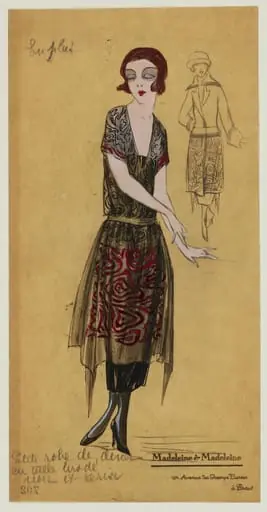
These artists left a small but striking set of 1924 drawings and designs that mix fashion and line.
Museum
Palais Galliera - Musée de la Mode de la Ville de Paris
Continue through works from the same source collection.