Artwork
Pour danser
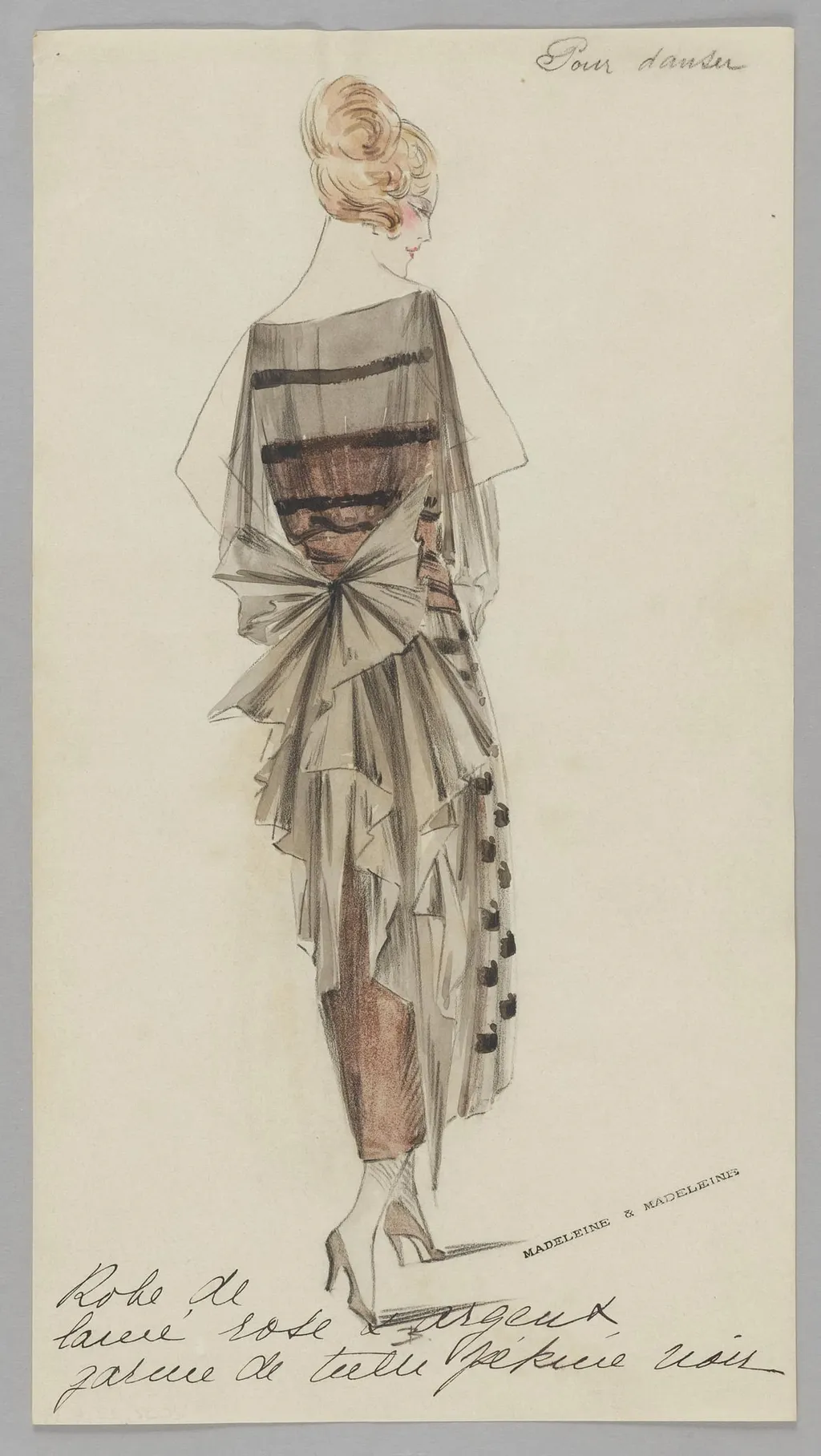
Pour danser is a drawing by Madeleine & Madeleine. It dates from 1924 and is held in the collection of the Palais Galliera - Musée de la Mode de la Ville de Paris.
About this work
Overview
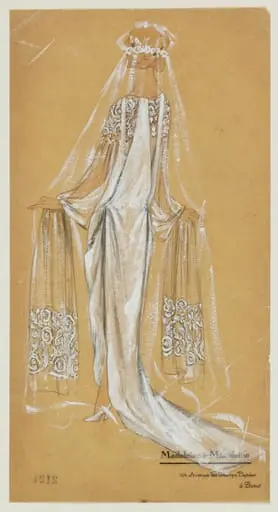
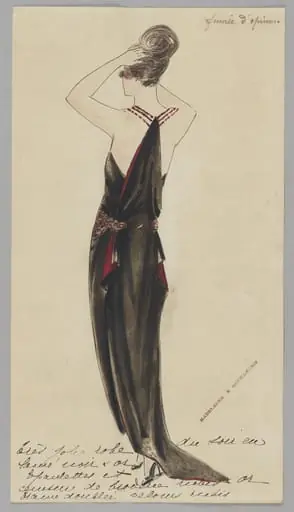
Created in 1924 by the design duo Madeleine & Madeleine, this garment sketch depicts a dance dress intended for performance.
Created in 1924 by the design duo Madeleine & Madeleine, this garment sketch depicts a dance dress intended for performance. Rendered in silver, pink, and black, it combines metallic lamé with black tulle pékiné, a fine lace with dotted patterns. The drawing emphasizes motion, capturing the dress’s structure as it would move with the body. It is held in the collection of the Museum of Ethnography as an example of early 20th-century theatrical costume design.
Subject & Meaning
The figure is shown from behind, suggesting a focus on the dress’s form rather than the wearer’s identity. The large waist bow and layered tulle imply theatricality and rhythm, aligning with dance traditions of the era. The title explicitly frames it as attire for movement, not everyday wear. The absence of facial features reinforces the garment as the central subject, highlighting design as expression rather than portraiture.
Technique & Style
The sketch uses precise linework to suggest the sheen of lamé and the transparency of tulle pékiné. Black dots on the overlay are rendered with delicate hatching, creating texture without color. The silhouette is streamlined, with attention to how fabric falls and drapes during motion. The palette—soft pink, metallic silver, and deep black—enhances the illusion of light reflecting off moving fabric, a key concern for stage costumes of the time.
History & Provenance
The work originates from the design practice of Madeleine & Madeleine, active in Paris during the 1920s, known for theatrical and avant-garde costumes. It entered the Museum of Ethnography’s collection as part of a broader effort to document fashion as cultural artifact. Its preservation reflects early institutional recognition of costume design as worthy of archival study, beyond mere clothing.
Context
In the 1920s, dance and performance arts were undergoing formal innovation, with choreographers and designers collaborating closely. This dress reflects the era’s fascination with lightweight, luminous materials that enhanced movement. The use of lamé and tulle pékiné aligns with trends in ballet and cabaret, where visual spectacle and physical agility were equally valued. The sketch serves as a bridge between fashion illustration and functional costume design.
Legacy
This drawing contributes to the historical record of how costume design evolved alongside modern dance. It illustrates the shift from ornamental fashion toward garments engineered for kinetic expression. Its preservation in an ethnographic museum underscores the growing academic interest in clothing as cultural practice. The work remains a reference for studies on textile, motion, and performance aesthetics of the interwar period.
Artist & collection
Artist
These artists left a small but striking set of 1924 drawings and designs that mix fashion and line.
Museum
Palais Galliera - Musée de la Mode de la Ville de Paris
Continue through works from the same source collection.