Artwork
Portrait of Gillis Hooftman (1521-81). Shipowner, and his wife Margaretha van Nispen (b 1545)
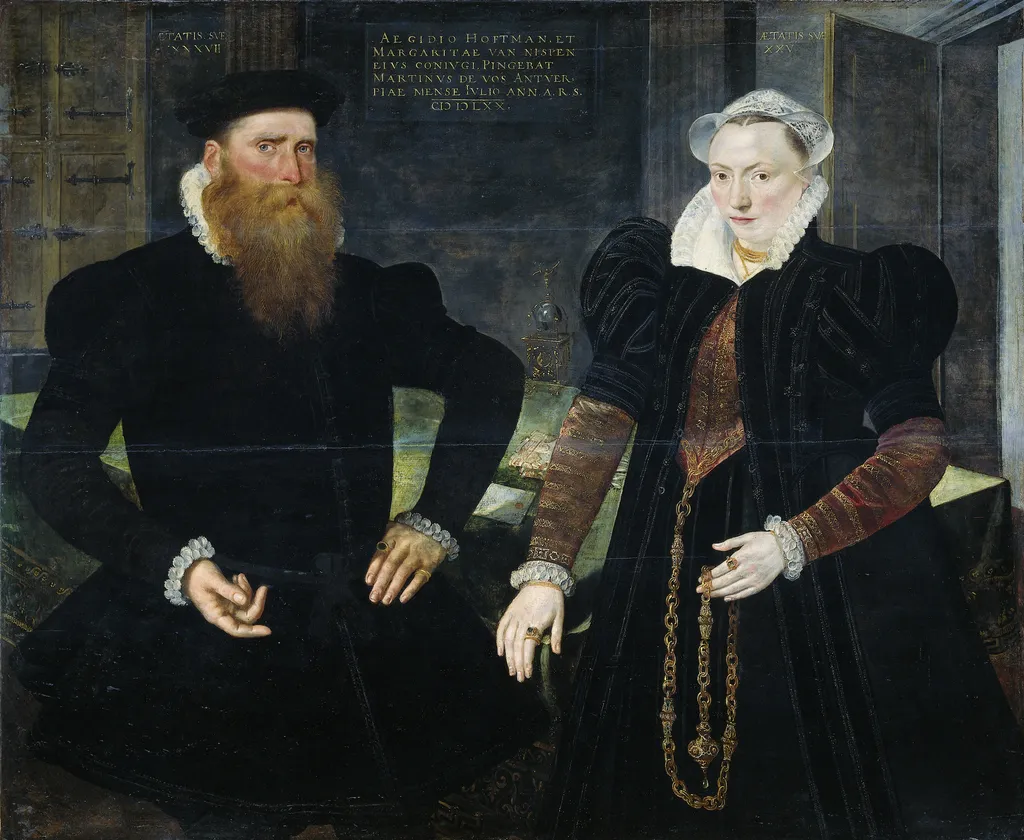
Portrait of Gillis Hooftman (1521-81). Shipowner, and his wife Margaretha van Nispen (b 1545) is an oil painting by the Northern Renaissance artist Maerten de Vos. It dates from 1570 and is held in the collection of the Rijksmuseum.
About this work
The woman has light skin, a white cap, and a dark dress with red sleeves and a gold chain.
This painting shows a man and woman standing side by side. The man has a long red beard and wears a black outfit with green sleeves. The woman has light skin, a white cap, and a dark dress with red sleeves and a gold chain. Both look straight ahead, their hands resting near their sides.
The woman’s gold chain is a small but rich detail, hinting at wealth. The painting was made in 1570 by Maerten de Vos.
Look up Maerten de Vos next to see more of his work.
Overview
Created in 1570, this oil painting by the Flemish artist Maerten de Vos presents a married couple from Antwerp’s mercantile elite. The work shows Gillis Hooftman, a prominent shipowner, standing beside his wife Margaretha van Nispen, both gazing directly at the viewer. Their attire and accessories convey their social standing within the bustling trade network of the late sixteenth‑century Low Countries.
Subject & Meaning
Gillis Hooftman is depicted with a long red beard, dressed in a black doublet accented by green sleeves, while Margareta wears a dark gown with red sleeves, a white cap, and a modest gold chain at her throat. The restrained yet affluent presentation reflects the values of the merchant class, emphasizing both prosperity and modesty in a period when personal virtue was often linked to commercial success.
Technique & Style
De Vos employs the precise brushwork and balanced composition typical of Northern Renaissance portraiture. The figures are rendered with careful attention to texture—silk, fur and metal are distinguished through subtle variations in light. The muted palette, punctuated by the vivid green and red accents, underscores the sitter’s status without resorting to overt flamboyance.
History & Provenance
The portrait was executed during de Vos’s mature period, when he was known chiefly for religious and allegorical scenes but also accepted commissions from Antwerp’s affluent patrons. The painting remained in the family’s possession for several generations before entering a public collection in the nineteenth century, where it continues to illustrate the city’s commercial heritage.
Own this work as a print
Artist & collection
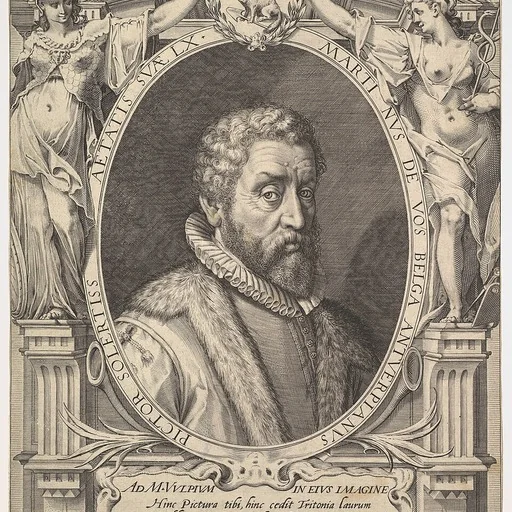
Artist
Maerten de Vos, Maerten de Vos the Elder or Marten de Vos (1532 – 4 December 1603) was a Flemish painter, known mainly for his history and allegorical paintings and portraits.