Artwork
Descent of the Cross
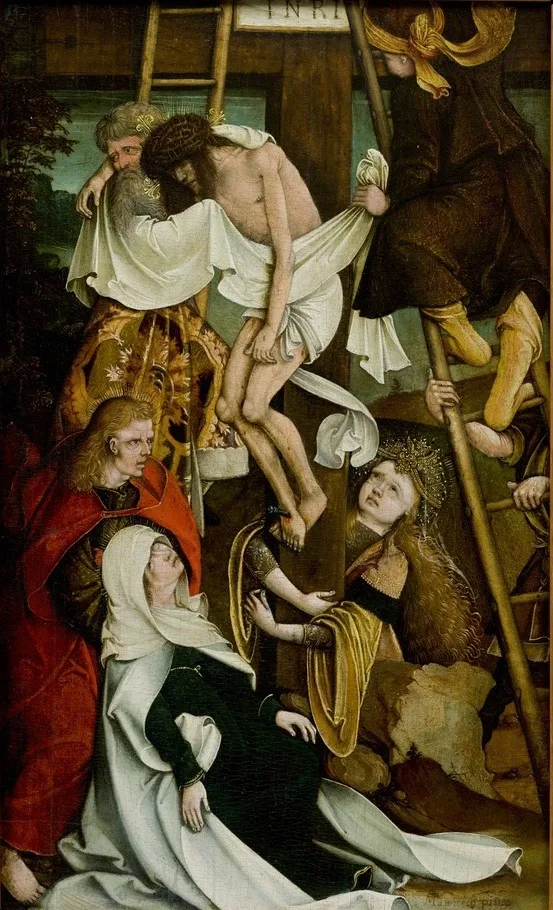
Descent of the Cross is an oil painting by the Northern Renaissance artist Mair von Landshut. It dates from 1500 and is held in the collection of the Bonnefanten Museum.
About this work
Overview
Mair von Landshut's *Descent of the Cross*, completed in 1500, is an oil painting from the Northern Renaissance. This work, now housed in the Rijksmuseum, portrays the solemn moment when Christ's body is taken down from the cross. The German artist, active in Bavaria, employed oil paint to render this significant religious narrative, characteristic of the period's devotional art.
Subject & Meaning
The painting depicts the somber aftermath of the crucifixion, with Jesus Christ's lifeless form carefully lowered from the cross.
The painting depicts the somber aftermath of the crucifixion, with Jesus Christ's lifeless form carefully lowered from the cross. His body, draped in white, is surrounded by mourners, including a figure on a ladder assisting the descent. The scene captures a pivotal moment in Christian theology, emphasizing the sorrow and reverence associated with Christ's sacrifice, a common theme in Northern European art.
Technique & Style
Executed in oil paint, the artwork demonstrates characteristics of Northern Renaissance painting. Mair von Landshut utilized a dark background to enhance the somber atmosphere of the scene. The application of chiaroscuro, a technique employing strong contrasts of light and shadow, creates a profound sense of depth and dramatic intensity, drawing the viewer into the emotional gravity of the event.
History & Provenance
Created in 1500 by Mair von Landshut, an artist primarily active in Bavaria between 1485 and 1504, this painting reflects the artistic output of the late 15th and early 16th centuries in the German-speaking lands. The work is presently part of the collection at the Rijksmuseum, where it represents an example of Northern Renaissance religious art.
Artist & collection

Artist
Mair von Landshut (active c. 1485–1504 or later) was a German engraver, painter, and designer of woodcuts, who worked in Bavaria. He probably came from Freising near Munich, and worked in both towns, as well as…
