Artwork
Polichinelle
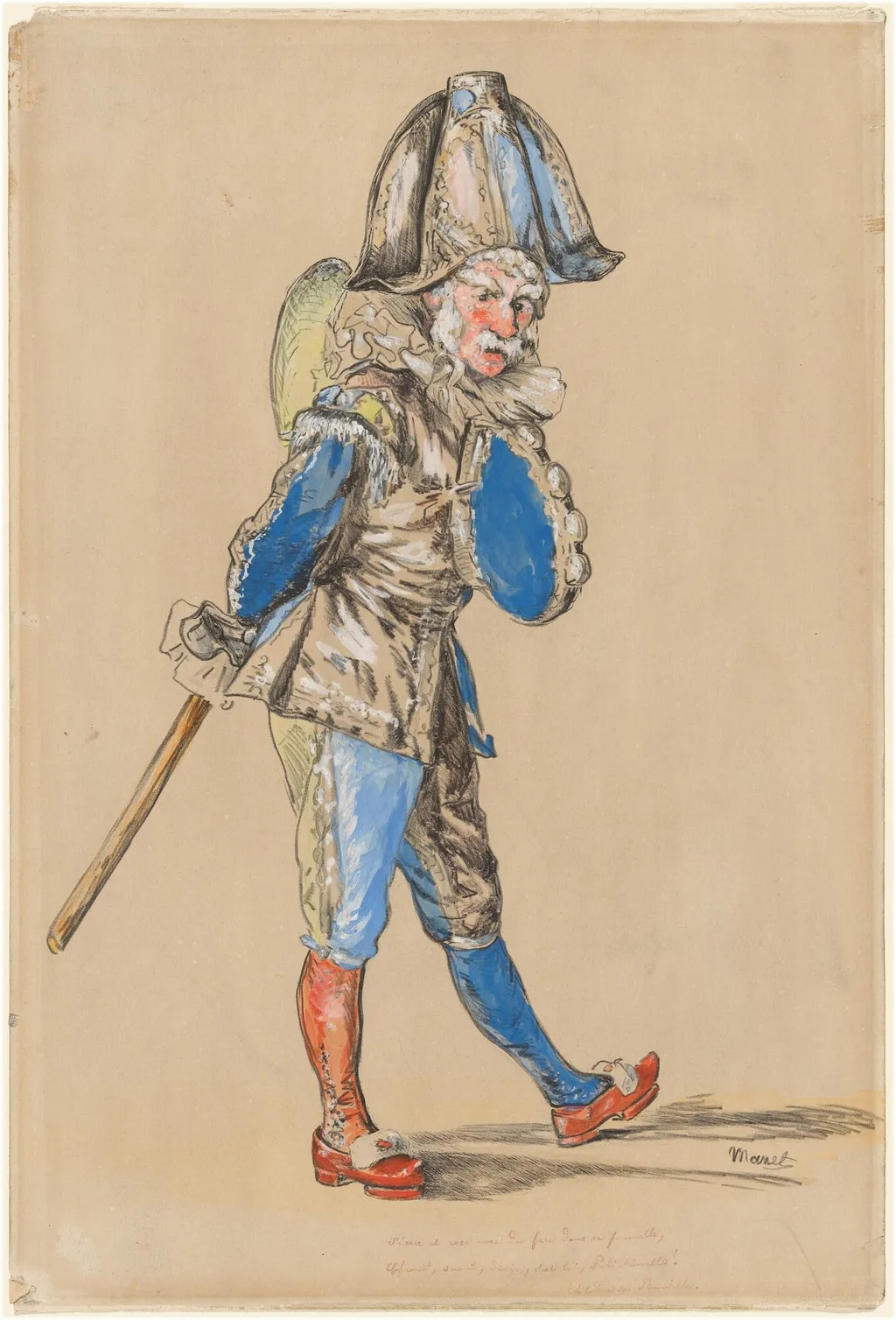
Polichinelle is a watercolor print by the Impressionist artist Edouard Manet. It dates from 1874 and is held in the collection of the National Gallery of Art.
About this work
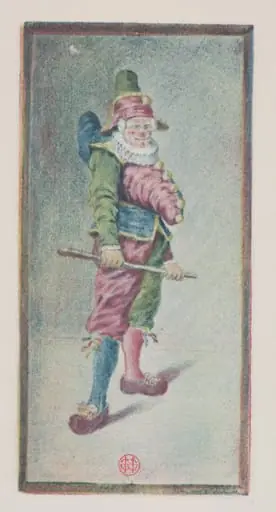
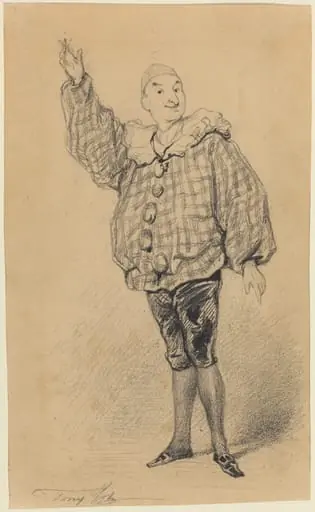
This print shows a white-faced clown in a white suit, arms out, grinning wide.
This print shows a white-faced clown in a white suit, arms out, grinning wide. It looks like a stage costume you'd see in a puppet show. The colors are soft but bright, like a child's toy.
Manet made this in 1874. It shows Pulcinella, a stock character from old Italian comedy. He's a trickster who often causes trouble but gets away with it.
This is a lithograph with watercolor. It's not a painting but a print. Look for it at the National Gallery of Art, Washington.
Overview
Created in 1874, Polichinelle is a hand-colored lithograph by Édouard Manet, produced on wove paper. Unlike his oil paintings, this work belongs to the print medium, combining lithographic ink with delicate applications of gouache and watercolor. The image captures a single figure in theatrical costume, rendered with soft yet vivid hues that suggest the artificiality of stage performance.
Subject & Meaning
The figure is Pulcinella, a traditional character from Italian commedia dell’arte known for his mischievous nature and white-painted face. Dressed in a loose white suit with exaggerated gestures, he embodies the trickster archetype—chaotic yet unpunished. Manet’s portrayal strips away narrative context, focusing instead on the mask-like persona, inviting reflection on performance, identity, and the boundaries between art and theater.
Technique & Style
Manet employed lithography to achieve a flat, graphic quality, then enhanced it with translucent watercolor and opaque gouache to add subtle tonal variation. The coloring is deliberate but restrained, avoiding realism in favor of a stylized, almost toy-like appearance. The lines are clean and the forms simplified, aligning with the character’s theatrical origins while retaining the spontaneity characteristic of Manet’s graphic work.
History & Provenance
Manet produced Polichinelle in 1874 during a period of intense experimentation with printmaking. It was likely made as a personal or limited edition work, not for commercial reproduction. The print entered the collection of the National Gallery of Art in Washington, D.C., where it remains part of the museum’s holdings of 19th-century graphic art, reflecting Manet’s engagement with popular culture and print media.
Context
In the 1870s, Manet turned increasingly to prints and drawings, drawn to their immediacy and accessibility. Pulcinella, a figure from centuries-old street theater, resonated with contemporary interest in folk traditions and the theatricality of modern life. Manet’s choice to depict this character aligns with broader cultural fascination with masquerade and the blurred lines between reality and performance in post-revolutionary France.
Legacy
Polichinelle stands as a quiet but significant example of Manet’s exploration beyond painting. It reveals his interest in the graphic arts and his ability to infuse popular imagery with psychological nuance. Though not widely exhibited during his lifetime, the work now contributes to scholarly understanding of how 19th-century artists engaged with vernacular culture through print.
Artist & collection

Artist
Édouard Manet didn’t have much time to make his mark—he died at 51—but he used every year.