Artwork
Arrangement - Hieroglyphics (Painting No. 2)
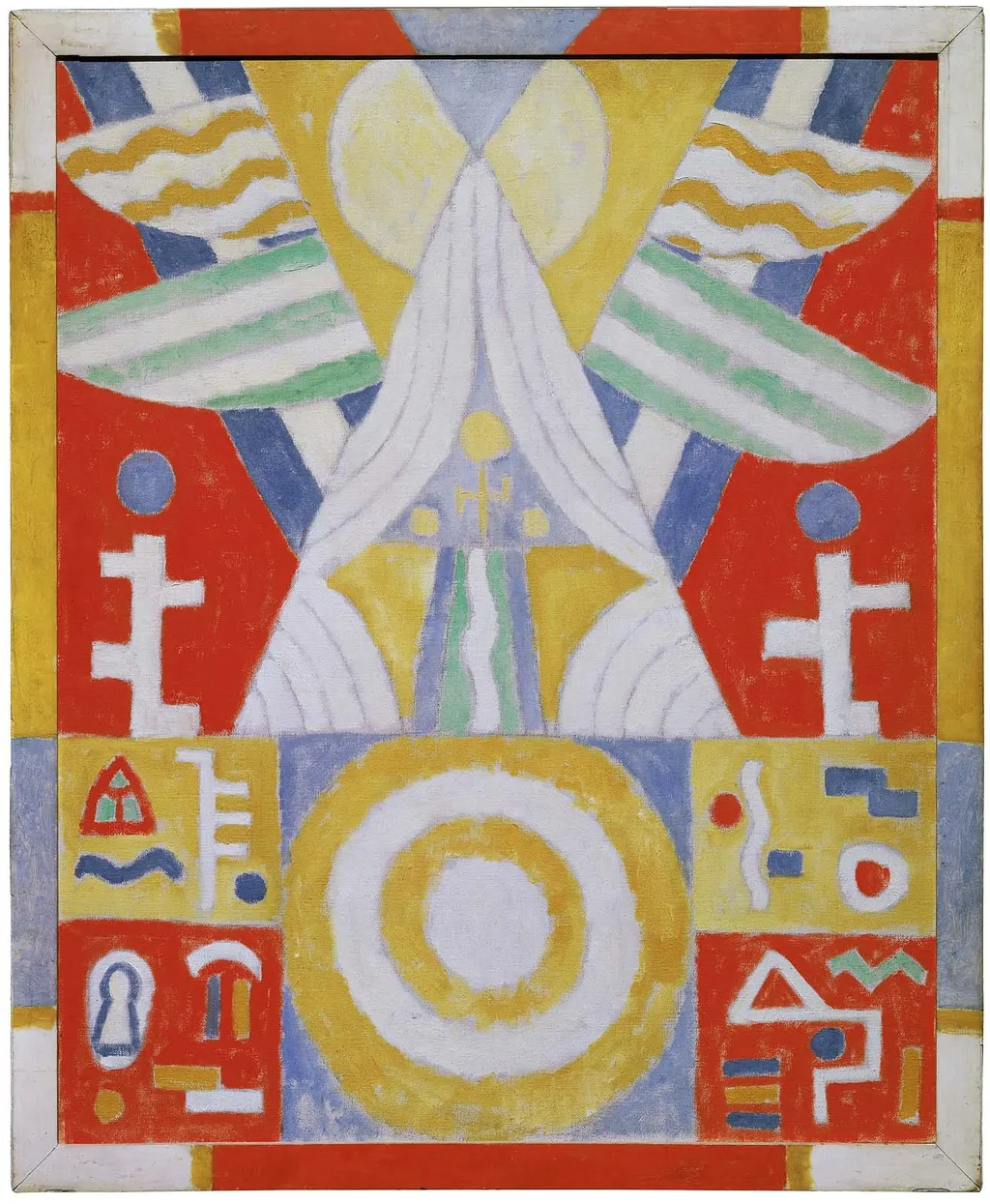
Arrangement - Hieroglyphics (Painting No. 2) is an oil painting by Marsden Hartley. It dates from 1914 and is held in the collection of the Museum of Fine Arts Boston. Created in 1914, Arrangement - Hieroglyphics (Painting No.
About this work
Overview
Its composition balances structured elements with expressive energy, reflecting Hartley’s engagement with European modernism during his time in Berlin.
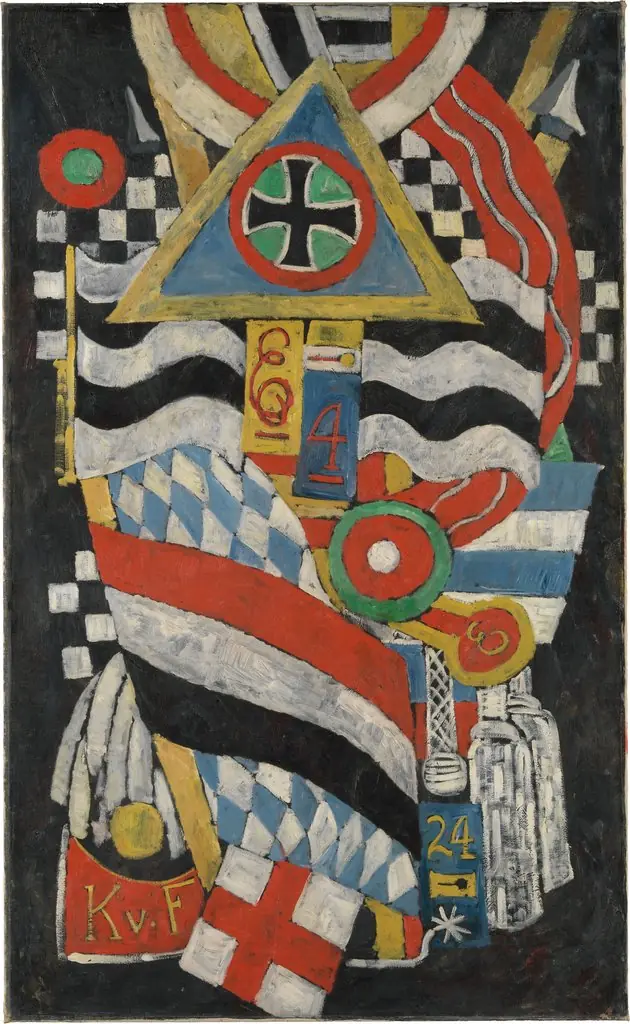
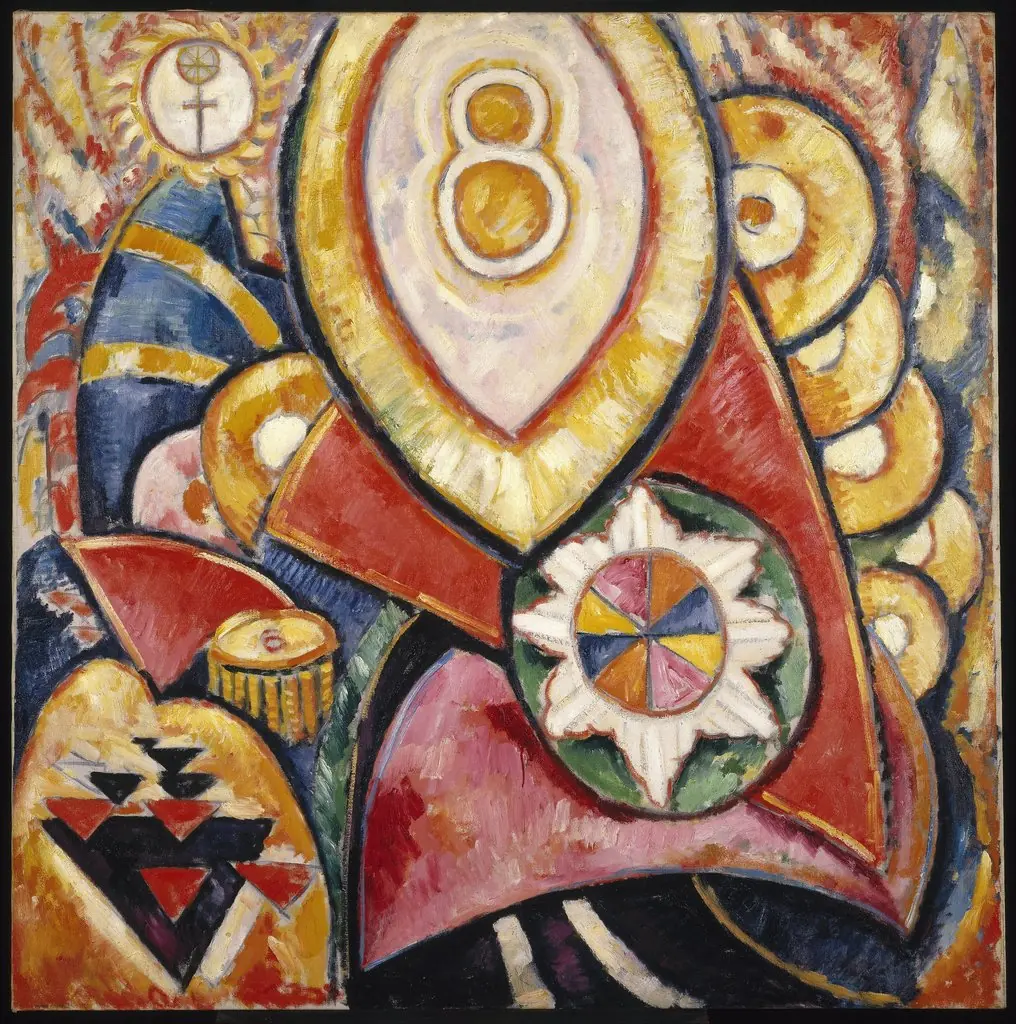
Created in 1914, Arrangement - Hieroglyphics (Painting No. 2) is an abstract oil painting by American artist Marsden Hartley. It resides in the collection of the Museum of Fine Arts, Boston. The work departs from literal representation, instead constructing a visual language from bold shapes and rhythmic lines. Its composition balances structured elements with expressive energy, reflecting Hartley’s engagement with European modernism during his time in Berlin.
Subject & Meaning
The painting evokes symbolic forms rather than depicting a specific narrative. A central white shape, resembling a stylized figure with outstretched arms, suggests a presence or emblem, possibly referencing religious or military iconography. Below, a grid of geometric signs—crosses, circles, and angular motifs—hints at coded communication or ritual markings. These elements together imply a personal mythology, blending spiritual and martial symbols Hartley encountered in pre-war Germany.
Technique & Style
Hartley applied oil paint with direct, assertive brushwork, emphasizing flat planes and sharp contours. The palette is dominated by red, yellow, and white, accented by muted blue and green, creating a sense of luminous tension. Forms are simplified into geometric units, arranged with rhythmic repetition. The composition avoids perspective, instead relying on layered shapes and contrasting hues to generate movement and spatial ambiguity, aligning with early abstract tendencies in modernist painting.
History & Provenance
Painted during Hartley’s stay in Berlin, the work emerged from his immersion in German military culture and avant-garde circles. It was likely completed before his return to the United States in 1915. The painting entered the Museum of Fine Arts, Boston’s collection in 1949 through a bequest, becoming one of the earliest American abstract works in their holdings. Its provenance reflects Hartley’s shifting artistic identity and the growing institutional recognition of modernist experimentation.
Context
Created on the eve of World War I, the painting responds to the militaristic symbolism and spiritual fervor Hartley observed in Berlin. His interest in Germanic iconography, including military medals and religious emblems, merged with influences from Cubism and Expressionism. Unlike European contemporaries, Hartley infused his abstractions with personal and cultural references, bridging the gap between European modernism and emerging American artistic voices seeking new forms of expression.
Legacy
Arrangement - Hieroglyphics (Painting No. 2) stands as an early example of American abstraction that prioritizes symbolic resonance over representation. It influenced later generations of artists exploring non-objective forms rooted in personal or cultural codes. Its presence in a major American museum helped legitimize abstract painting in the U.S. during a period when such work was still met with skepticism, cementing Hartley’s role in the transition toward modern American art.
Artist & collection

Artist
Marsden Hartley was an American Modernist painter, poet, and essayist. Hartley developed his painting abilities by observing Cubist artists in Paris and Berlin.