Artwork
The Dark Mountain
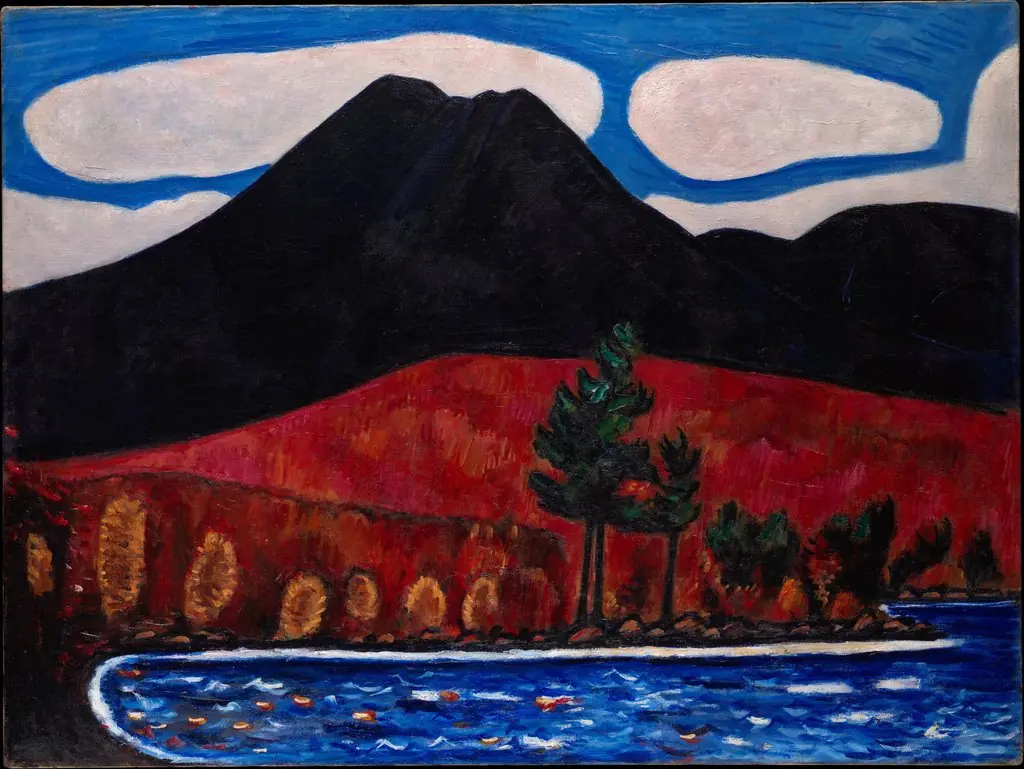
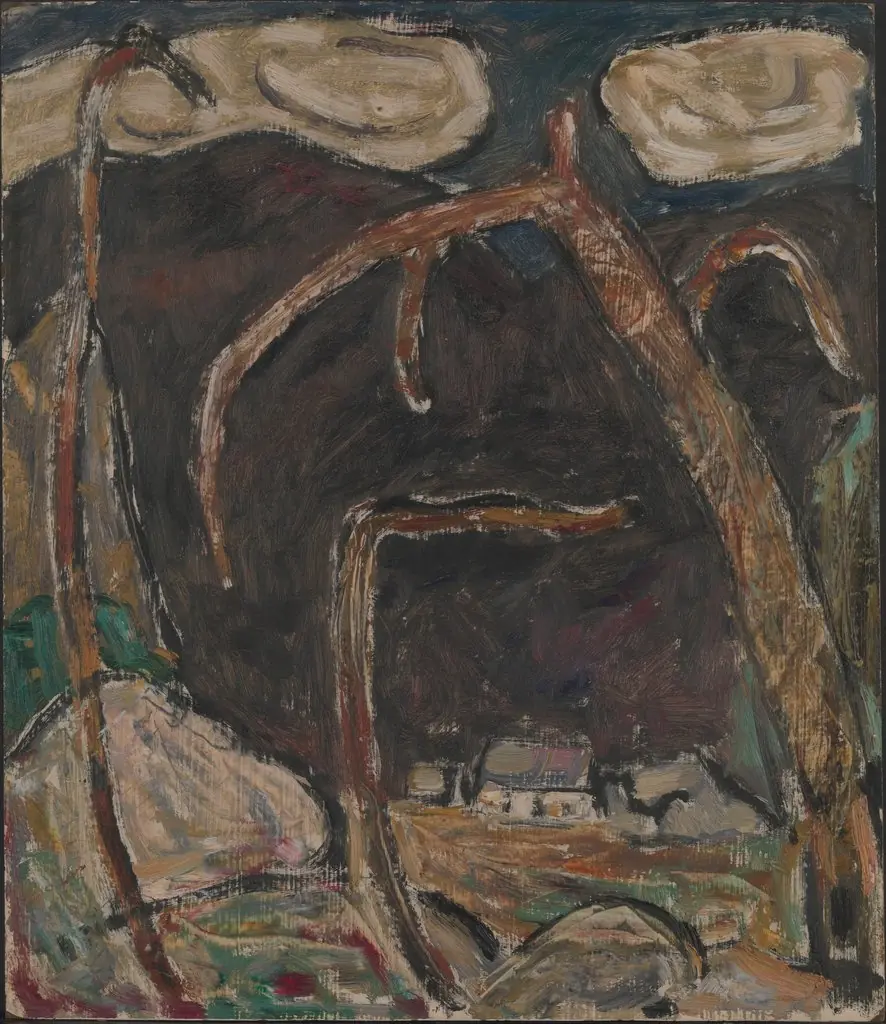
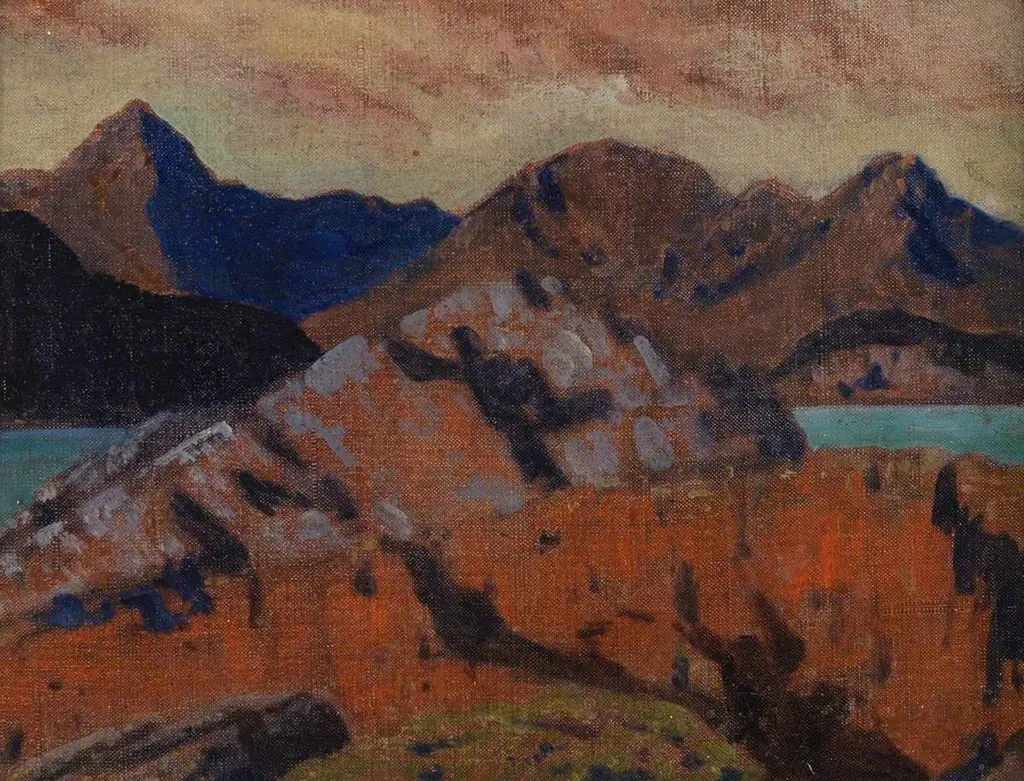
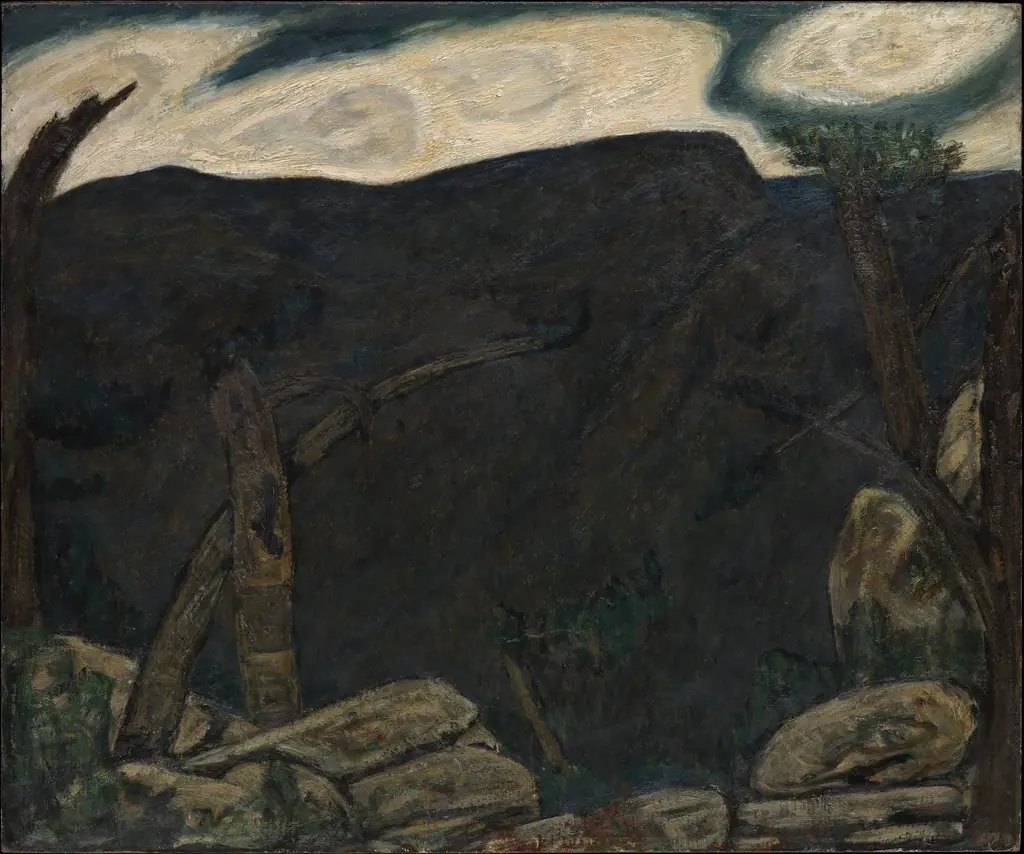
The Dark Mountain is an oil painting by the American Impressionist artist Marsden Hartley. It dates from 1909 and is held in the collection of the Art Institute of Chicago.
About this work
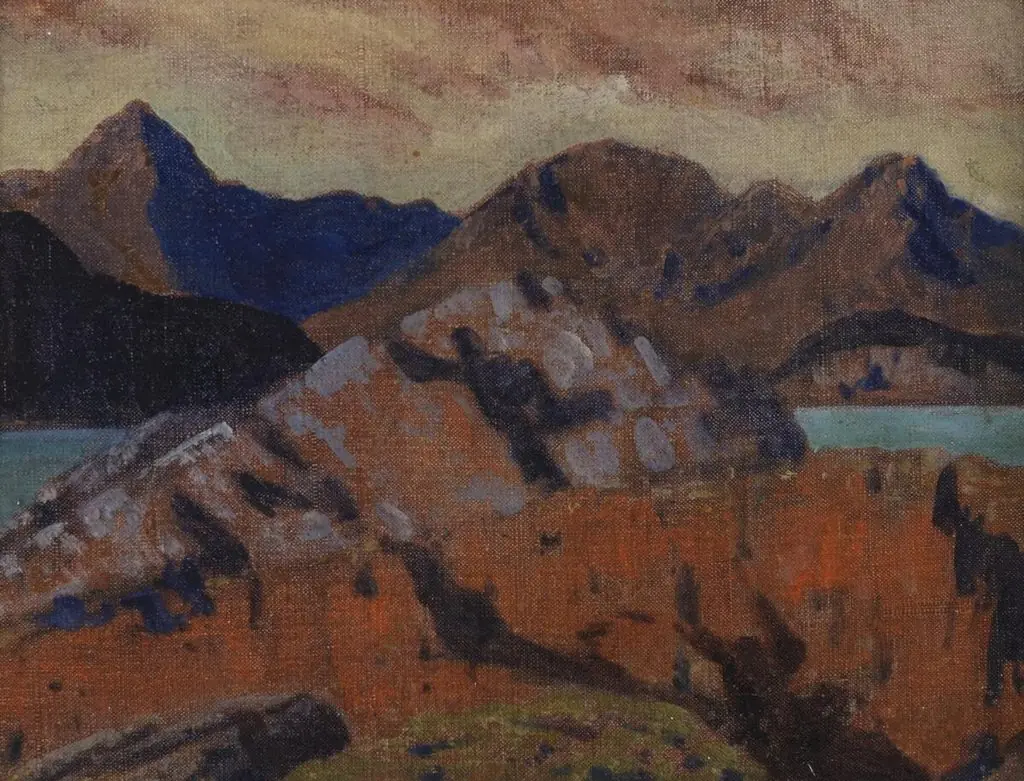
The colors are bold—cold blues and blacks, with red streaks that look like cracks or fire.
Hartley painted steep, jagged mountains against a dark sky. The colors are bold—cold blues and blacks, with red streaks that look like cracks or fire. You can almost feel the cold air.
This small board painting feels raw. Hartley made it in Maine, long before modern art took over. The shapes are simple but packed with energy.
See how thick the paint stands up in places? That’s called impasto. Look for the texture near the mountain peaks.
Painted in 1909, it hangs today at the Art Institute of Chicago.
Overview
Painted in 1909, The Dark Mountain is a small oil on composition board landscape by American artist Marsden Hartley. Created during his time in Maine, the work captures a rugged natural scene with intense emotional presence. Its compact size and direct handling reflect Hartley’s early experimentation with form and mood, predating his later association with modernist movements in Europe.
Subject & Meaning
The painting depicts a towering, angular mountain range under a brooding sky, devoid of human presence or conventional detail. The forms suggest geological power rather than literal representation, evoking isolation and elemental force. The streaks of red may imply geological fractures or inner tension, transforming the landscape into a psychological space rather than a topographical record.
Technique & Style
Hartley applied oil paint thickly in places, using impasto to build texture along the mountain ridges and sky edges. The palette is dominated by deep blues and blacks, punctuated by sharp crimson lines that cut through the darkness. Brushwork is energetic and unrefined, emphasizing physicality over realism. The composition reduces nature to essential shapes, prioritizing emotional resonance over descriptive accuracy.
History & Provenance
Created during Hartley’s formative years in Maine, the painting remained in his possession until it entered the collection of the Art Institute of Chicago. Its early date places it among his first mature works, made before his exposure to European avant-garde circles. The work’s survival and institutional acquisition reflect its significance in tracing the development of American modernism.
Context
In 1909, American art was still largely rooted in realism and tonalism. Hartley’s bold abstraction of natural forms stood apart, anticipating the expressive direction of modernism. Though not yet influenced by European movements like Cubism or Expressionism, The Dark Mountain reveals his instinctive move toward emotional intensity and structural simplification, setting him apart from his contemporaries.
Legacy
The Dark Mountain is recognized as an early indicator of Hartley’s unique voice in American modernism. Its raw energy and emotional depth influenced later artists seeking to convey inner experience through landscape. Though not widely exhibited in his lifetime, its presence in a major museum collection has cemented its role as a pivotal work in the transition from traditional to modern American painting.
Artist & collection

Artist
Marsden Hartley was an American Modernist painter, poet, and essayist. Hartley developed his painting abilities by observing Cubist artists in Paris and Berlin.