Artwork
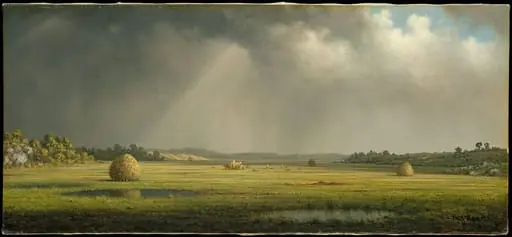
High Tide on the Marshes
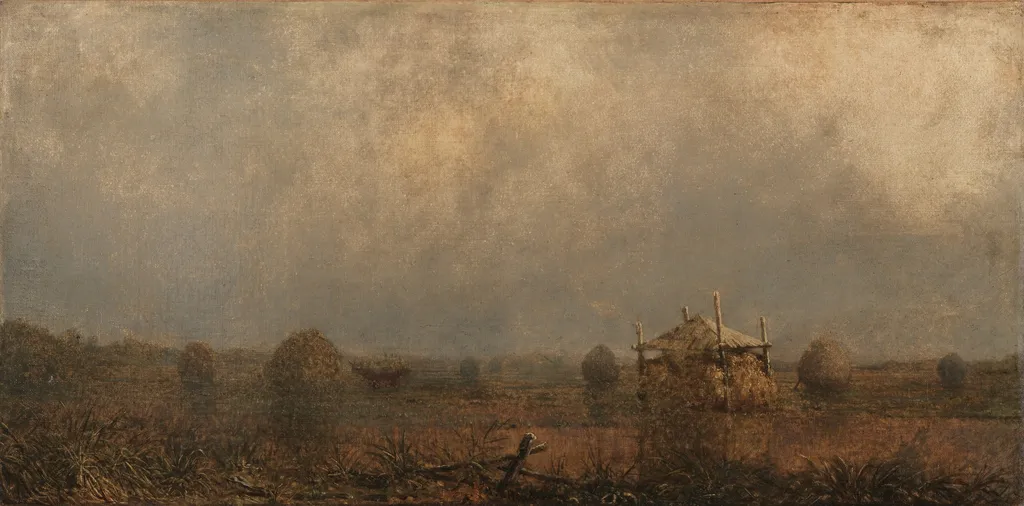
High Tide on the Marshes is an oil painting by the American Impressionist artist Martin Johnson Heade. It dates from 1872 and is held in the collection of the Cleveland Museum of Art.
About this work
Overview
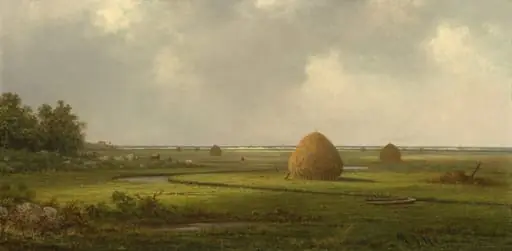
Created in 1872, *High Tide on the Marshes* is an oil painting by American artist Martin Johnson Heade. The work depicts a tranquil, expansive marsh at low light, its muted palette dominated by grays and faint earth tones. The composition stretches horizontally, emphasizing the flatness of the landscape and the subtle rise of a distant horizon.
Subject & Meaning
The scene presents a quiet tidal marsh, its surface dotted with dry grasses and sparse, leaf‑less shrubs. A modest thatched shelter sits near the right edge, suggesting human presence without disrupting the natural stillness. The overall atmosphere conveys a sense of solitude and the fleeting nature of the tide, inviting contemplation of the landscape’s quiet endurance.
Technique & Style
Heade employed delicate, layered brushwork characteristic of glazing, building thin washes of pigment to achieve a soft, atmospheric effect. The restrained color scheme and gentle transitions between sky, water, and land reflect an early American Impressionist approach, focusing on light and mood rather than detailed realism.
History & Provenance
After its completion, the painting entered the American art market and eventually became part of the Cleveland Museum of Art’s collection, where it remains on view. Its acquisition reflects the museum’s commitment to representing 19th‑century American landscape painting within its broader holdings.
Context
Heade’s marsh scenes diverge from the dominant romanticized vistas of his era, favoring a more observational, understated portrayal of the natural world. Working in the post‑Civil War period, he aligned with a growing interest among American artists in capturing local environments with a quieter, more empirical eye, laying groundwork for later Impressionist tendencies.
Artist & collection