Artwork
Lake George
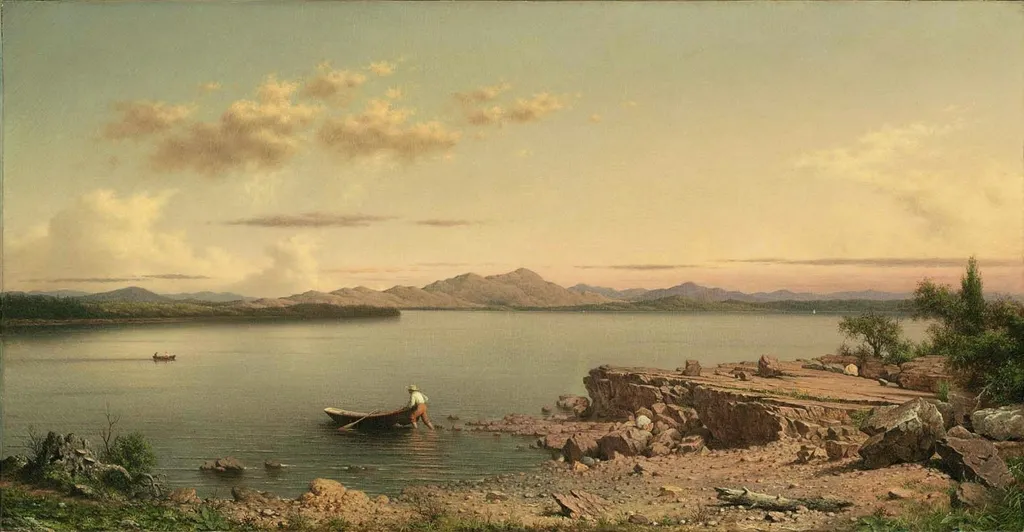
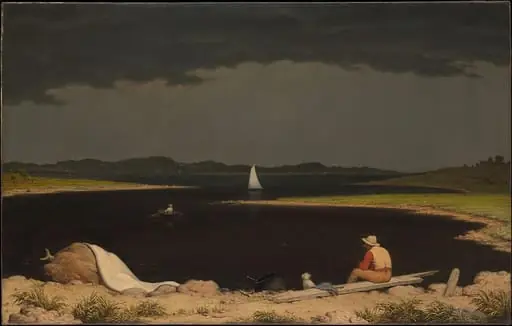
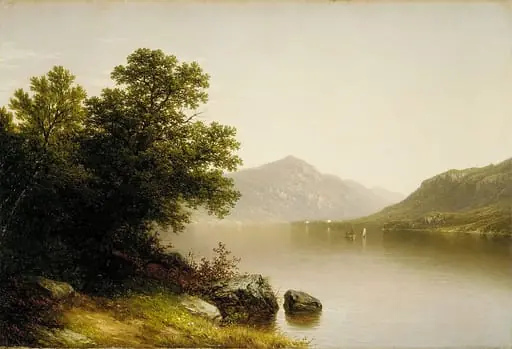
Lake George is an oil painting by the American Impressionist artist Martin Johnson Heade. It dates from 1862 and is held in the collection of the Museum of Fine Arts Boston.
About this work
Overview
This landscape captures a tranquil view of Lake George, featuring a small boat with a solitary figure.
Martin Johnson Heade, an American painter, completed *Lake George* in 1862 using oil paint. This landscape captures a tranquil view of Lake George, featuring a small boat with a solitary figure. Heade, known for his diverse subjects including landscapes, seascapes, and still lifes, often developed a distinctive style that diverged from the prevailing romantic trends of his era. The work is now part of the collection at the Museum of Fine Arts Boston.
Subject & Meaning
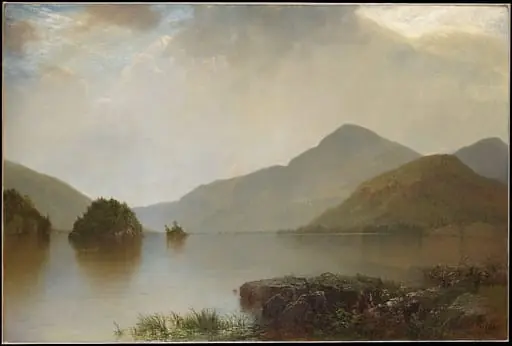
The painting presents a serene vista of Lake George, with calm waters mirroring the surrounding natural environment. In the foreground, a small boat drifts, its occupant leaning over the side, suggesting a moment of quiet contemplation or activity. Distant trees and mountains frame the scene under a sky dotted with clouds, contributing to an atmosphere of peacefulness. Heade's depiction emphasizes the stillness and reflective qualities of the natural world.
Technique & Style
Heade rendered *Lake George* with a palette that captures the natural beauty of the setting. He employed deep blues and greens for the water and foliage, contrasting them with warmer tones in the sky and distant mountains. This careful application of color, combined with the smooth surfaces and precise details, creates a sense of clarity and light. His approach here reflects a move away from the dramatic emotionalism often seen in contemporary Romantic landscapes, favoring a more observed and composed tranquility.
History & Provenance
Created in 1862, *Lake George* represents a significant work within Martin Johnson Heade's extensive output of American landscapes. The painting has since become a notable piece within a public institution. It is currently housed in the permanent collection of the Museum of Fine Arts Boston, where it contributes to the understanding of 19th-century American art and Heade's unique artistic trajectory.
Artist & collection