Artwork
York Harbor, Coast of Maine
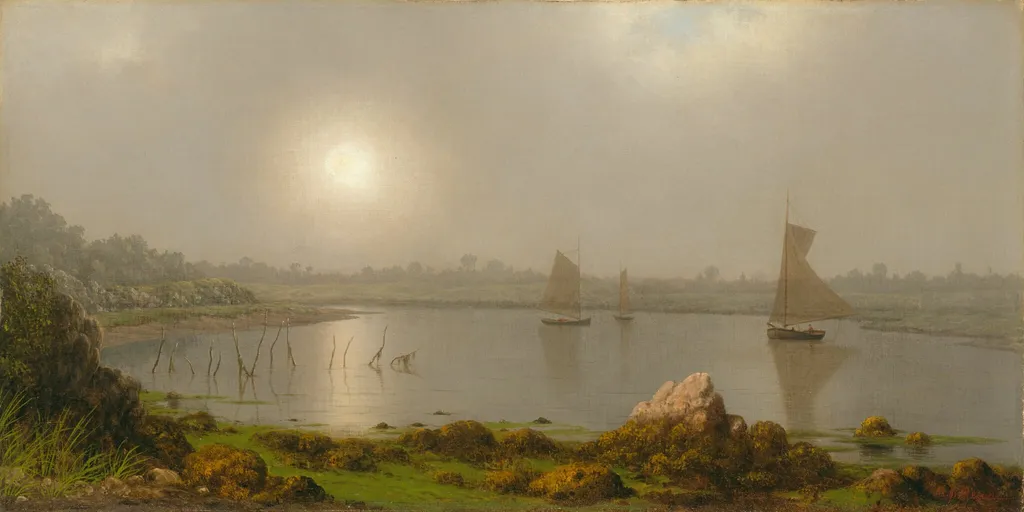
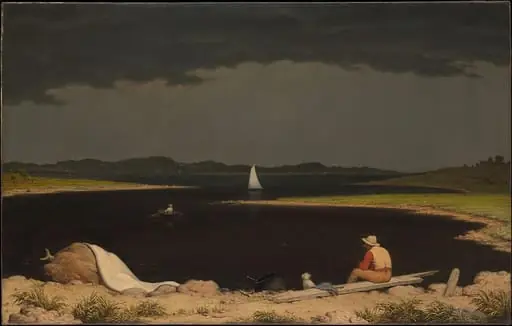
York Harbor, Coast of Maine is an oil painting by the American Impressionist artist Martin Johnson Heade. It dates from 1877 and is held in the collection of the Art Institute of Chicago.
About this work
Heade painted this in 1877 using tiny brushstrokes you can only see up close.
York Harbor, Coast of Maine shows calm water meeting the shore at dusk. Pale pinks and blues fade into the distance where a wooden pier juts out. Tiny sailboats dot the horizon like scattered toys.
Heade painted this in 1877 using tiny brushstrokes you can only see up close. The light feels soft and even, as if the sun glows from inside the canvas. It looks quiet enough to hear gulls cry over the water.
This scene proves Heade knew Maine’s coast well. Go see it at the Art Institute of Chicago.
Overview
York Harbor, Coast of Maine, executed in oil on canvas in 1877, depicts a tranquil seascape at twilight. The composition is arranged horizontally, showing calm water merging with a shoreline where a modest pier extends outward, while small sailboats punctuate the distant horizon. The palette softens into pale pinks and blues that recede into the sky, creating a sense of quiet evening.
Subject & Meaning
The painting captures a moment of stillness along Maine’s coast, emphasizing the gentle interaction of light and water at dusk. By presenting an unobtrusive horizon and muted activity, the work invites contemplation of nature’s quietude, reflecting a 19th‑century interest in the spiritual resonance of unspoiled landscapes.
Technique & Style
Heade employed a refined, almost invisible brushstroke, applying minute touches that coalesce only when viewed from a distance. The luminous quality arises from a diffuse, internalized light source, giving the scene an even, soft glow. The horizontal format and restrained detail align the work with the American Luminist approach, which prioritizes atmospheric clarity and calm composition.
History & Provenance
Created in the later phase of Heade’s career, the canvas entered the collection of the Art Institute of Chicago, where it remains on display. Its acquisition reflects the museum’s broader effort to represent American landscape painting of the post‑Civil War era.
Context
The painting emerged during a period when American artists were increasingly influenced by transcendental ideas that linked natural observation with philosophical reflection. Heade’s focus on the Maine shoreline parallels contemporary literary and philosophical currents that valued the contemplative experience of unaltered scenery.
Artist & collection



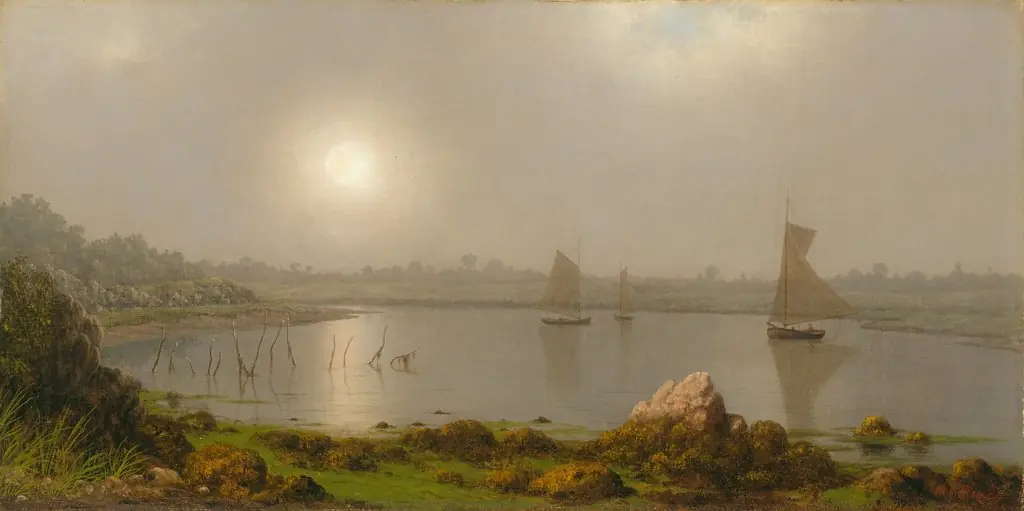 York Harbor, Coast of Maine
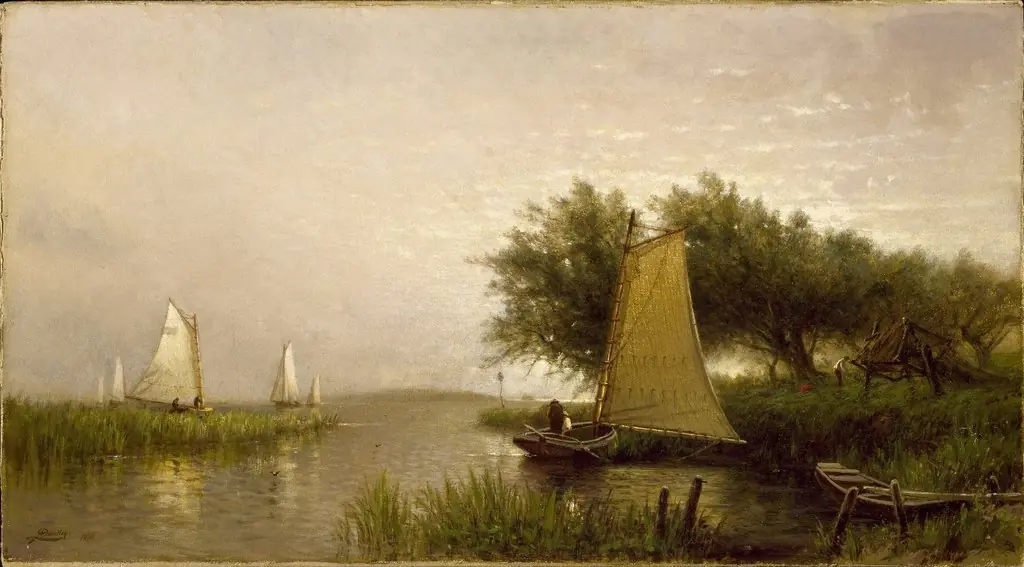 On Synepuxent Bay, Maryland
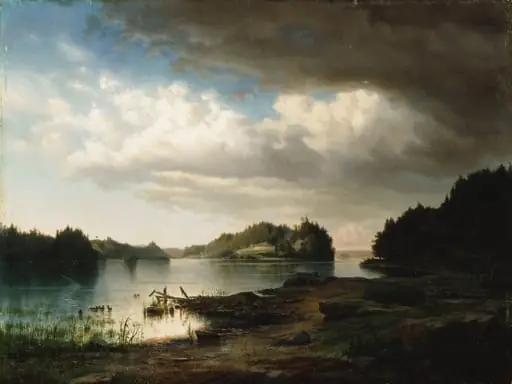 Suomalainen järvimaisema
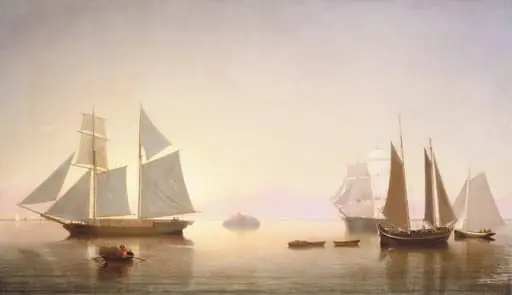 Becalmed off Halfway Rock
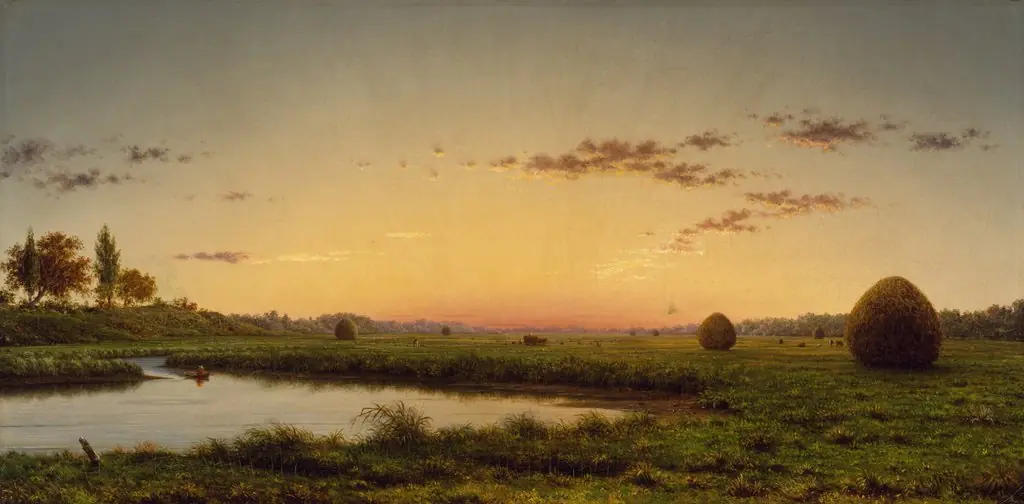 Haystacks on the Newburyport Marshes
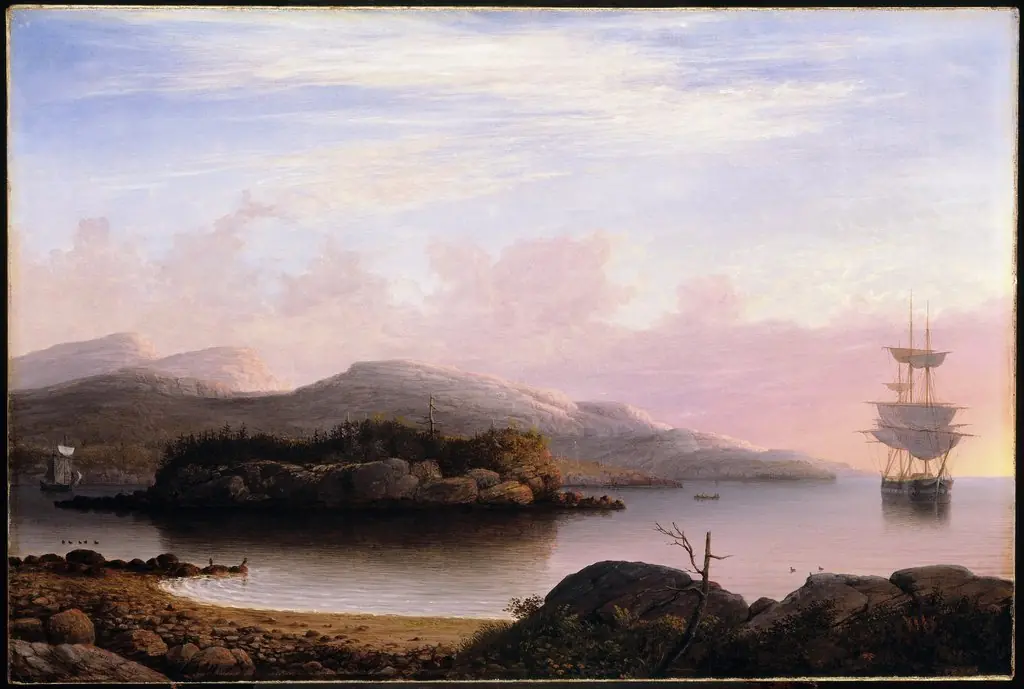 Off Mount Desert Island
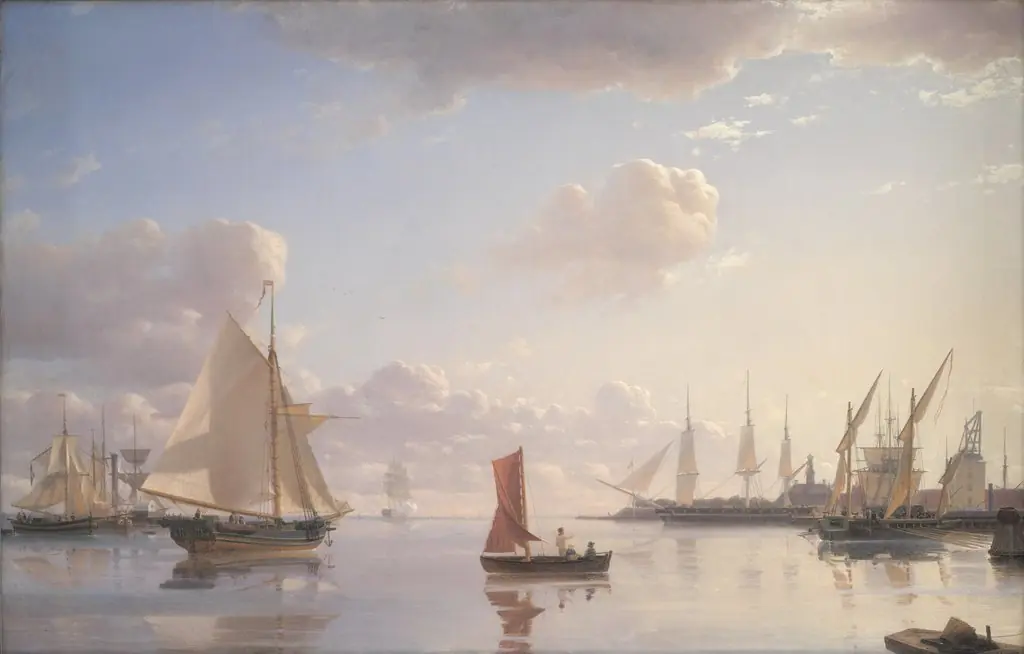 View from Langelinie towards the Royal naval Dockyards at Nyholm, Copenhagen. Morning Light
 View from Langelinie towards the Royal naval Dockyards at Nyholm, Copenhagen. Morning Light
 Stage Fort across Gloucester Harbor
 Sunset, Black Rock, Connecticut
 Summer Afternoon
 Lake George