Artwork
Monarosa, dochter van de schilder, als fruitverkoopster
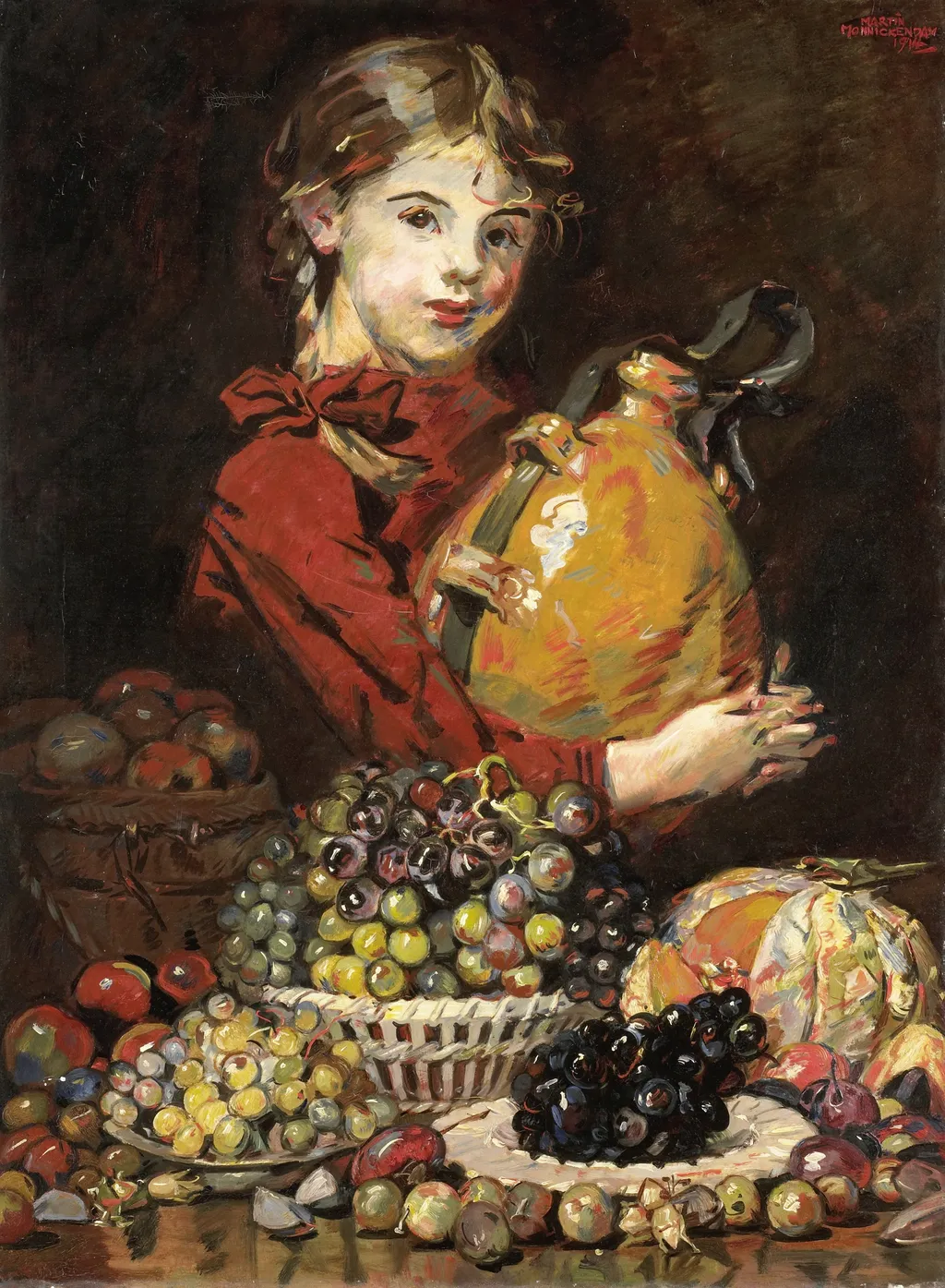
Monarosa, dochter van de schilder, als fruitverkoopster is an oil painting by the Impressionist artist Martin Monnickendam. It dates from 1914 and is held in the collection of the Rijksmuseum.
About this work
The paint looks thick in spots, especially on the fruit and her dress, giving it a textured, almost three-dimensional feel.
A girl in a bright red dress holds a yellow jug, her face turned toward us with a calm expression. Around her, a table is piled with fruit—apples, grapes, plums, and pears—spilling over in a messy, colorful heap. The paint looks thick in spots, especially on the fruit and her dress, giving it a textured, almost three-dimensional feel.
The artist’s signature is small and neat in the corner, dated 1912. The way the light hits her face and the dark background makes her stand out sharply.
Check out impasto to see how artists use thick paint for texture like this.
Overview
Monarosa, dochter van de schilder, als fruitverkoopster is an oil painting by Martin Monnickendam, dated 1912 (signature) and 1914 (creation year), featuring the artist's daughter Monarosa portrayed as a fruit vendor.
Subject & Meaning
The painting depicts Monarosa, the artist's daughter, in a fictional role as a fruit seller. Her calm expression and direct gaze engage the viewer, while the abundant fruit surrounding her emphasizes her assigned occupation.
Technique & Style
The work showcases a textured, impasto technique, particularly evident in the thick paint layers of the fruit and the subject's bright red dress. This impasto lends a nearly three-dimensional quality to these elements. The composition contrasts the subject's illuminated face with a dark, nondescript background, heightening her visual prominence.
History & Provenance
Created in 1914 and signed in 1912, the painting is part of the Rijksmuseum's collection, though the specifics of its acquisition are not detailed here.
Context
While the broader artistic context of the time (early 20th century) saw various movements, this work's style suggests a blend of traditional representation with expressive, textured brushwork, common in early modern European painting.
Legacy
The painting's legacy is marked by its presence in the Rijksmuseum, indicating its recognized value within Dutch cultural heritage, though its broader influence on art history is not explicitly outlined in the provided details.
Own this work as a print
Artist & collection