Artwork
Explosion at Antwerp of Dutch Gunboat No. 2, Commanded by Jan van Speyk, 5 February 1831
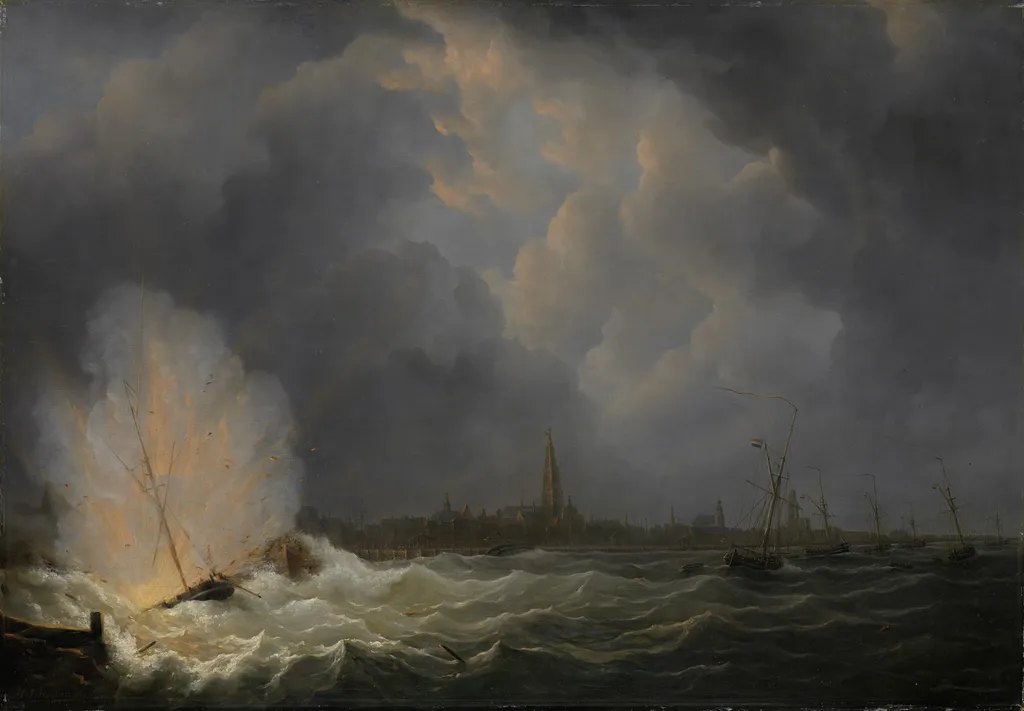
Explosion at Antwerp of Dutch Gunboat No. 2, Commanded by Jan van Speyk, 5 February 1831 is an oil painting by Martinus Schouman. It dates from 1832 and is held in the collection of the Rijksmuseum.
About this work
Overview
Martinus Schouman's 1832 oil painting, Explosion at Antwerp of Dutch Gunboat No. 2, Commanded by Jan van Speyk, 5 February 1831, captures a pivotal maritime event in a dramatic seascape. The work is part of the Rijksmuseum's collection.
Subject & Meaning
The painting depicts the explosive demise of the Dutch Gunboat No. 2 under Commander Jan van Speyk during the Belgian Revolution. The contrast between the chaotic, flaming vessel and the serene, smoke-veiled Antwerp skyline suggests a narrative of both immediate danger and contained impact.
Technique & Style
Schouman employed thick, expressive brushstrokes to animate the fire and smoke, leveraging chiaroscuro to heighten drama through the juxtaposition of intense light from the flames against dark, stormy clouds.
History & Provenance
Created in 1832, just a year after the event, the painting reflects a contemporary response to the explosion. It has been preserved in the Rijksmuseum, ensuring its availability for historical and artistic study.
Context
The painting is set against the backdrop of the Belgian Revolution (1830-1831), where the explosion of the gunboat was a significant, symbolic act of resistance by Commander van Speyk against the Belgian forces.
Own this work as a print
Artist & collection

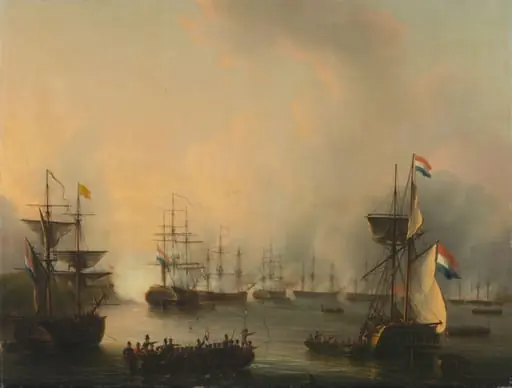 The Bombardment of Palembang, Sumatra, 24 June 1821
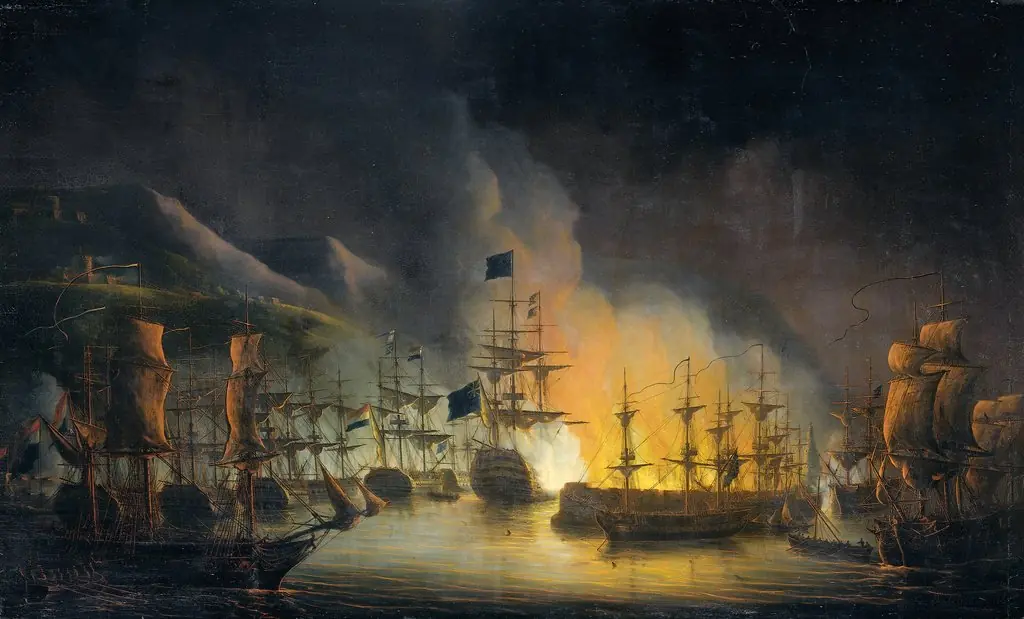 Bombardment of Algiers, in Support of the Ultimatum to Release White Slaves, 26-27 August 1816
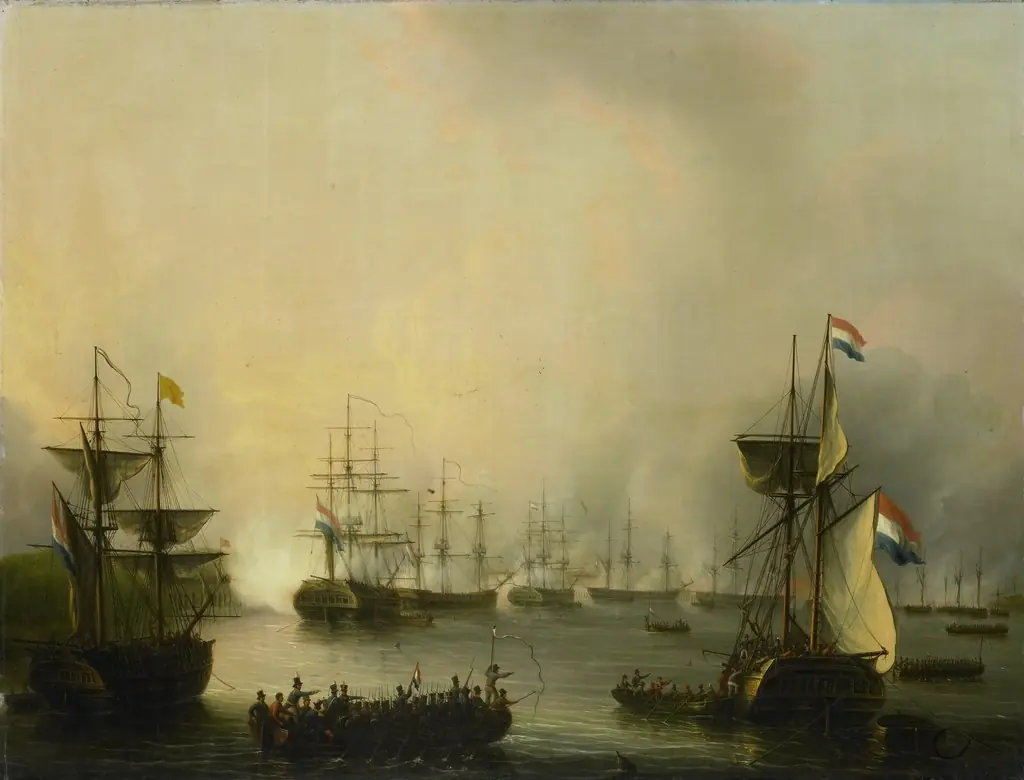 Bombardment of Palembang, Sumatra, by the Dutch Fleet, 24 June 1821
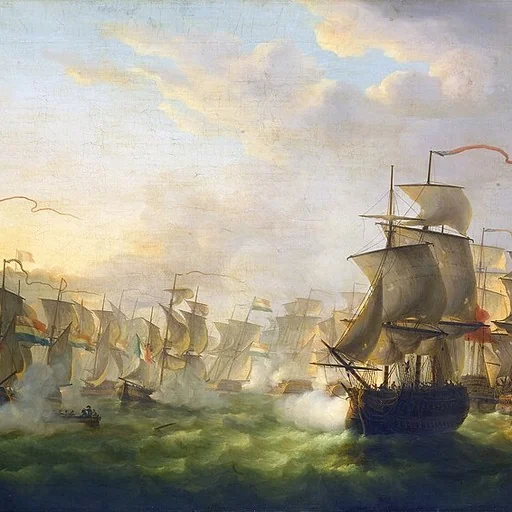
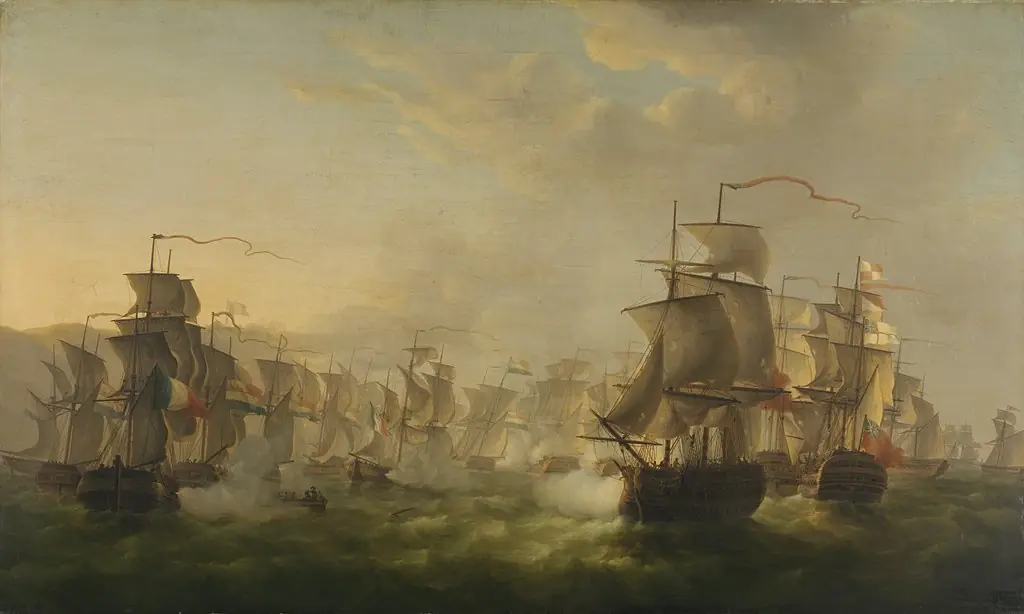 The Encounter of the Dutch and the English Fleet during the Voyage of the Dutch Flotilla to Boulogne, 1805