Artwork
Damask Rose
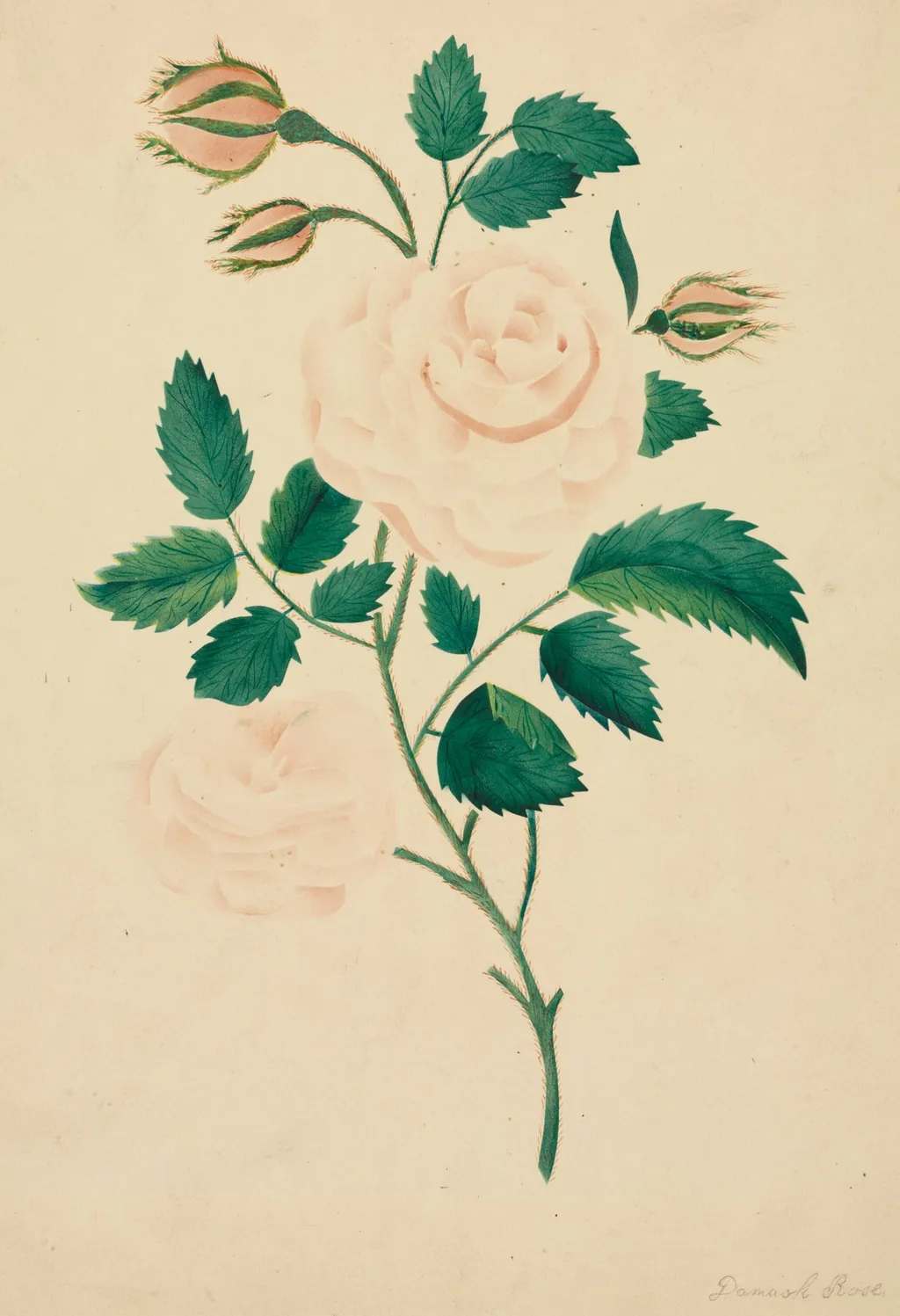
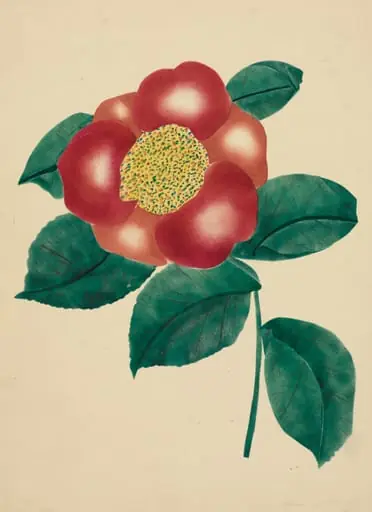
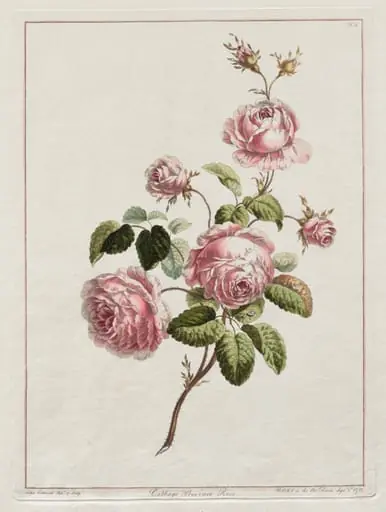
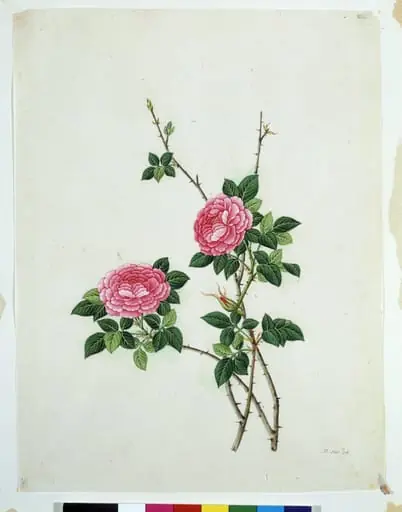
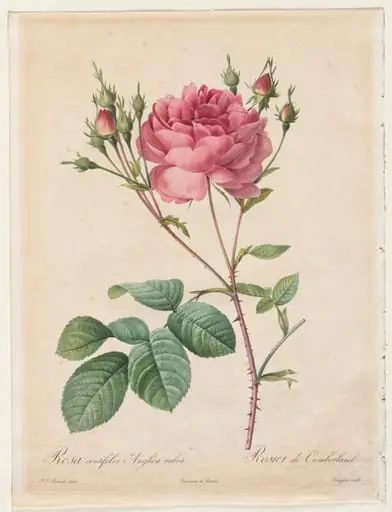
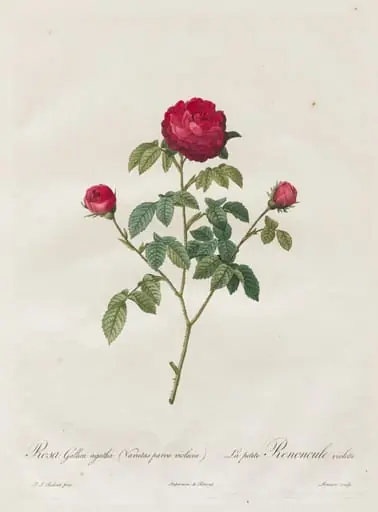
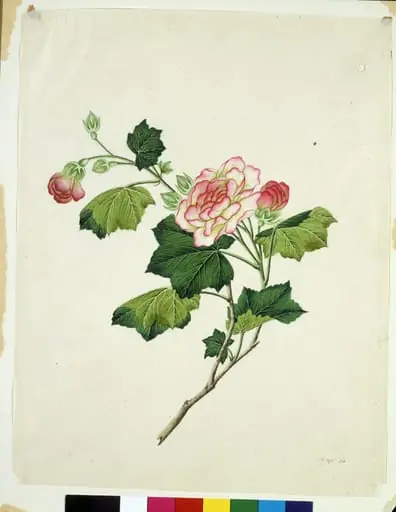
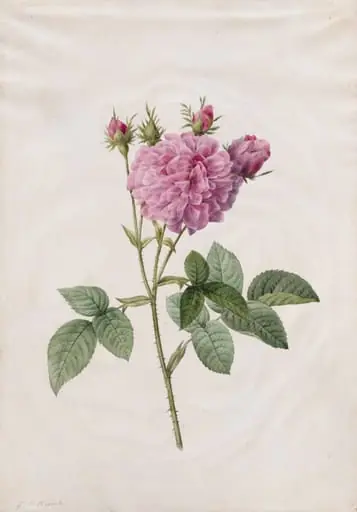
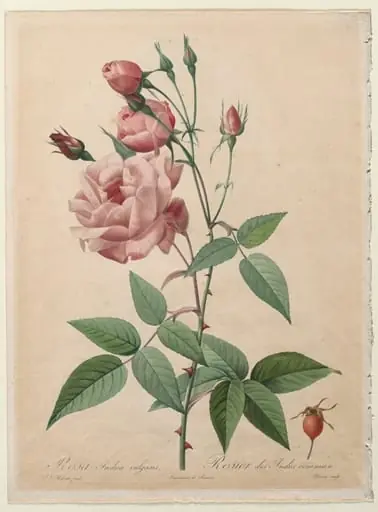
Damask Rose is a drawing by the Romanticist artist Mary Altha Nims. It dates from 1804 and is held in the collection of the Cleveland Museum of Art.
About this work
Overview
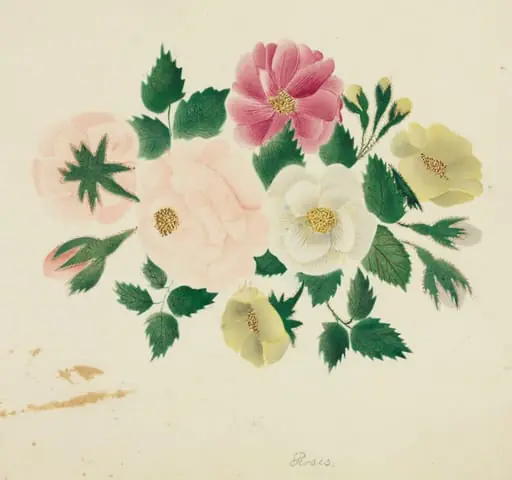
Executed in delicate pencil and watercolor, it depicts a single rose with subtle tonal gradations against a deep, unmodulated background.
Damask Rose is a botanical drawing by Mary Altha Nims, dated around 1804. Executed in delicate pencil and watercolor, it depicts a single rose with subtle tonal gradations against a deep, unmodulated background. The work is part of the collection at The Cleveland Museum of Art, where it reflects the quiet precision characteristic of early 19th-century American botanical illustration by women artists.
Subject & Meaning
The subject is a single damask rose, rendered with attention to its natural form and texture. Its soft, folded petals and single curled leaf suggest a moment of stillness, as if caught in the transition between bloom and decay. The absence of context or companion elements focuses attention on the flower’s intrinsic beauty, aligning with contemporary ideals of nature as a subject worthy of quiet contemplation.
Technique & Style
Nims employed fine pencil lines and translucent watercolor washes to model the rose’s form, creating a sense of volume without heavy shading. The petals appear luminous against the dark ground, achieved through careful left-to-right gradation of tone. The leaf’s curl is rendered with minimal but precise strokes, emphasizing tactile realism. The technique reflects academic training in natural history illustration, prioritizing accuracy over ornamentation.
History & Provenance
The drawing entered The Cleveland Museum of Art’s collection through documented acquisition, though its earlier ownership remains unrecorded. It is among the few surviving works by Mary Altha Nims, whose output was largely domestic and private. Its preservation suggests it was valued within her circle, possibly as a personal study or gift, rather than a public exhibition piece.
Context
In early 19th-century America, women artists often turned to still life and botanical subjects due to social restrictions on formal artistic training and public display. Botanical drawing was considered an appropriate, refined pursuit, blending scientific observation with aesthetic sensitivity. Nims’s work fits within this tradition, where nature served both as subject and socially acceptable medium for artistic expression.
Legacy
Damask Rose stands as a quiet testament to the skill of women artists working within constrained cultural boundaries. While Nims’s broader oeuvre is limited in surviving examples, this drawing contributes to the recognition of early American botanical art as a serious, if understudied, field. It continues to be referenced in scholarship on gender and artistic practice in the early republic.
Artist & collection