Artwork
Morning Mists
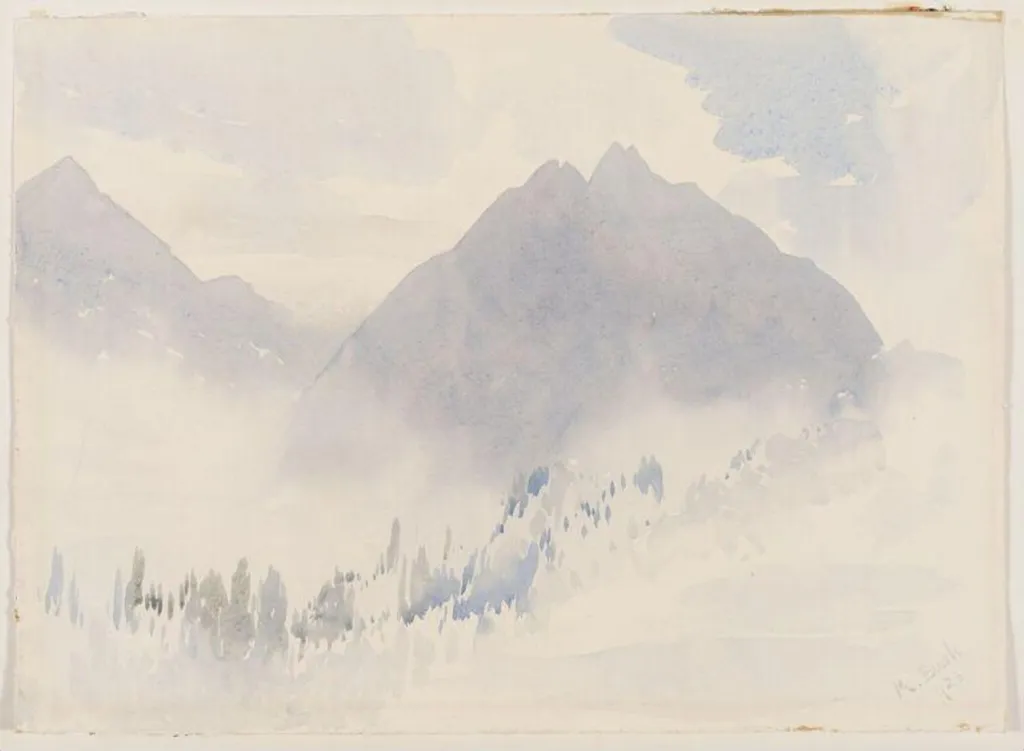
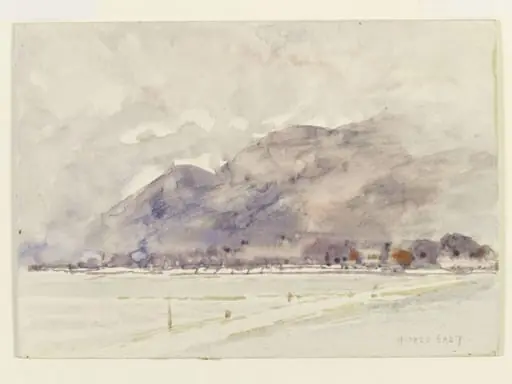
Morning Mists is a watercolor work on paper by the Impressionist artist Mary Busk. It dates from 1923 and is held in the collection of the Victoria and Albert Museum.
About this work
Overview
The medium’s transparency allows the paper’s texture to contribute to the overall atmosphere, reinforcing the sense of quiet and stillness.
Mary Busk created *Morning Mists* in 1923 using watercolour on paper. The work is signed and dated by the artist, confirming its origin and timing. It captures a tranquil landscape at daybreak, where natural elements dissolve into one another through delicate washes. The medium’s transparency allows the paper’s texture to contribute to the overall atmosphere, reinforcing the sense of quiet and stillness.
Subject & Meaning
The painting depicts a distant mountain range veiled in early morning fog, with a narrow band of dark trees anchoring the foreground. There is no human presence or narrative detail—only the subtle interplay of land, sky, and mist. The absence of sharp forms suggests a moment of transition, evoking the ephemeral quality of dawn and the quiet solitude of nature before the day begins.
Technique & Style
Busk employed thin, layered watercolour washes to build subtle tonal shifts, allowing the white of the paper to suggest light and haze. Brushwork is fluid and unstructured, with no defined outlines or hard edges. The technique prioritizes atmosphere over detail, relying on the natural bleeding of pigment to mimic the soft diffusion of mist. This approach reflects a sensitivity to light and moisture inherent in the watercolour medium.
History & Provenance
The painting was completed in 1923 and has remained in private or institutional collections since. While its early ownership is not publicly documented, it is now held by the Victoria and Albert Museum, where it is preserved as part of a broader collection of British watercolours from the early 20th century. Its inclusion there reflects its alignment with the period’s interest in lyrical landscape expression.
Context
Created during a time when British watercolourists were redefining the medium beyond topographical precision, *Morning Mists* aligns with a trend toward impressionistic, mood-driven landscapes. Artists like Busk moved away from detailed realism, embracing instead the emotional resonance of light and atmosphere. This shift paralleled broader artistic movements seeking to capture transient sensory experiences over static representation.
Legacy
Though not widely known outside specialist circles, Busk’s work contributes to the understated legacy of early 20th-century women watercolourists who expanded the expressive potential of the medium. *Morning Mists* remains a quiet example of how simplicity and restraint in technique can convey profound stillness. Its preservation in a major museum ensures its place within the evolving narrative of British watercolour tradition.
Artist & collection
Artist
Mary Busk painted quiet landscapes in watercolour during the 1920s. She left two small works behind: Morning Mists (1923) shows layered hills dissolving in pale light, while The Gate of the Desert wraps a sun-bleached…

 In the Alps
 Untitled
 Derwentwater
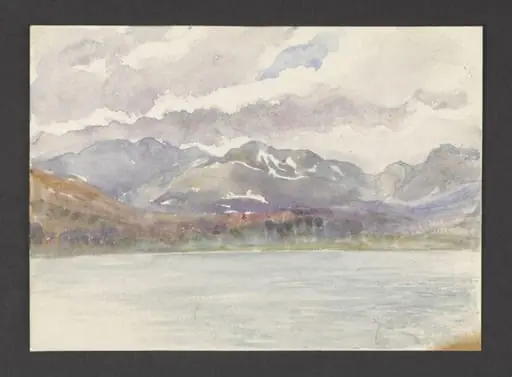 View of mountains including the Langdale Pikes
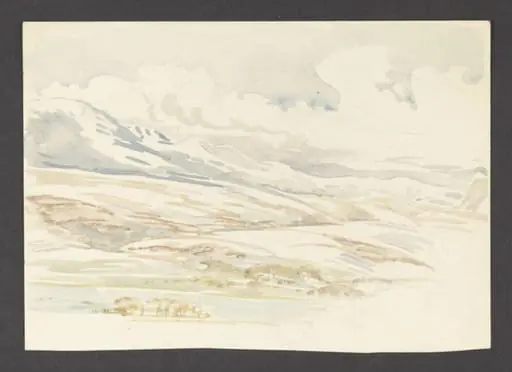 Landscape with hills under snow and a lake
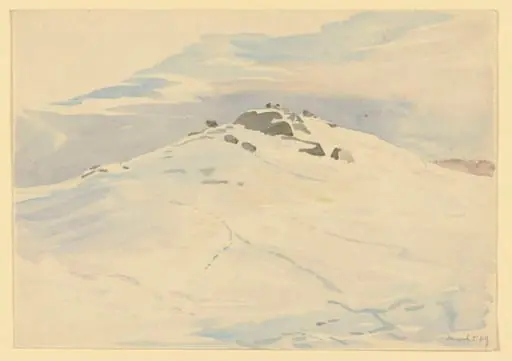 Hill-top under snow
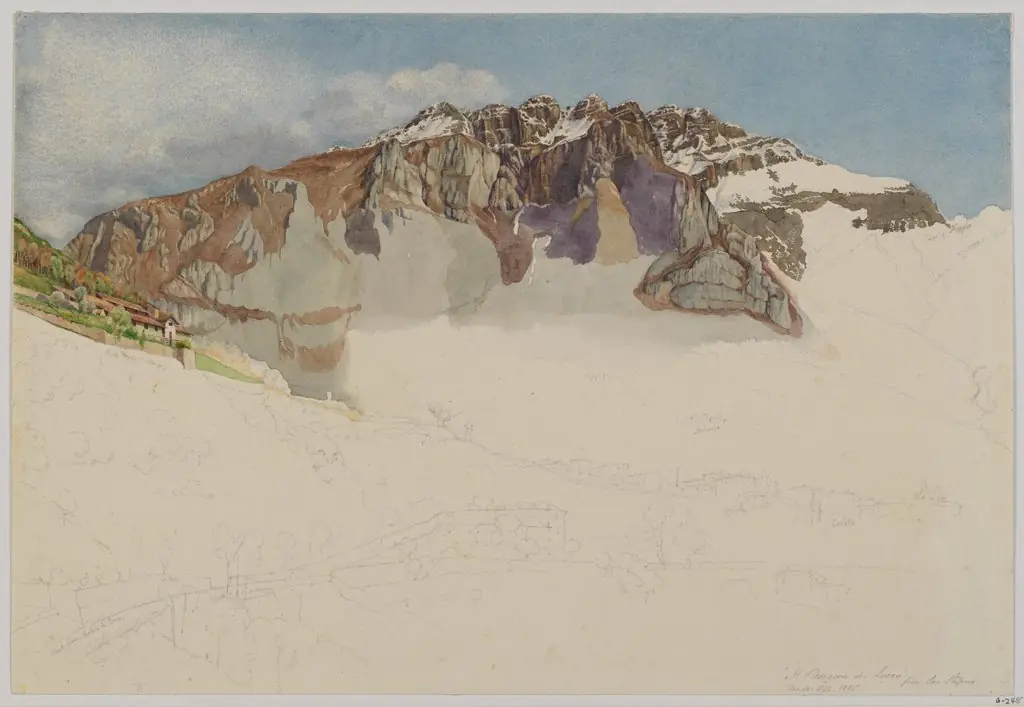 Mountainous Landscape in Italy : "Il Resegone"
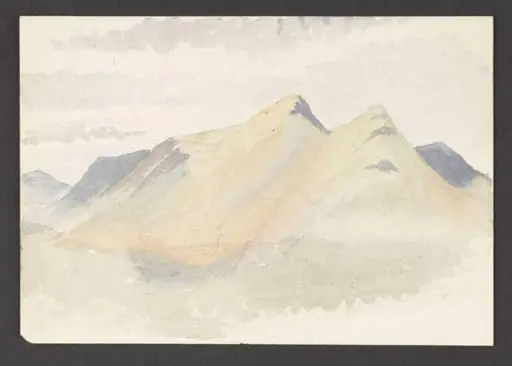 Study of mountains, possibly a view towards Catbells
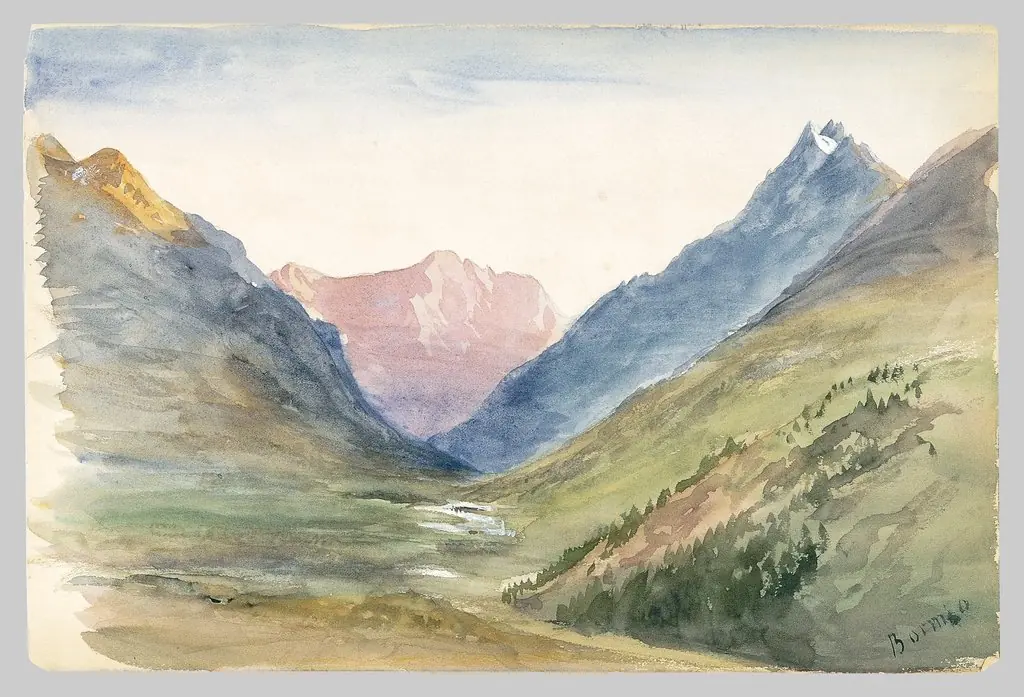 Mountain View at Bormio (from Switzerland 1869 Sketchbook)
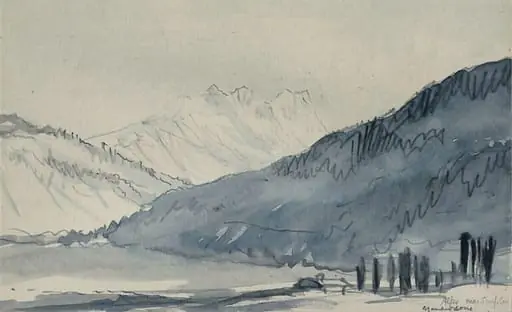 Alps near Simplon
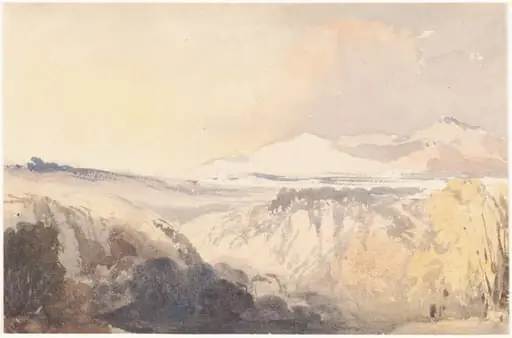 Landscape with a Distant Mountain Range
 Mountains