Artwork
Portrait of Engelbrecht II, Count of Nassau
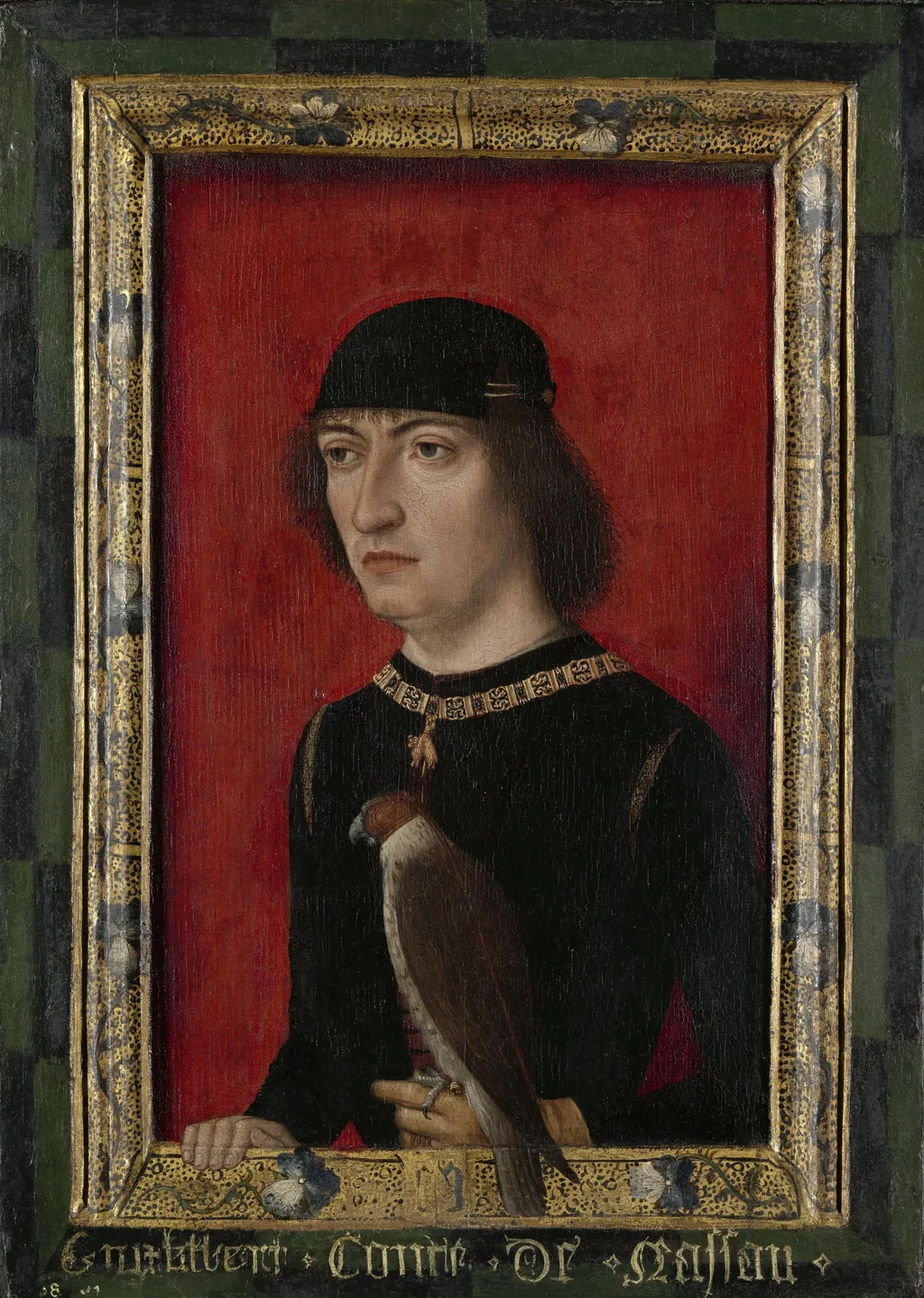
Portrait of Engelbrecht II, Count of Nassau is an oil painting by the Northern Renaissance artist Master of Portraits of Princes. It dates from 1493 and is held in the collection of the Rijksmuseum.
About this work
Overview
The work is an oil painting executed in 1493 by the anonymous workshop known as the Master of Portraits of Princes. It portrays Engelbert II, Count of Nassau, positioned against a uniform red backdrop. The composition is framed by a gilded border adorned with miniature birds, emphasizing the portrait’s formal, courtly character.
Subject & Meaning
Engelbert II is shown in sober black attire, his expression restrained, while a small falcon rests on his gloved hand. In late‑medieval and Renaissance iconography, the falcon signified noble authority and the aristocrat’s skill in the sport of falconry, reinforcing the sitter’s status and martial virtues.
Technique & Style
The painting employs oil on panel, allowing the artist to build up layers of pigment with a tactile, impasto handling on the clothing. Thick, textured brushstrokes convey the richness of the fabric, while the smooth modeling of the face reflects the Northern Renaissance’s attention to detail and naturalistic representation.
History & Provenance
Created in the closing years of the 15th century, the portrait entered the collection of the Rijksmuseum in Amsterdam, where it remains on public display. Its attribution to the Master of Portraits of Princes derives from stylistic comparison with other princely likenesses produced by the same workshop.
Context
The portrait belongs to the Northern Renaissance, a period marked by the diffusion of oil techniques and heightened realism in court portraiture. Such images served both as personal commemoration and as political propaganda, presenting noble patrons as dignified, cultured, and aligned with contemporary ideals of rulership.
Artist & collection

Artist
Master of Portraits of Princes
This early Netherlandish painter specialized in rulers’ likenesses—think crisp velvet collars and golden rings.