Artwork
Virgin and Child
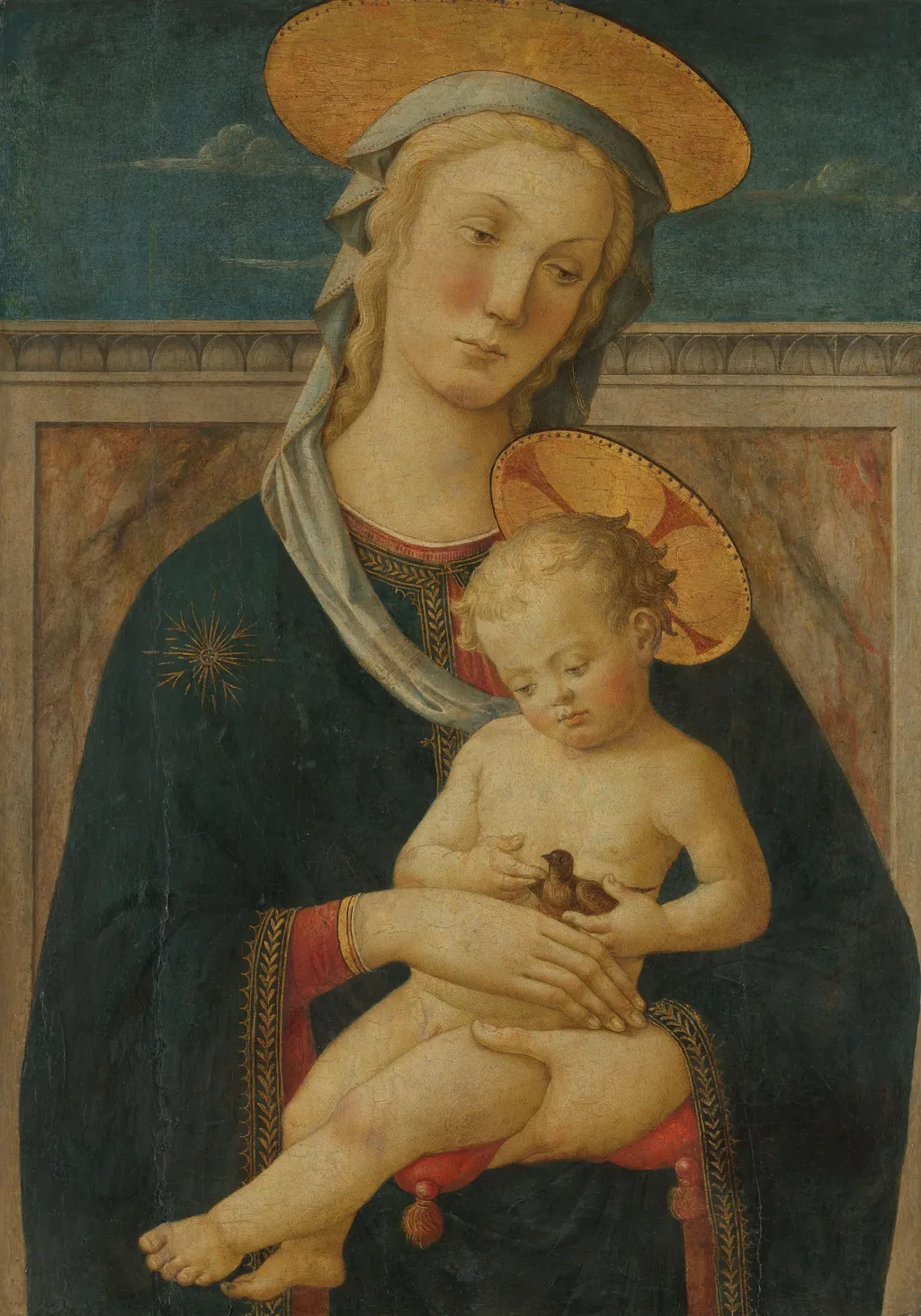
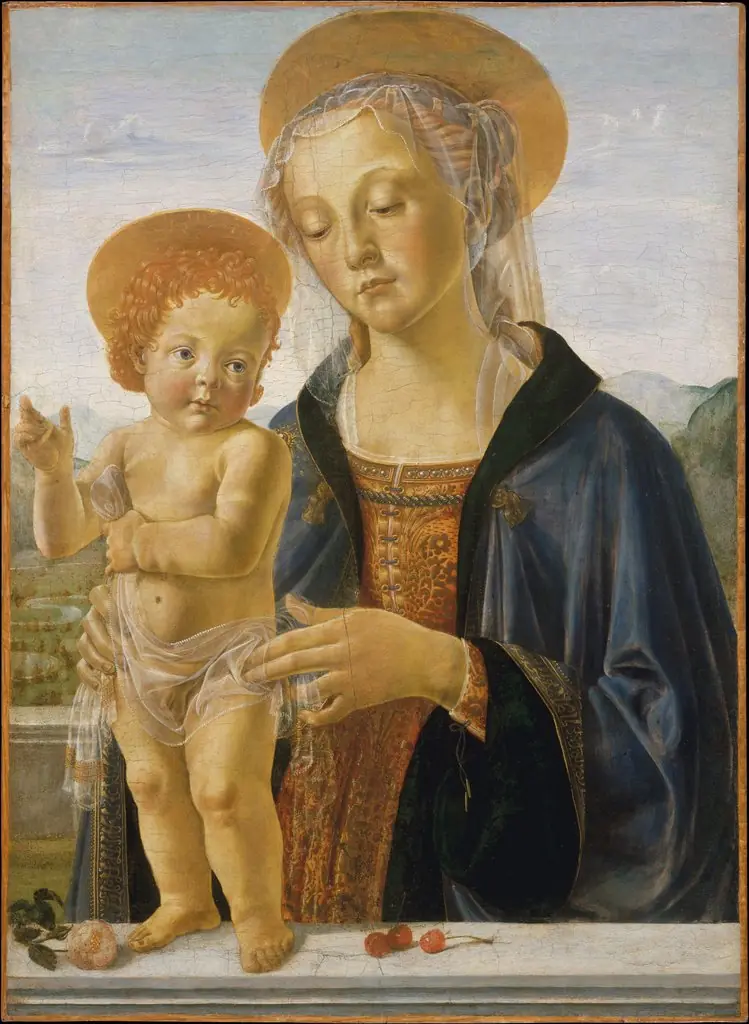
Virgin and Child is a tempera painting by the Early Renaissance artist Master of San Miniato. It dates from 1470 and is held in the collection of the Rijksmuseum.
About this work
Overview
This painting, titled Virgin and Child, was created around 1470 by the artist known as the Master of San Miniato. Executed in tempera, the work portrays a tender interaction between the Virgin Mary and the Christ Child. It is currently part of the collection at the Rijksmuseum. The composition emphasizes a quiet, intimate moment, characteristic of devotional art from the period.
Subject & Meaning
The painting centers on the Virgin Mary, depicted in a dark robe with rich red and gold trim, her head adorned with a wide-brimmed hat and white veil.
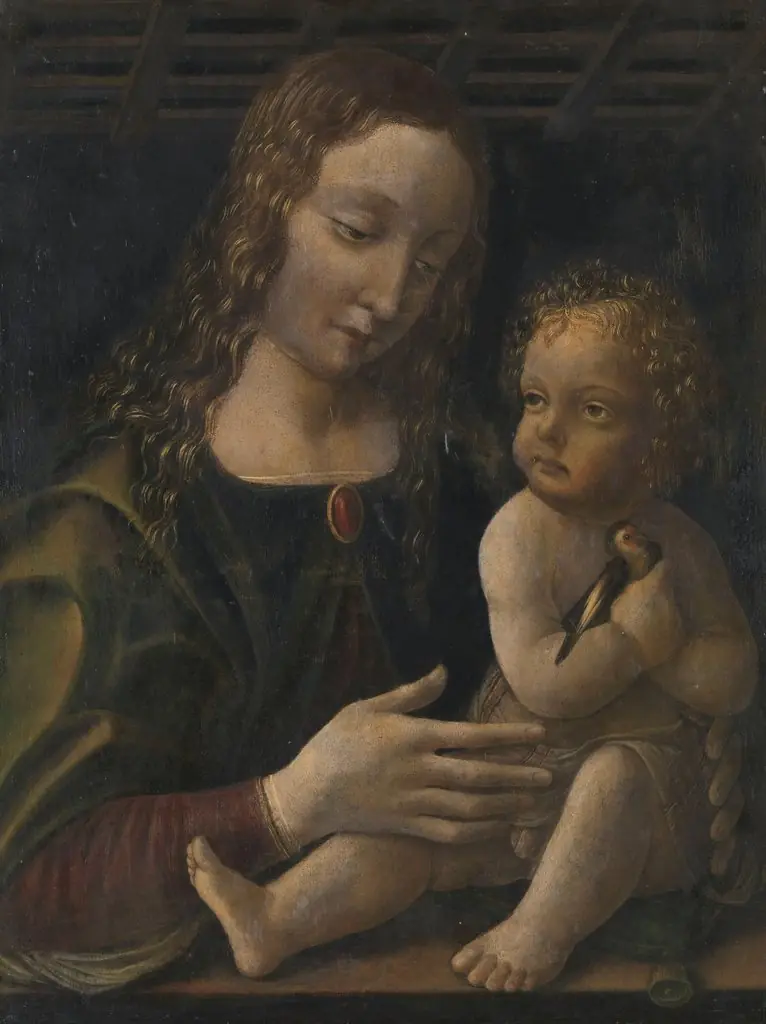
The painting centers on the Virgin Mary, depicted in a dark robe with rich red and gold trim, her head adorned with a wide-brimmed hat and white veil. She cradles the Christ Child on her lap, who holds a small bird. While Mary's gaze is directed downwards, the child looks intently at the bird, a common symbol in Christian art often representing the soul or Christ's future sacrifice. The scene evokes a sense of maternal affection and spiritual devotion.
Technique & Style
The Master of San Miniato employed tempera, a traditional medium of the era, to create this work. This technique allowed for the development of distinct textures and a sense of visual depth, particularly evident in the rendering of the figures' drapery and the child's form. The artist's careful application of paint draws the viewer's attention to the central figures, enhancing the painting's quiet intimacy and devotional atmosphere against a serene blue sky.
Own this work as a print
Artist & collection