Artwork
Left Wing of a cross altar, The Adoration of the Magi, Madonna and Child
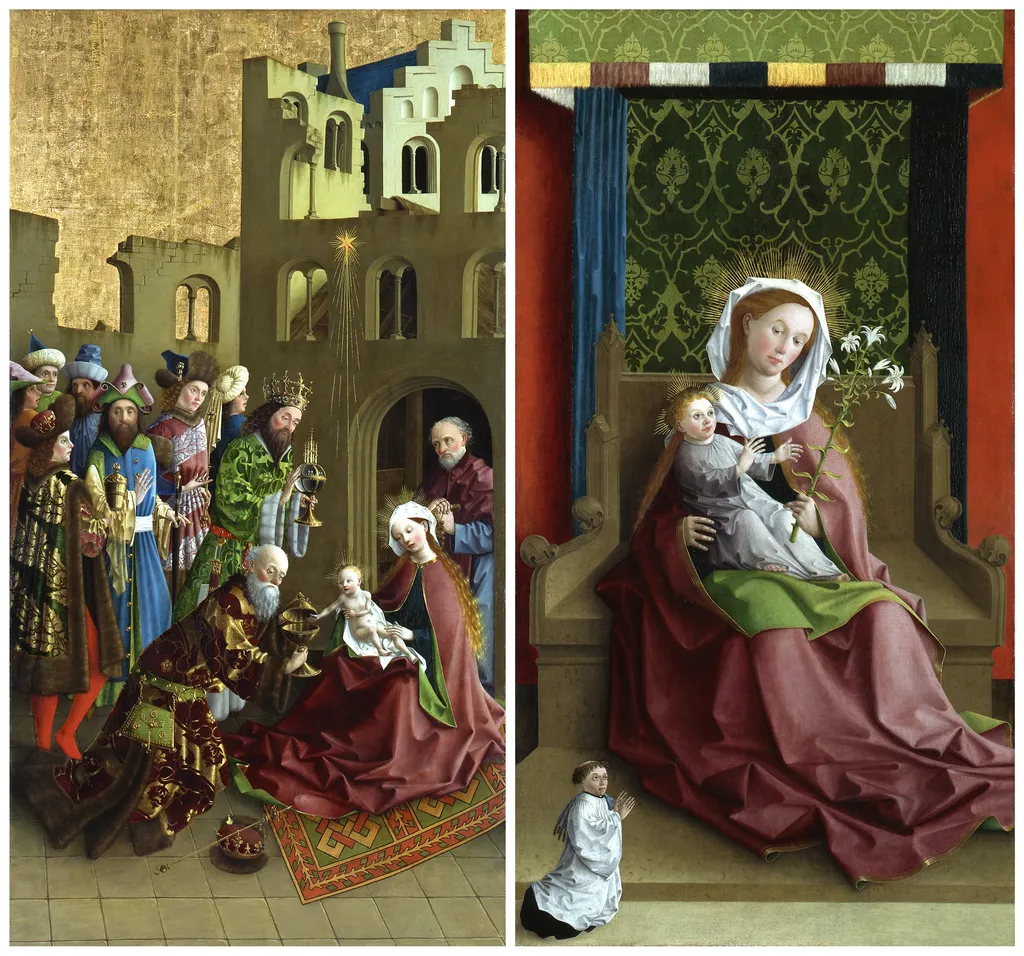
Left Wing of a cross altar, The Adoration of the Magi, Madonna and Child is a paint painting by the Northern Renaissance artist Master of the Darmstadt Passion. It dates from 1460 and is held in the collection of the Gemäldegalerie Berlin. Created around 1460, the left wing of a cross altar combines two distinct scenes within a single diptych.
About this work
Overview
Created around 1460, the left wing of a cross altar combines two distinct scenes within a single diptych. The left panel presents the Adoration of the Magi, while the right panel portrays the Madonna and Child. Executed in paint by the anonymous Master of the Darmstadt Passion, the work is part of the collection of the Gemäldegalerie in Berlin.
Subject & Meaning
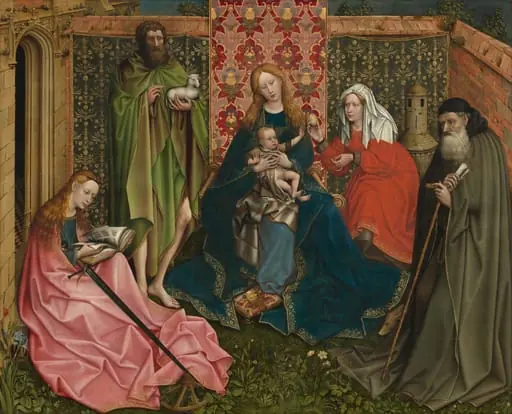
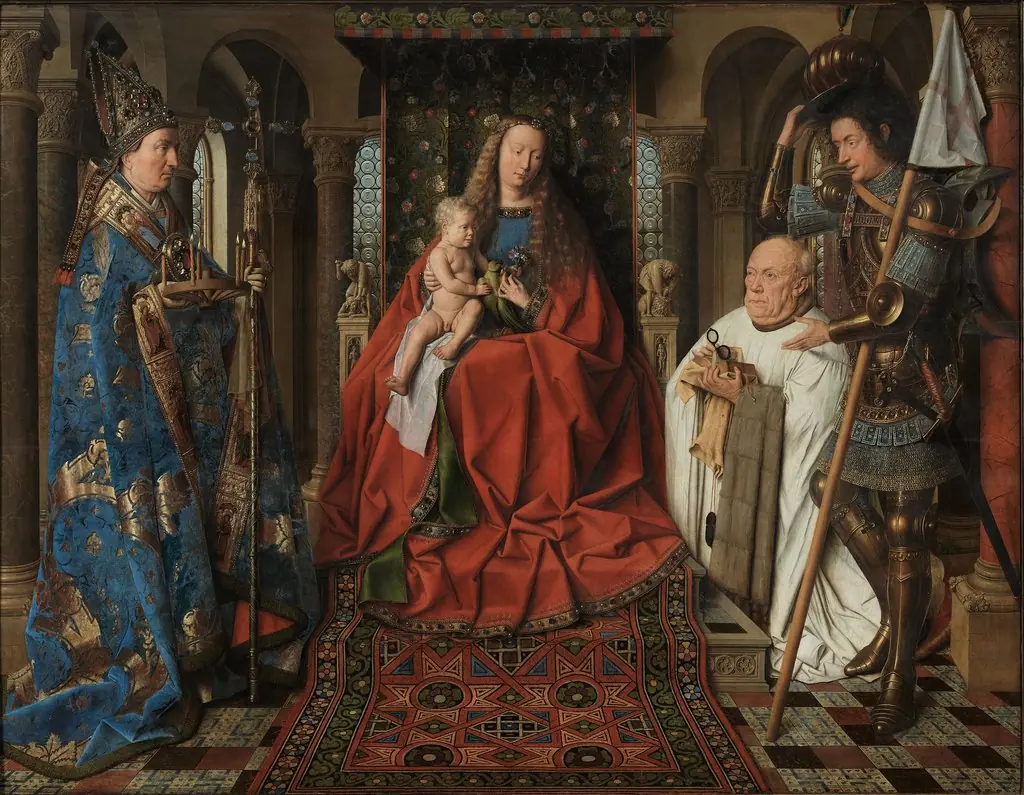
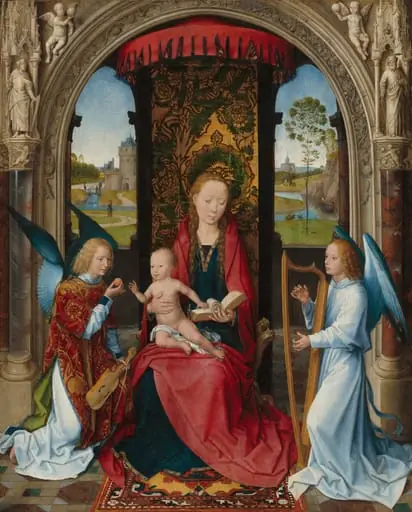
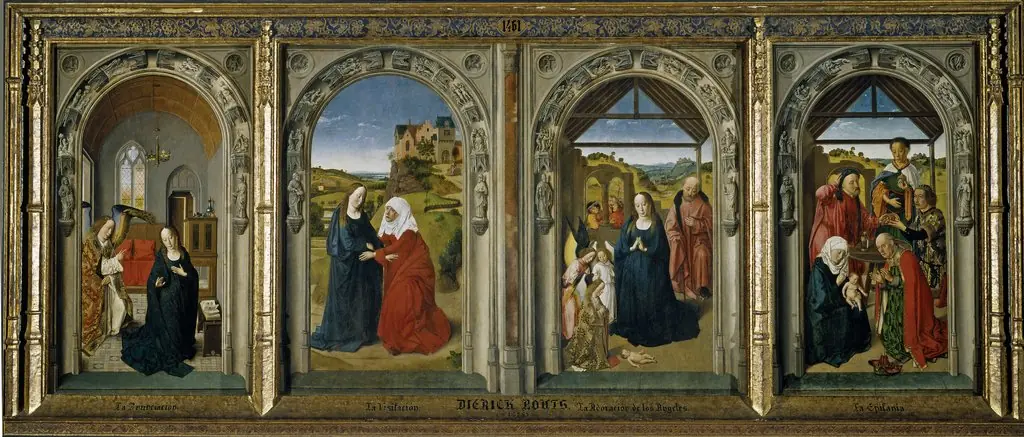
The left panel gathers the three biblical magi—identified as Balthazar, Caspar and a third figure—kneeling before the infant Jesus, each offering a symbolic gift. The right panel shows the Virgin seated on a throne, cradling the child and holding a white flower, a motif associated with purity, while a kneeling figure in white robes prays, underscoring devotion.
Technique & Style
Rendered in tempera or oil paint on wooden panels, the composition reflects the late Gothic aesthetic of the mid‑15th century. Rich, saturated reds dominate the garments, contrasting with the pale flesh tones of the holy figures. The artist employs delicate linear detailing and a hierarchical arrangement that emphasizes the sacred centrality of the infant.
History & Provenance
Attributed to the Master of the Darmstadt Passion, an anonymous workshop active in the Germanic regions, the diptych was likely commissioned for a church altar. It entered the Gemäldegalerie Berlin’s holdings in the 20th century, where it remains displayed as part of the museum’s medieval collection.
Context
The work belongs to a tradition of portable altarpieces that combined narrative episodes with devotional images, facilitating private contemplation. Its iconography aligns with contemporary theological emphasis on the incarnation and the reverence owed to the Christ child by both earthly and heavenly visitors.
Artist & collection
Artist
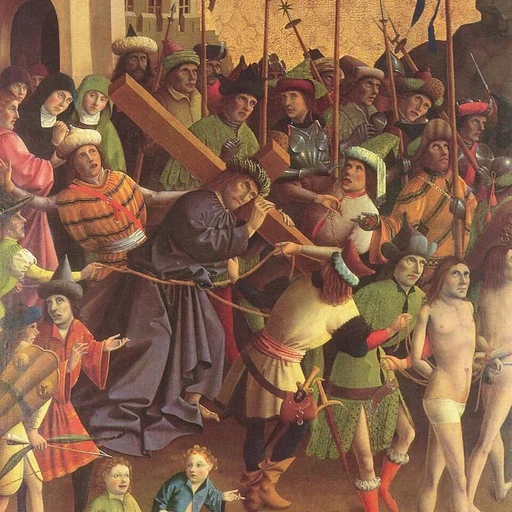
Master of the Darmstadt Passion
This anonymous German painter around 1460 made altarpieces full of bright reds and blues, stiff figures, and tiny gold highlights.