Artwork
Joseph of Egypt
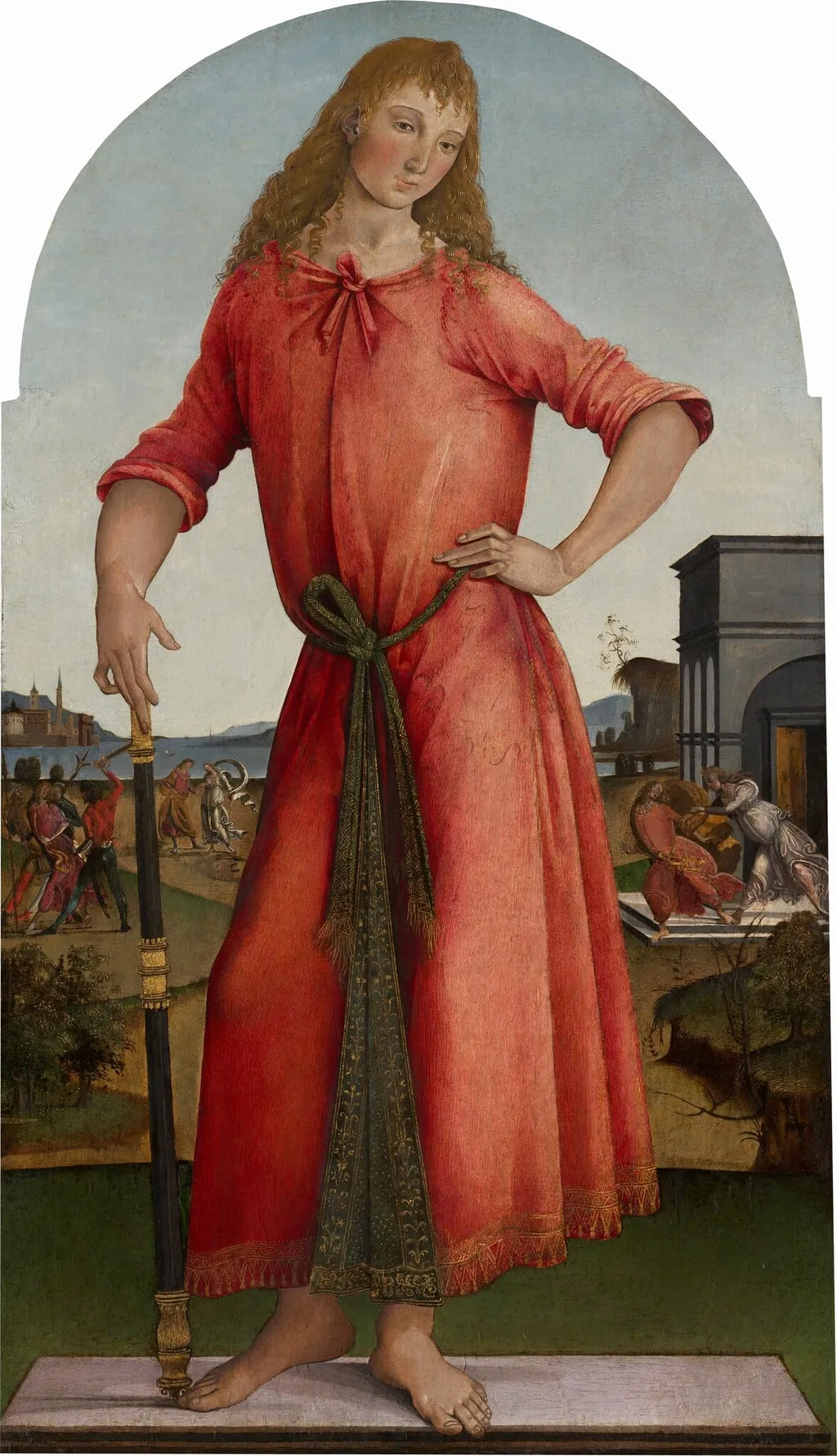
Joseph of Egypt is an oil painting by the Renaissance artist Master of the Griselda Legend. It dates from 1492 and is held in the collection of the National Gallery of Art.
About this work
Overview
Created around 1492, this oil work—originally on panel and later transferred to canvas—was painted by the anonymous figure known as the Master of the Griselda Legend. It presents a youthful male figure in a narrative setting, rendered with a careful balance of color and spatial depth that reflects the transitional aesthetics of late‑15th‑century Northern European painting.
Subject & Meaning
The central figure is a young man with long, curled hair, dressed in a red tunic edged with an elaborate patterned hem and a green sash at the waist. He holds a black staff tipped with gold, a possible symbol of authority or pilgrimage, while his pose—hand on hip, barefoot on a white platform—suggests a moment of contemplation within a larger biblical or hagiographic story.
Technique & Style
The artist employed oil pigments to achieve a luminous surface, using subtle gradations of light to model the figure’s form. The transferred canvas retains the original panel’s fine brushwork, especially evident in the intricate detailing of the tunic’s hem and the delicate rendering of background architecture and water, which together create a layered sense of space.
History & Provenance
Originally executed on wood, the painting was later moved to canvas—a common conservation practice for works of this age. Its attribution to the Master of the Griselda Legend stems from stylistic parallels with other late‑Gothic works, though the artist’s identity remains unknown. The piece has been documented in regional collections since the early modern period.
Context
The work belongs to a period when religious narratives were frequently depicted for devotional purposes, often incorporating contemporary dress and settings to make biblical figures more relatable. The inclusion of everyday elements—people, animals, buildings, and water—reflects the era’s interest in integrating sacred stories within recognizable, lived environments.
Artist & collection

