Artwork
The Presentation in the Temple
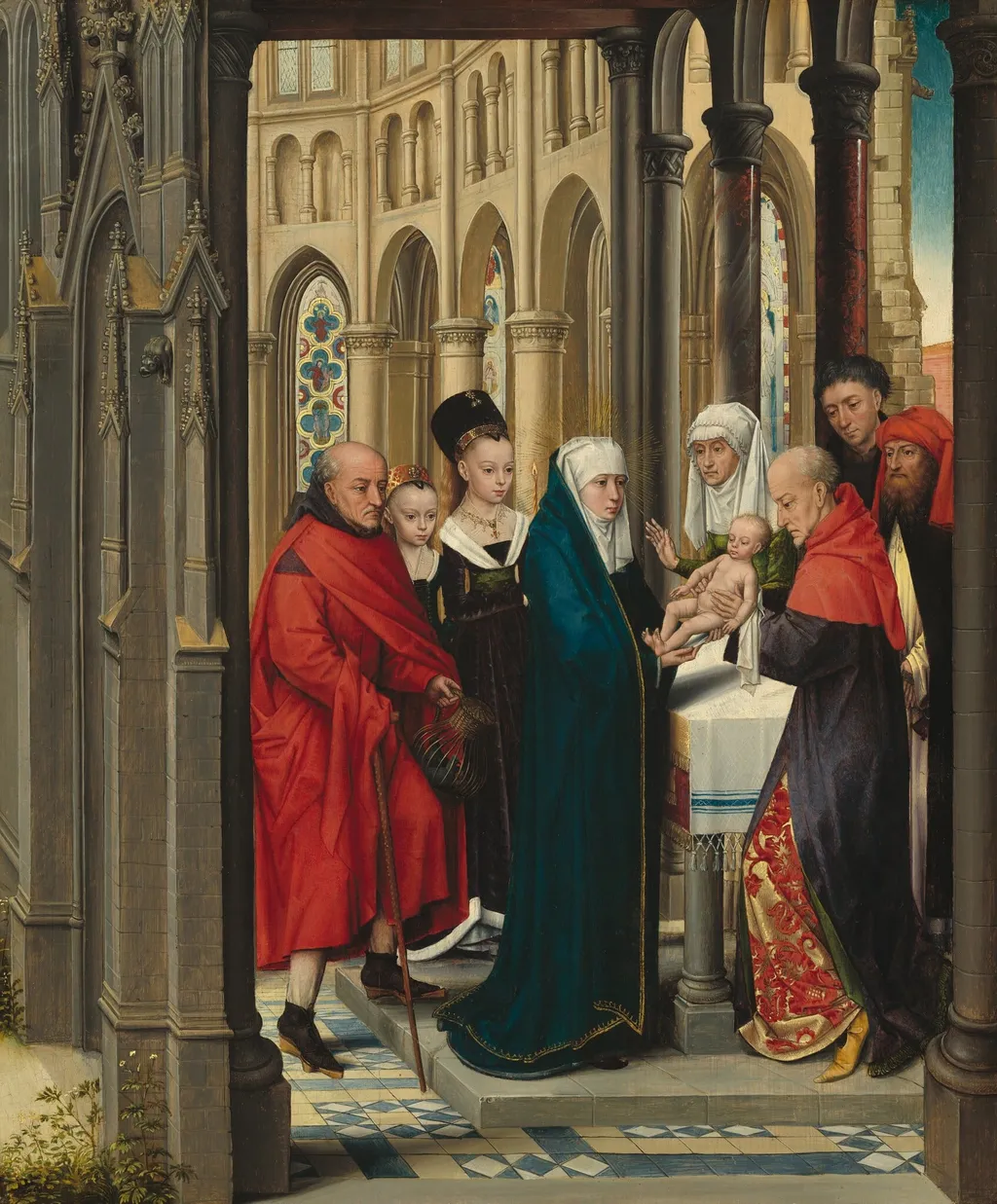
The Presentation in the Temple is an oil painting by the Northern Renaissance artist Master of the Prado "Adoration of the Magi". It dates from 1475 and is held in the collection of the National Gallery of Art.
About this work
Overview
" The work depicts a pivotal event from the New Testament, illustrating the ritual presentation of the infant Jesus at the Jerusalem Temple.
This oil painting on panel, titled The Presentation in the Temple, was created around 1475 by the artist known as the Master of the Prado "Adoration of the Magi." The work depicts a pivotal event from the New Testament, illustrating the ritual presentation of the infant Jesus at the Jerusalem Temple. It exemplifies characteristics of the Northern Renaissance, reflecting the period's detailed naturalism and religious devotion.
Subject & Meaning
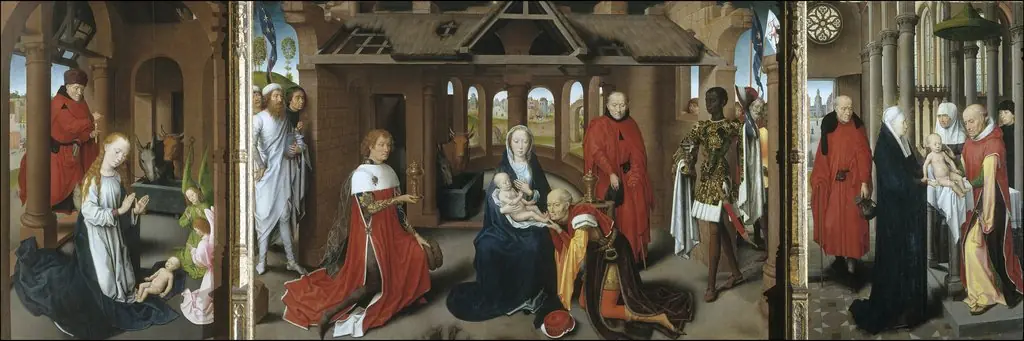
The painting centers on the biblical episode of Jesus's presentation and purification, as described in the Gospel of Luke. Within a grand architectural setting, an infant is held aloft by a figure in white, likely Mary, near a stone altar. Other figures, including a man in red robes and a woman in blue, observe the scene, emphasizing the solemnity of the religious ceremony. The composition highlights the child as the focal point of this sacred ritual.
Technique & Style
Executed in oil on panel, this work showcases the meticulous detail and rich color palette characteristic of Northern Renaissance painting. The artist employs deep reds and blues for the drapery, which contrast with the cooler tones of the stone architecture. The background features intricate elements such as tall arches, stained glass, and robust stone pillars, demonstrating a sophisticated handling of perspective and light within an interior space.
Context
Created during the Northern Renaissance, The Presentation in the Temple reflects the artistic trends of the Low Countries in the late 15th century. Artists of this period often combined religious narratives with a keen observation of everyday life and material detail. The use of oil paint allowed for luminous colors and precise rendering of textures, contributing to a sense of tangible reality that distinguished Northern European art from its Italian counterparts.
Own this work as a print
Artist & collection

Artist
Master of the Prado "Adoration of the Magi"
Master of the Prado "Adoration of the Magi" (1470–1480) was an artist.