Artwork
The Arrest of Jerome Baumgaertner, Doctor of Nurnberg
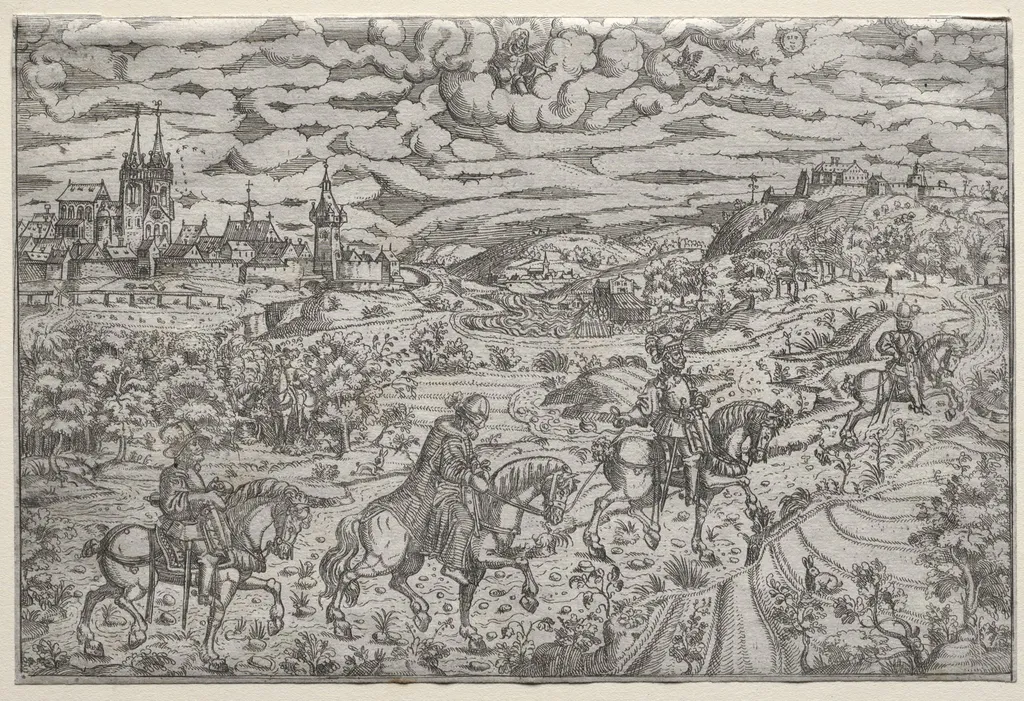
The Arrest of Jerome Baumgaertner, Doctor of Nurnberg is a print by Mathis Zündt. It dates from 1545 and is held in the collection of the Cleveland Museum of Art.
About this work
Overview
The work belongs to a broader tradition of documenting contemporary events through graphic media, blending historical record with visual narrative.
Created around 1545 by Mathis Zündt, a Nuremberg-based engraver, this print captures a moment of civic confrontation involving Jerome Baumgaertner, a local physician. Zündt, known for his precision in line and composition, rendered the scene using engraving techniques common in 16th-century German printmaking. The work belongs to a broader tradition of documenting contemporary events through graphic media, blending historical record with visual narrative.
Subject & Meaning
The scene portrays the detention of Jerome Baumgaertner, a Nuremberg doctor, likely tied to political or religious tensions of the Reformation era. His central position, restrained by two figures in lighter garb, suggests a public act of authority. The absence of overt symbols of guilt or triumph leaves the reason for arrest ambiguous, inviting interpretation rooted in the city’s volatile social climate rather than moral judgment.
Technique & Style
Zündt employed fine, controlled engraving lines to define form and texture, emphasizing the contrast between the dark, compact figures and the lighter, open background. The use of chiaroscuro enhances spatial depth, guiding the viewer’s eye toward the central struggle. Architectural details in the background—buildings and a church spire—are rendered with careful perspective, grounding the event in a recognizable urban setting.
History & Provenance
The print emerged during a period of religious and civic upheaval in Nuremberg, where medical professionals sometimes became entangled in doctrinal disputes. While Baumgaertner’s specific offense is unrecorded, the image reflects the city’s practice of using visual media to document public order. The work survives in several institutional collections, preserved as part of Nuremberg’s rich print heritage.
Context
In mid-16th-century Nuremberg, printed images served as tools for public communication, often illustrating legal or religious events. Zündt’s work aligns with a trend of documenting local incidents—arrests, sermons, processions—through detailed engravings. The presence of a church steeple hints at the intertwining of civic and ecclesiastical authority, a defining feature of urban life during the Reformation.
Legacy
Zündt’s print contributes to the historical record of German print culture, illustrating how artists documented everyday power dynamics. Though not widely reproduced in later centuries, it remains a valuable artifact for understanding Nuremberg’s social structures and the role of visual media in early modern civic life. Its preservation underscores the importance of print as a medium for historical testimony.
Artist & collection

Artist
Matthias Zündt (sometimes Zynndt; 1498–1586) was a German engraver, born at Nuremberg.

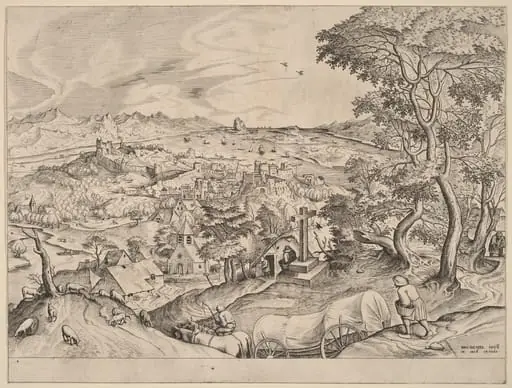 Plaustrum Belgicum (The Belgian Wagon)
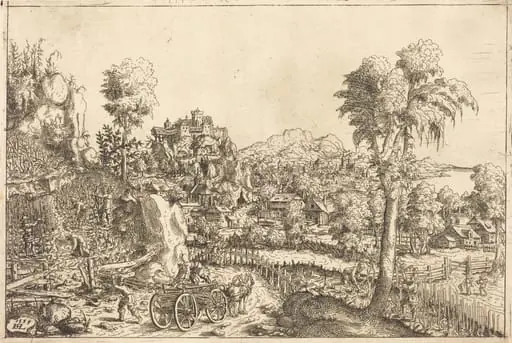 Landscape with a Vineyard
 The Mocking Children Cursed by Elijah and Eaten by a She-Bear
 Landscape with a Shepherd Couple
 Landscape with the Cannon
 Flusslandschaft
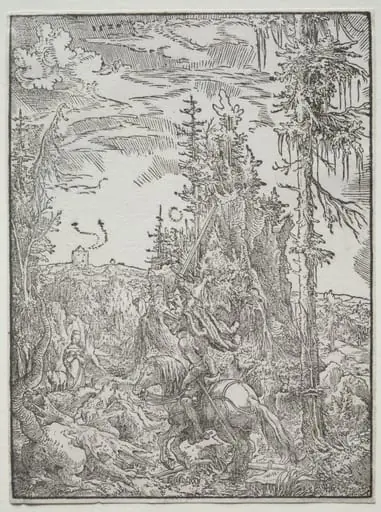 St. George and the Dragon
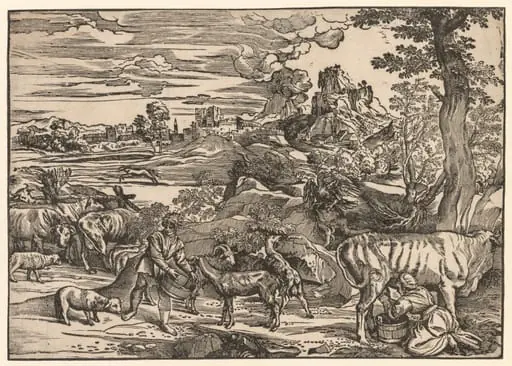 Landscape with a Milkmaid
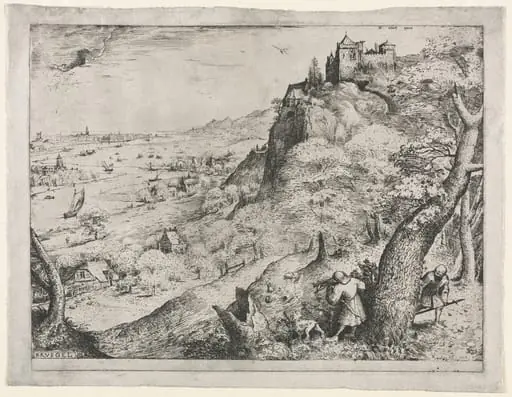 The Rabbit Hunt
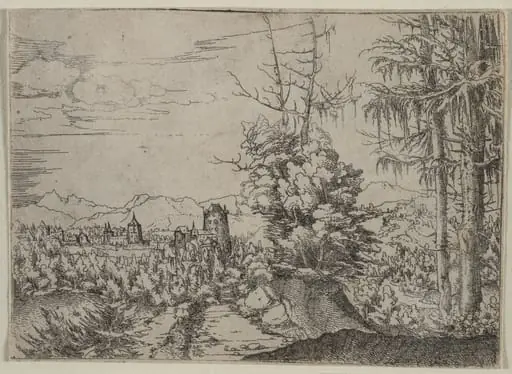 Landscape with Two Pines
 Hunter on Horseback
 Landscape with the Cannon