Artwork
The Nieuwe Haarlemse Sluis on the Singel, Known as ‘Souvenir d’Amsterdam’
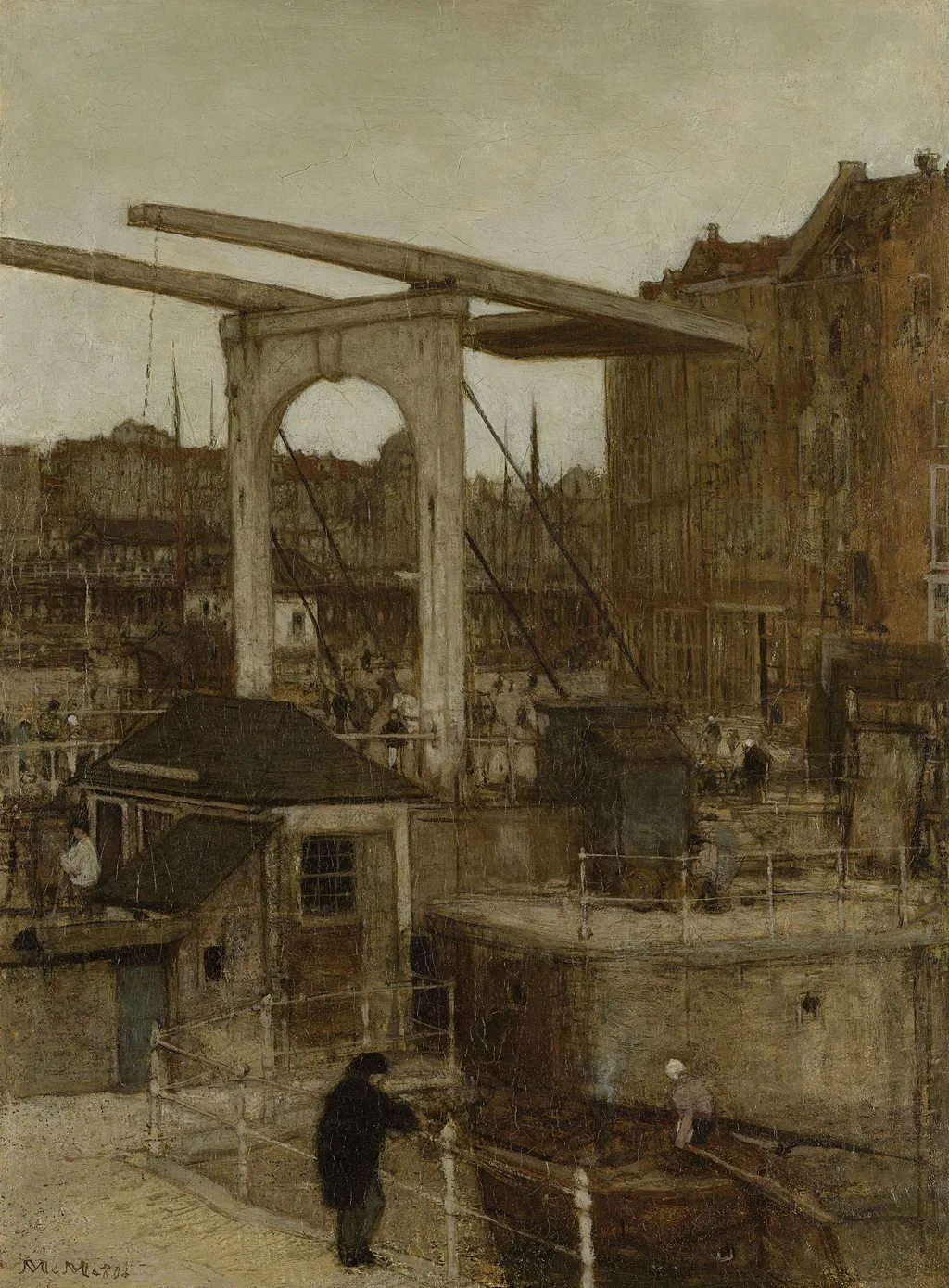
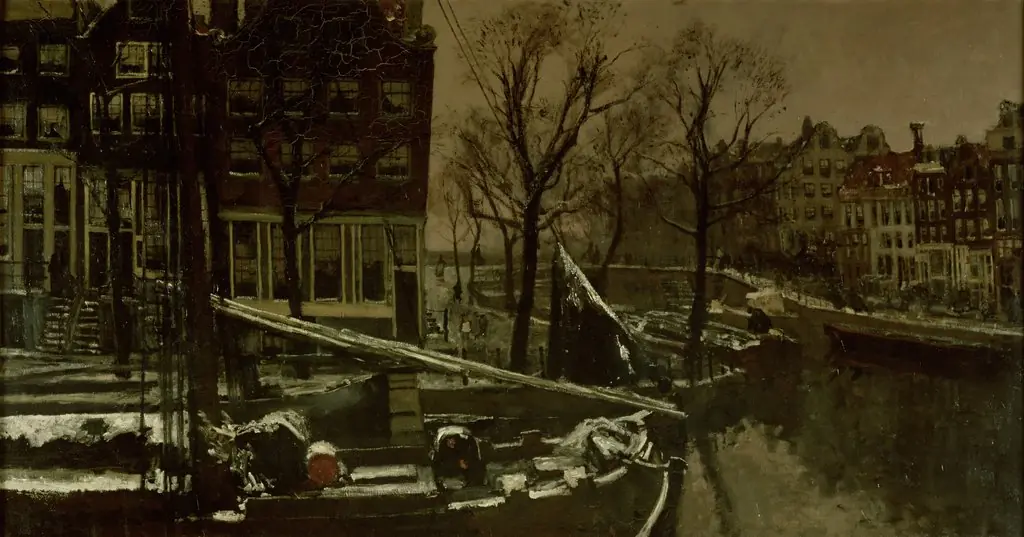
The Nieuwe Haarlemse Sluis on the Singel, Known as ‘Souvenir d’Amsterdam’ is an oil painting by the Impressionist artist Matthijs Maris. It dates from 1871 and is held in the collection of the Rijksmuseum.
About this work
Overview
Matthijs Maris painted *The Nieuwe Haarlemse Sluis on the Singel, Known as ‘Souvenir d’Amsterdam’* in 1871. Executed in oil, the work presents a quiet urban scene centered on a partially constructed wooden lock along Amsterdam’s Singel canal. The composition is held by the Rijksmuseum, where it forms part of the museum’s Dutch 19th‑century holdings.
Subject & Meaning
The canvas captures a half‑built wooden structure spanning the canal, its open centre exposing the water below. Two figures—one in dark clothing, the other in lighter garb—stand nearby, seemingly observing the construction. The muted browns and grays of the building contrast with faint blue tones in distant buildings, suggesting a moment of everyday labor within the city’s landscape.
Technique & Style
Maris applied paint with a pronounced impasto, especially on the timber, creating a tactile surface that emphasizes the roughness of the unfinished lock.
Maris applied paint with a pronounced impasto, especially on the timber, creating a tactile surface that emphasizes the roughness of the unfinished lock. The brushwork is vigorous, lending a sense of physicality to the wood grain. While rooted in the realist tendencies of the Hague School, the handling of colour and texture hints at the decorative influence of the Pre‑Raphaelites, which Maris absorbed later in his career.
History & Provenance
Trained at the Hague Academy of Art, Maris emerged as a member of the Hague School before developing his own stylistic voice. After its completion in 1871, the painting entered private collections before being acquired by the Rijksmuseum, where it remains on view as part of the institution’s representation of Dutch urban painting of the period.
Context
The work reflects Amsterdam’s ongoing infrastructural development in the late 19th century, when new locks and canals were reshaping the city’s commerce and daily life. By focusing on a specific construction site, Maris documents a transient moment of modernization, aligning with contemporary interests in portraying the ordinary activities that underpinned urban growth.
Own this work as a print
Artist & collection
Artist
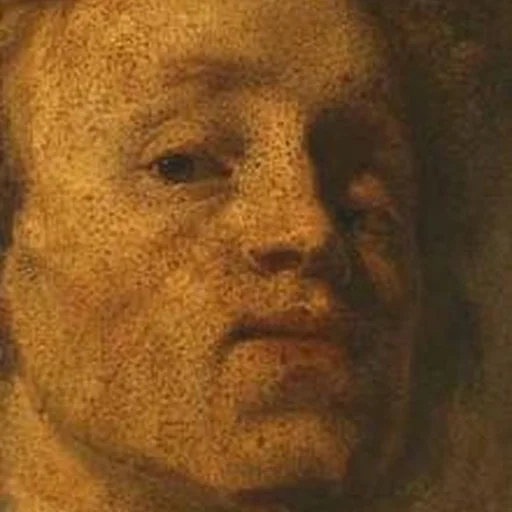
Matthias Maris (17 August 1839 – 22 August 1917) was a Dutch painter, etcher and lithographer.