Artwork
St. Jerome
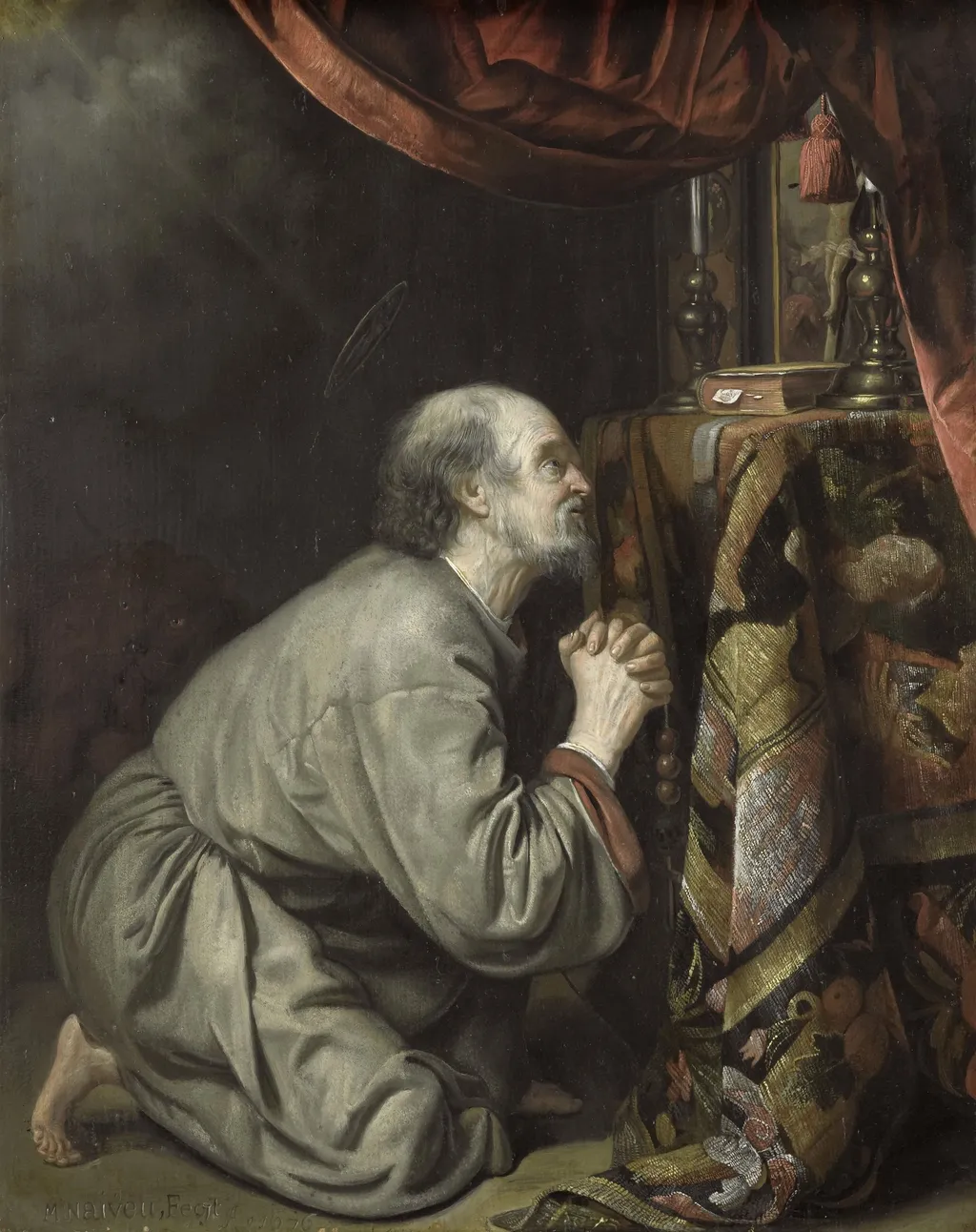
St. Jerome is an oil painting by the Dutch Golden Age artist Matthijs Naiveu. It dates from 1688 and is held in the collection of the Rijksmuseum.
About this work
Overview
Matthijs Naiveu’s 1688 oil on canvas presents a solitary figure of St. Jerome in a dim interior. The composition centers on an elderly man kneeling with clasped hands, his white beard and simple gray habit contrasting with the surrounding gloom. The work resides in the collection of the Rijksmuseum, exemplifying the artist’s focus on intimate devotional scenes.
Subject & Meaning
The painting portrays the biblical scholar and hermit Jerome at a moment of prayer, emphasizing his ascetic devotion. By isolating the saint in a sparse setting, Naiveu underscores themes of contemplation and scholarly piety, inviting viewers to reflect on the spiritual discipline associated with Jerome’s translation of the Bible into Latin.
Technique & Style
Naiveu employs chiaroscuro, allowing a narrow beam of light to illuminate the saint’s face and hands while the surrounding space recedes into shadow. This contrast creates a tranquil, introspective atmosphere. The brushwork is restrained, rendering the textures of the robe and the modest furnishings with subtle detail, reinforcing the painting’s solemn tone.
History & Provenance
Executed in 1688, the work entered the Dutch national collection and is now displayed at the Rijksmuseum in Amsterdam. Its provenance traces back to the artist’s workshop, where it likely served a private devotional patron before being acquired by the museum in the 19th century.
Context
Created during the Dutch Golden Age, the painting reflects the period’s interest in religious subjects rendered with naturalistic detail. Naiveu, known for genre scenes, applied his observational skill to a sacred theme, aligning with contemporary trends that favored personal, contemplative representations of saints over grandiose altar pieces.
Own this work as a print
Artist & collection