Artwork
Orfeo nell’ade
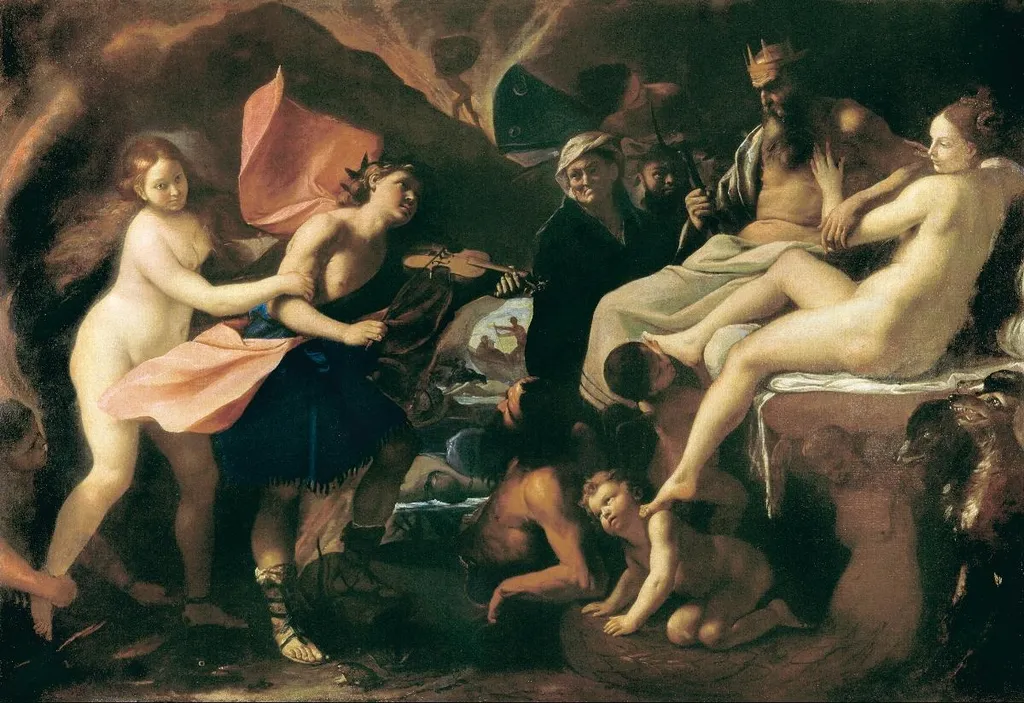
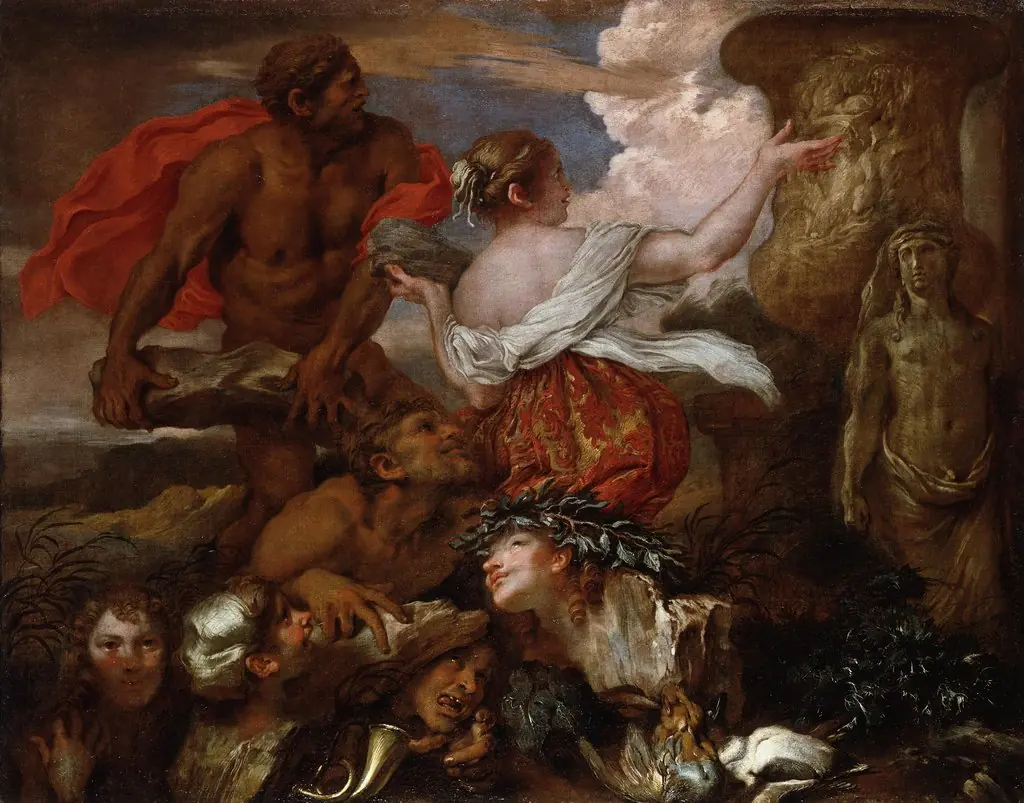
Orfeo nell’ade is an oil painting by the Early Baroque Italian artist Mattia Preti. It dates from 1637 and is held in the collection of the Kunsthaus Zürich.
About this work
Overview
The composition centers on figures gathered in a dim, enclosed environment, suggesting a narrative rooted in classical legend.
Painted in 1637 by Mattia Preti, this oil on canvas depicts a mythological scene set within a shadowed, cavernous space. The work is part of the collection at Kunsthaus Zürich and reflects Preti’s early Baroque style, marked by dramatic lighting and a focus on human figures in emotionally charged settings. The composition centers on figures gathered in a dim, enclosed environment, suggesting a narrative rooted in classical legend.
Subject & Meaning
The painting illustrates Orpheus in the underworld, a moment from Greek myth where he attempts to retrieve his deceased wife, Eurydice. The seated figures likely represent Orpheus and Eurydice, surrounded by spirits of the dead, including children and attendants. The presence of a dog may allude to Cerberus, the guardian of Hades. The scene conveys sorrow and the fragile boundary between life and death, as Orpheus’s plea hangs in the balance.
Technique & Style
Preti employs a muted palette dominated by deep browns, blacks, and muted earth tones to evoke the gloom of the underworld. Figures are rendered with sculptural solidity, their bare or minimally draped forms emphasizing vulnerability and raw emotion. Chiaroscuro defines the forms, with light falling selectively to isolate key gestures—such as the grasping hand—enhancing the tension of the moment without overt theatricality.
History & Provenance
Created during Preti’s formative years in Italy, the painting entered the Kunsthaus Zürich collection in the 20th century. Its early provenance is not fully documented, but its style aligns with works from his Roman period, influenced by Caravaggio’s naturalism and the emotional gravity of Counter-Reformation art. The painting has remained in institutional hands since its acquisition, with no known public exhibitions prior to the 1900s.
Context
In the mid-17th century, mythological subjects were favored by patrons seeking intellectual and moral allegories. Preti’s treatment of Orpheus reflects a broader European interest in classical narratives, filtered through a somber, psychologically nuanced lens. The work’s restrained drama contrasts with more ornate Baroque trends, aligning it with quieter, introspective interpretations of myth common among southern Italian painters of the era.
Legacy
Though not among Preti’s most widely reproduced works, this painting exemplifies his early mastery of emotional restraint and atmospheric depth. It contributes to understanding his development before his later, more monumental religious commissions. Scholars note its significance as a bridge between Caravaggisti influences and Preti’s mature style, offering insight into how mythological themes were adapted in regional Baroque practice.
Artist & collection

Artist
Mattia Preti was an Italian Baroque artist who worked in Italy and Malta. He was appointed a Member of the Order of Saint John.