Artwork
Venetian Canals
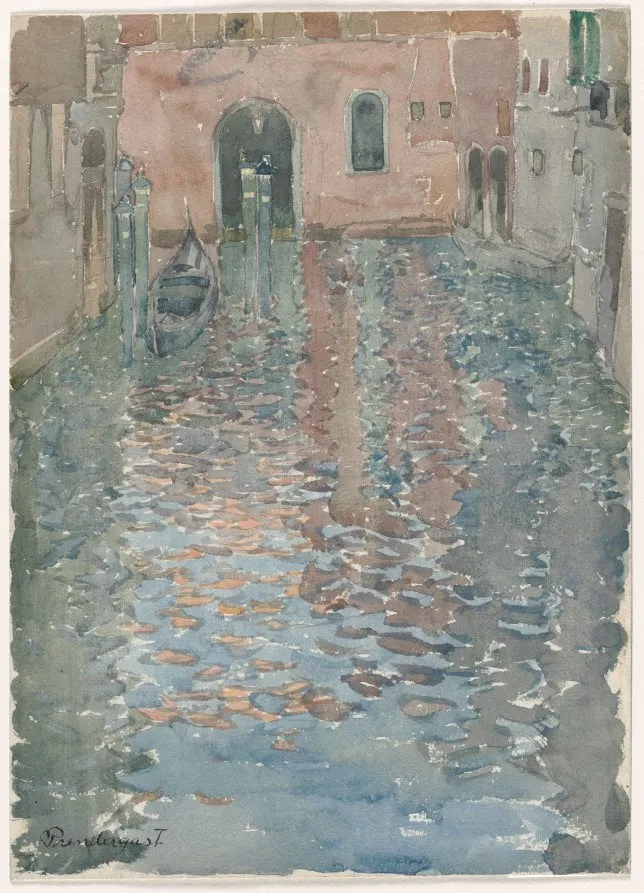
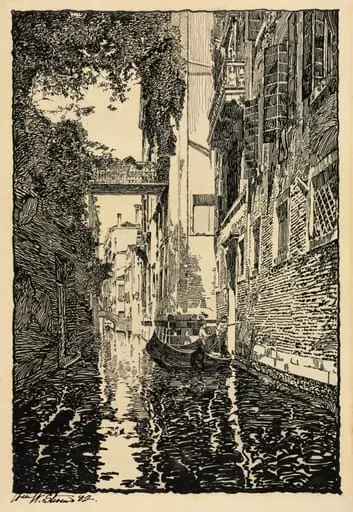
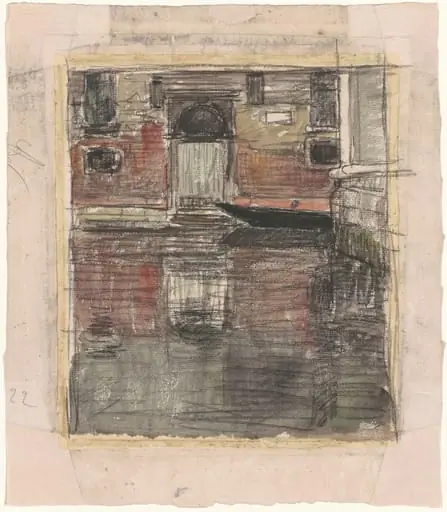
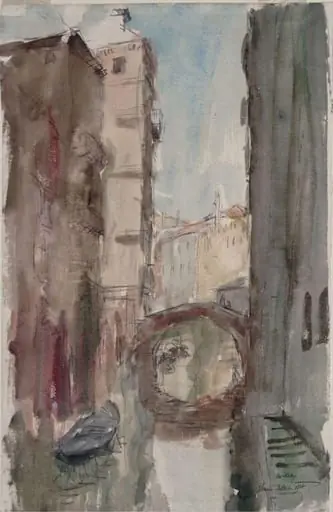
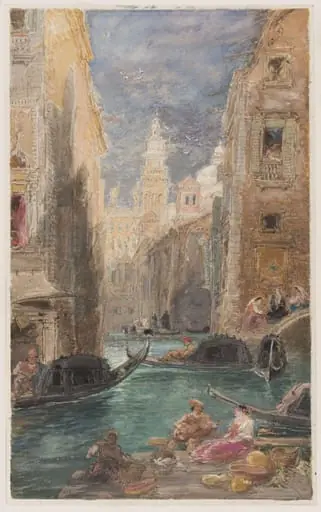
Venetian Canals is a drawing by the Impressionist artist Maurice Prendergast. It dates from 1898 and is held in the collection of the Cleveland Museum of Art.
About this work
Overview
Maurice Prendergast created *Venetian Canals* circa 1898 during a period when he was refining his approach to urban and aquatic landscapes.
Maurice Prendergast created *Venetian Canals* circa 1898 during a period when he was refining his approach to urban and aquatic landscapes. Though born in Newfoundland and active in the United States, his work reflects European influences absorbed through travel. The drawing captures a quiet moment in Venice, emphasizing atmosphere over narrative, and aligns with his broader interest in translating light and color into structured, rhythmic compositions.
Subject & Meaning
The scene portrays an empty Venetian canal flanked by weathered buildings with arched openings and faded pink facades. A single boat, moored to a wooden post, anchors the composition without introducing human presence. The absence of figures enhances the sense of stillness, suggesting a meditation on place rather than a depiction of activity. Prendergast’s focus on architecture and water conveys a quiet reverence for the city’s enduring, decaying beauty.
Technique & Style
Prendergast employed loose, fluid brushwork to suggest the reflective surface of the canal and the textured walls of the buildings. Color is applied in soft, broken strokes that evoke light rather than define form precisely. The palette—muted pinks, greens, and ochres—creates harmony through subtle tonal shifts. His method avoids sharp outlines, instead relying on the interplay of hue and wash to convey atmosphere and spatial depth.
History & Provenance
Created after Prendergast’s first trip to Europe, *Venetian Canals* belongs to a series of works inspired by his travels in Italy. It was produced during a transitional phase in his career, as he moved from more traditional watercolor techniques toward a bolder, more experimental style. The drawing remained in private hands for much of the 20th century before entering a public collection, where it now serves as an example of his mature approach to landscape.
Context
While Prendergast was associated with The Eight, a group known for challenging academic norms, his work diverged from the Ashcan School’s gritty urban realism. Instead, he pursued lyrical interpretations of leisure and environment, influenced by French Post-Impressionists and Japanese prints. *Venetian Canals* reflects this synthesis—capturing a European subject with an American sensibility, prioritizing mood over social commentary.
Legacy
The drawing exemplifies Prendergast’s contribution to American modernism through his unique fusion of color theory and compositional rhythm. Though less celebrated than his contemporaries, his approach to light and surface influenced later generations of watercolorists and regional painters. *Venetian Canals* remains a quiet testament to his ability to transform ordinary scenes into resonant visual poems through restraint and sensitivity to tone.
Artist & collection
Artist
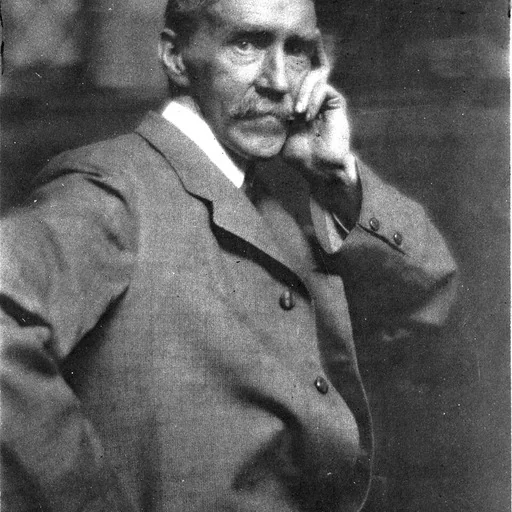
Maurice Brazil Prendergast (October 10, 1858 – February 1, 1924) was a Newfoundlander-American artist who painted in oil and watercolor, and created monotypes.