Artwork
On the Beach, No. 3
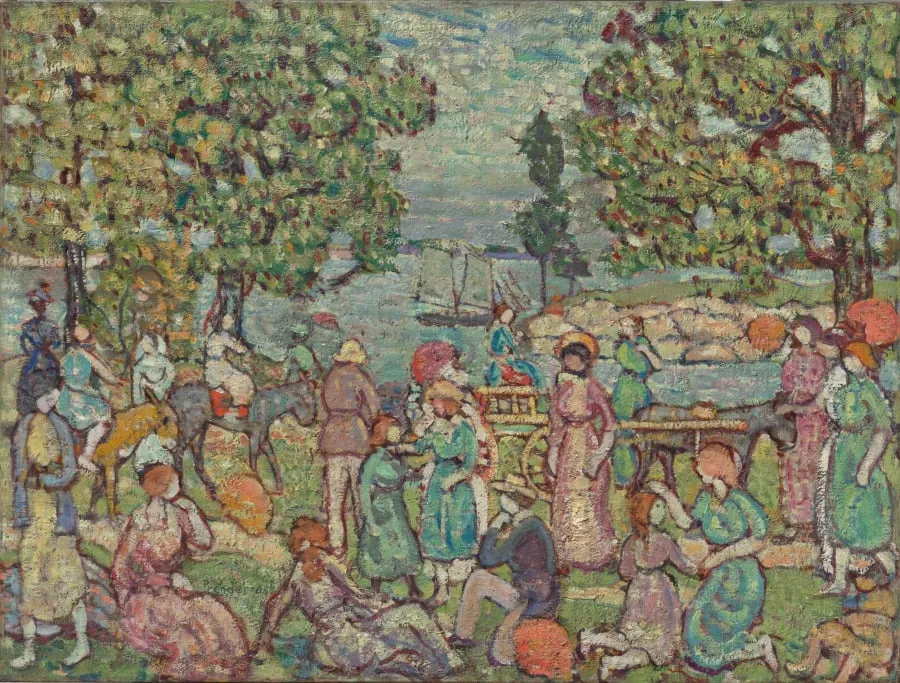
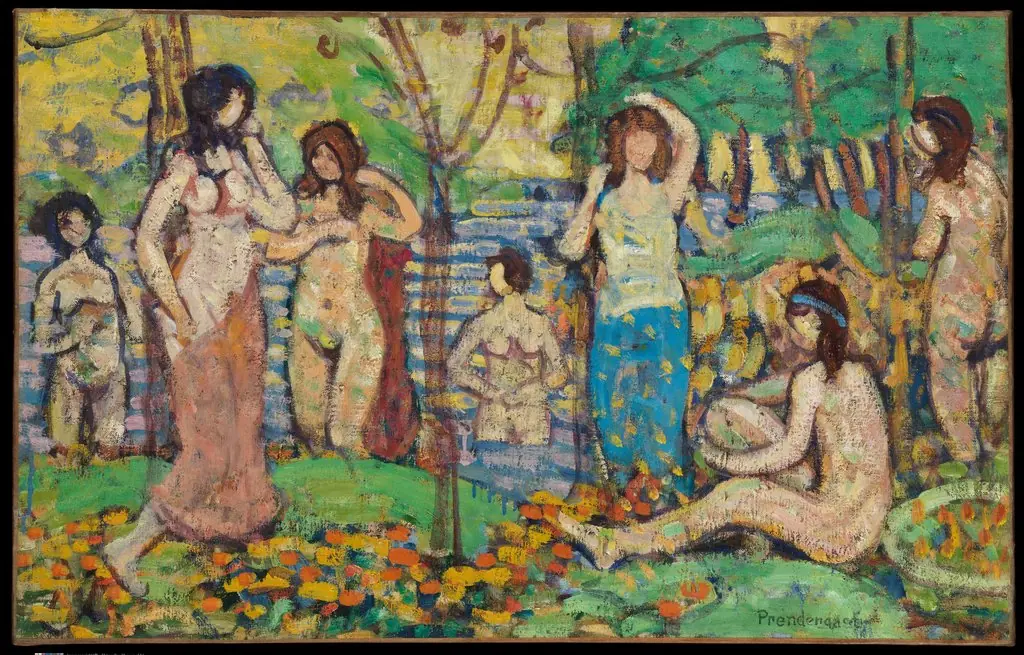
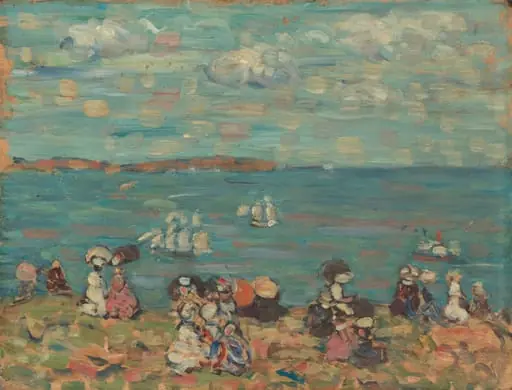
On the Beach, No. 3 is an unspecified painting by the Post-Impressionist artist Maurice Prendergast. It dates from 1916 and is held in the collection of the Cleveland Museum of Art. On the Beach, No.
About this work
Overview
The composition avoids linear perspective and detailed rendering, instead organizing the scene through rhythmic clusters of pigment.
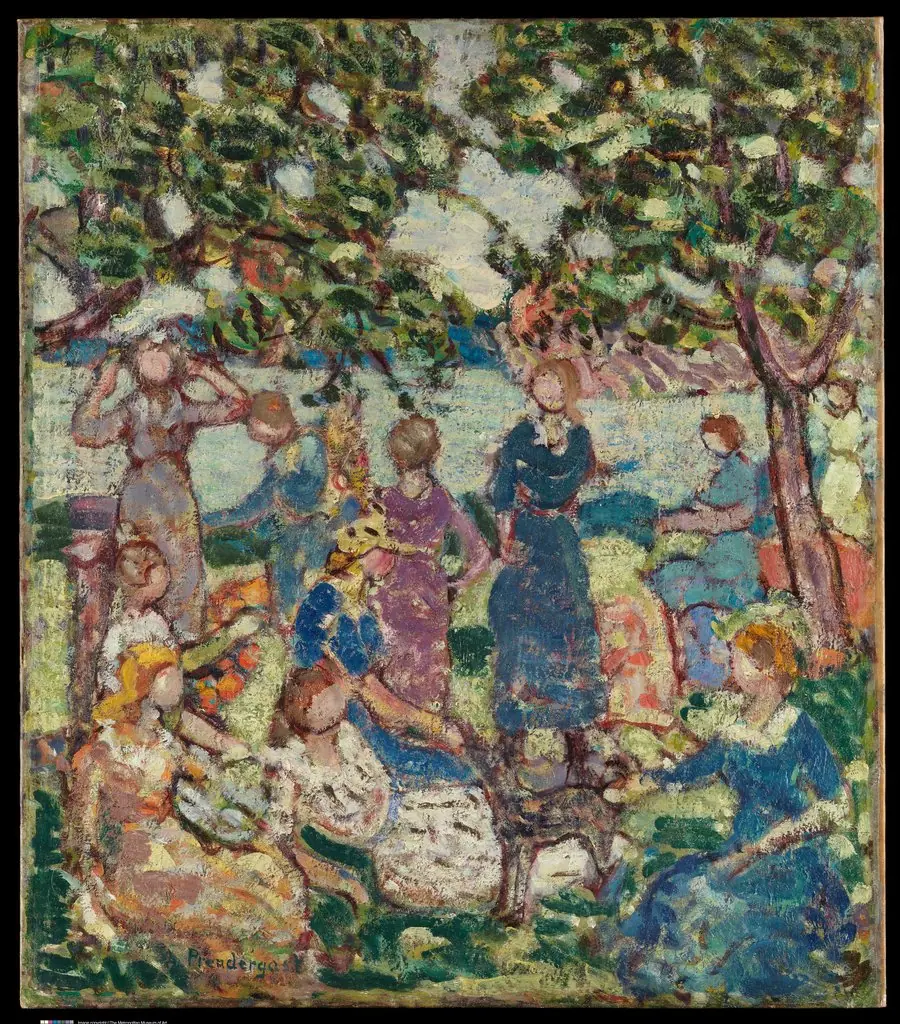
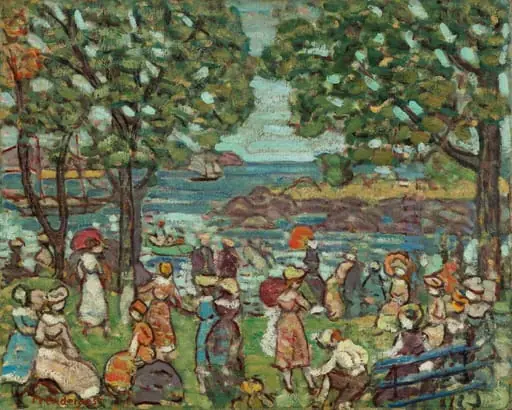
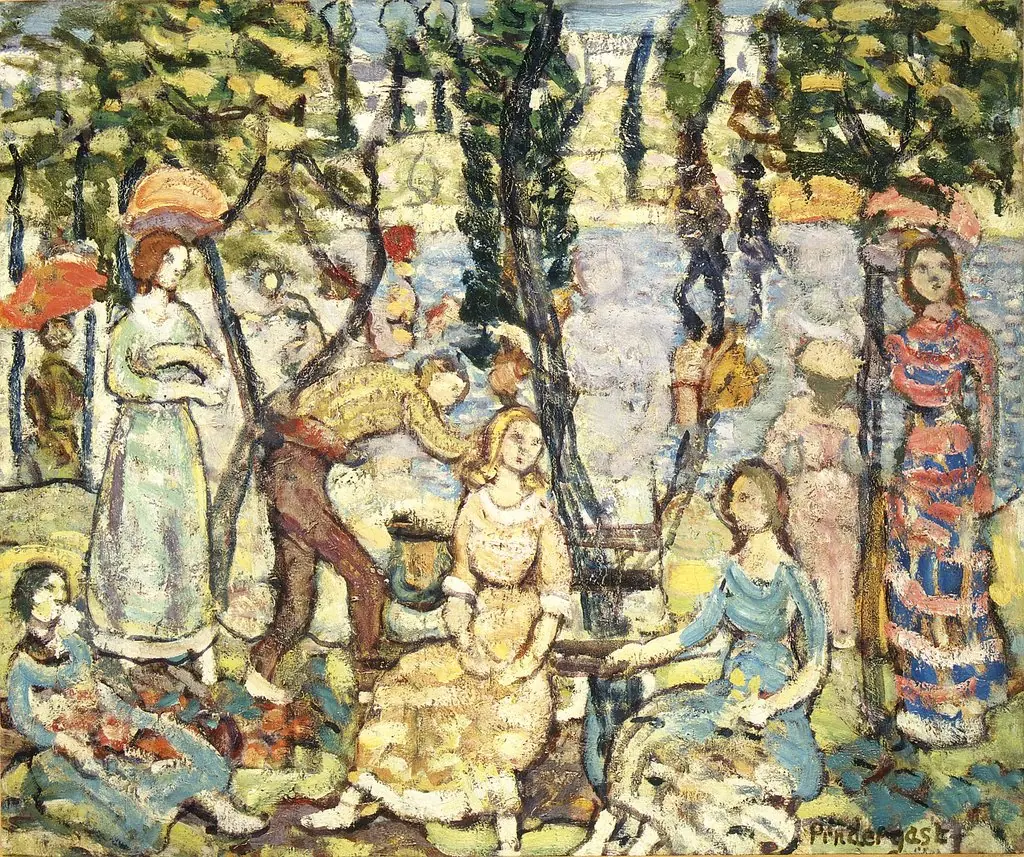
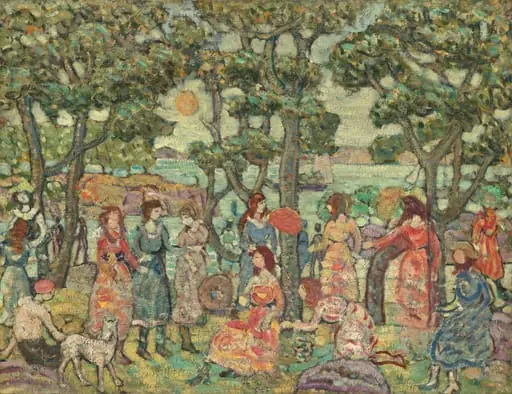
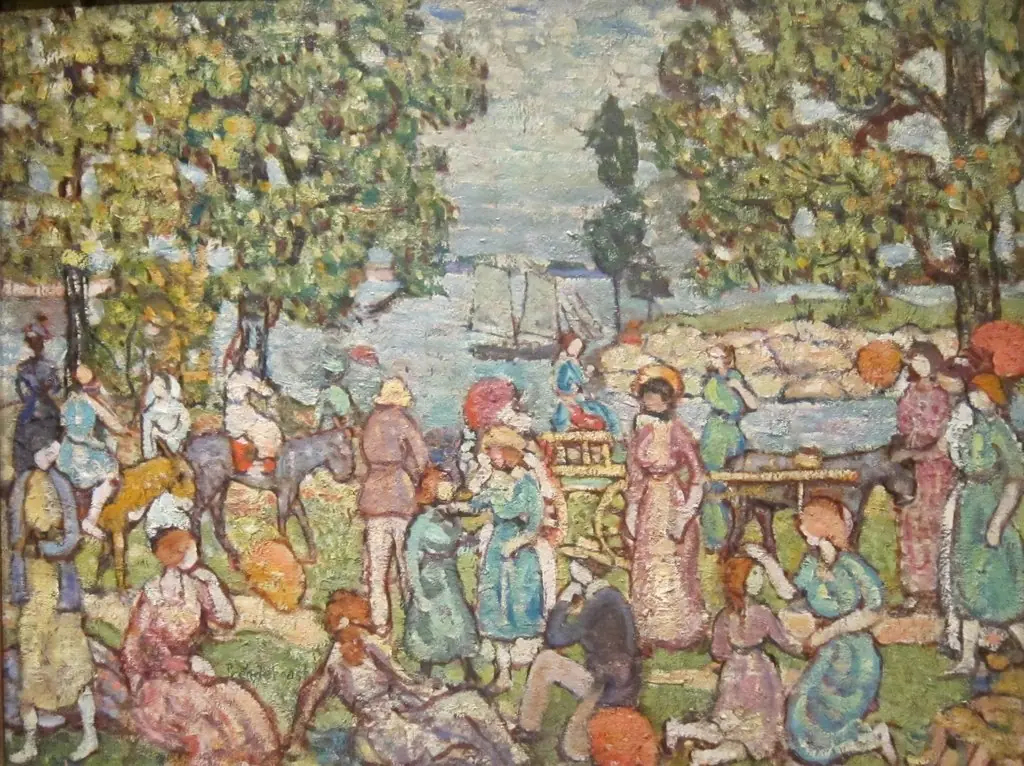
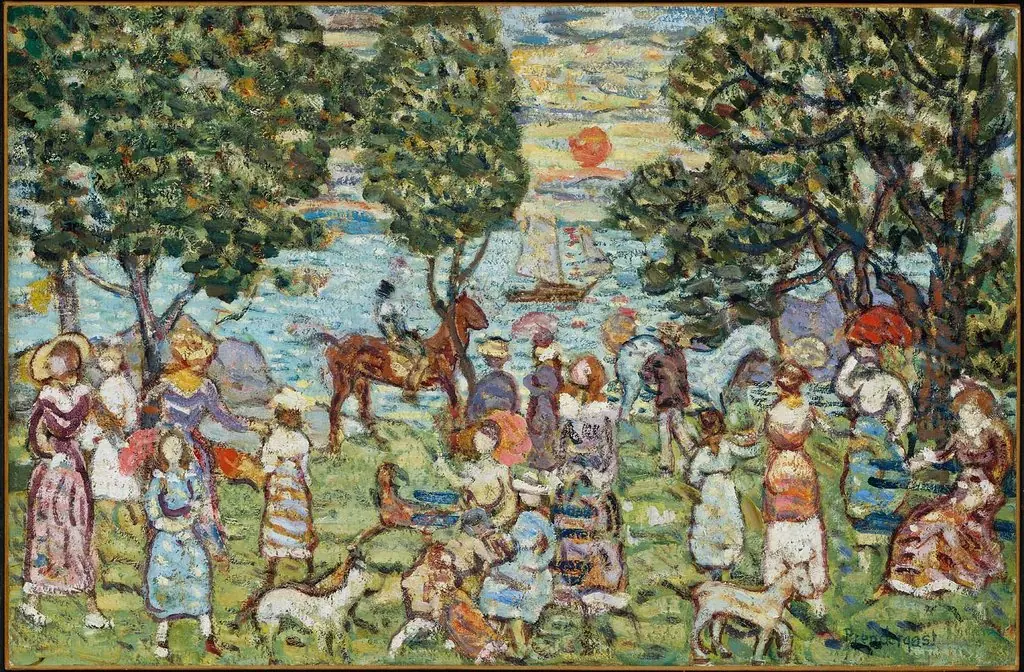
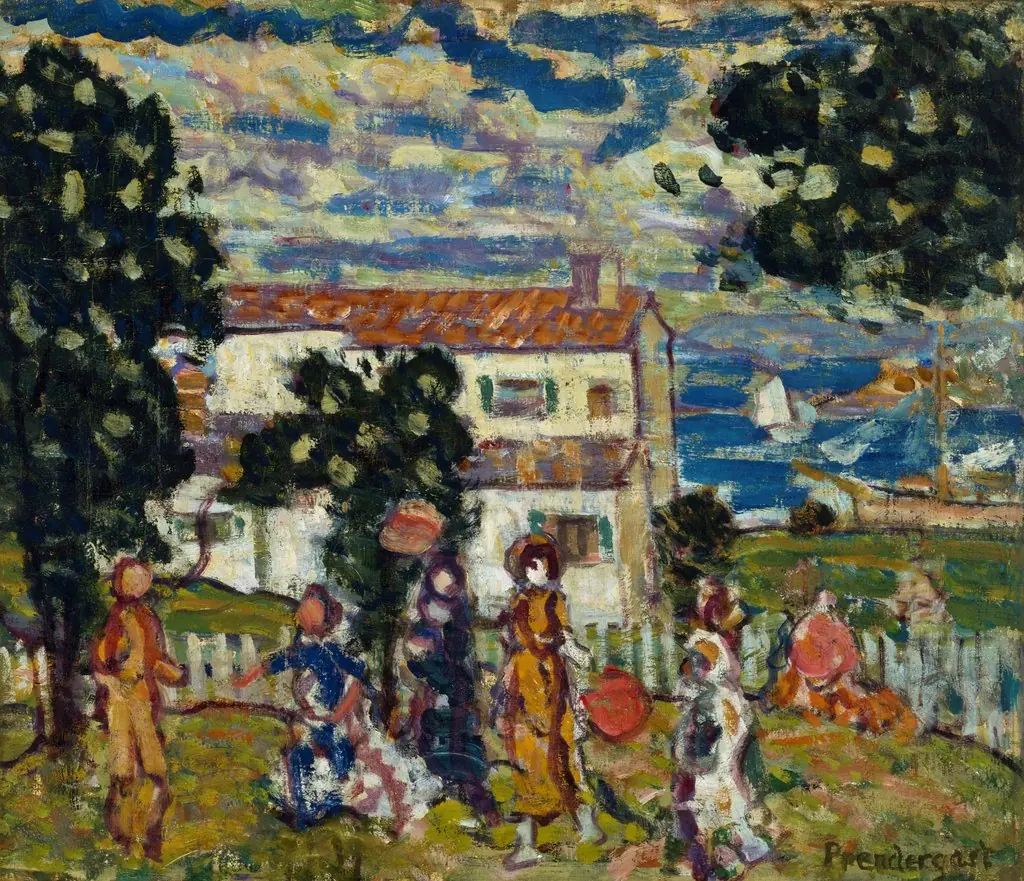
On the Beach, No. 3 is an oil painting by Maurice Prendergast that captures a seaside promenade populated by figures in leisurely motion. The composition avoids linear perspective and detailed rendering, instead organizing the scene through rhythmic clusters of pigment. Each form is built from thick, rounded daubs of color laid side by side, creating a surface that feels both tactile and decorative.
Subject & Meaning
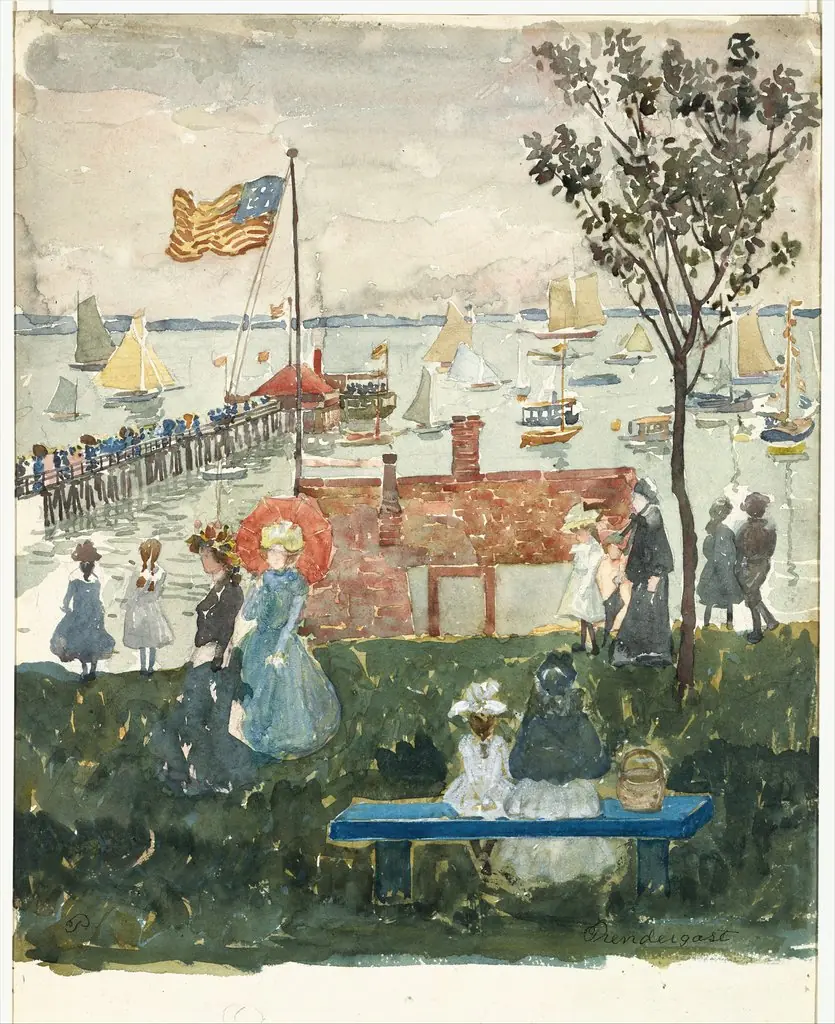
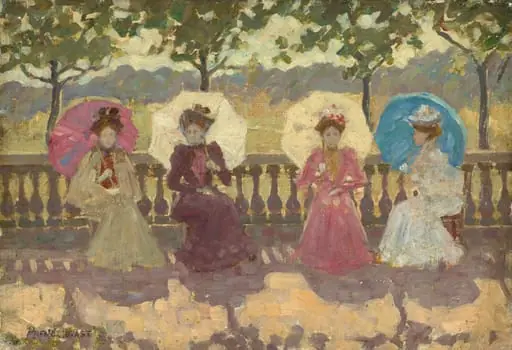
The painting depicts a summer day at a coastal resort, with figures strolling, resting, and interacting along the shore. Their identities are subsumed into the overall pattern, emphasizing collective atmosphere over individual narrative. The absence of facial detail and the flattened forms suggest a focus on mood and movement rather than portraiture, evoking the quiet rhythm of public leisure in the early 20th century.
Technique & Style
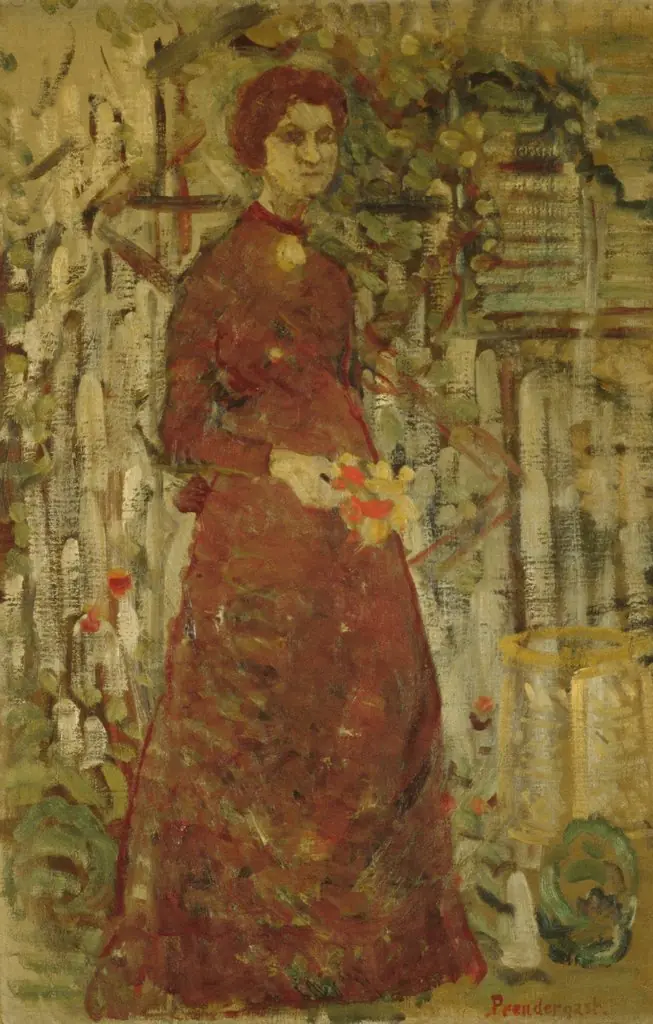
Prendergast applied paint in dense, flat patches of unmixed color, building forms through juxtaposition rather than blending. The thick impasto creates a textured surface that catches light unevenly, enhancing the sense of surface pattern. His method resembles textile weaving, with each color segment acting like a thread in a larger, luminous fabric, prioritizing visual harmony over anatomical precision.
History & Provenance
Painted around 1910, On the Beach, No. 3 belongs to a series of beach scenes Prendergast produced during his frequent visits to New England coastal towns. It was likely exhibited in the early 1910s as part of his growing recognition among American modernists. The work entered a public collection by the mid-20th century, where it remains as an example of his mature style.
Context
Prendergast’s approach emerged amid broader shifts in American art, influenced by Post-Impressionism and European modernism. While contemporaries pursued realism or social commentary, he turned toward abstraction through color and pattern. His work resonated with the decorative arts movement and reflected a fascination with public spaces as sites of visual rhythm rather than narrative drama.
Legacy
On the Beach, No. 3 exemplifies Prendergast’s unique contribution to American painting: a synthesis of color theory and compositional rhythm that anticipated later developments in modern abstraction. His emphasis on surface and pattern over illusion influenced subsequent generations of artists interested in non-narrative, emotionally resonant color fields.
Artist & collection
Artist
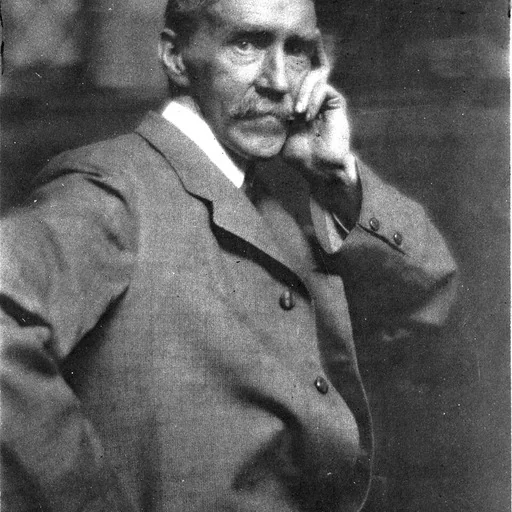
Maurice Brazil Prendergast (October 10, 1858 – February 1, 1924) was a Newfoundlander-American artist who painted in oil and watercolor, and created monotypes.