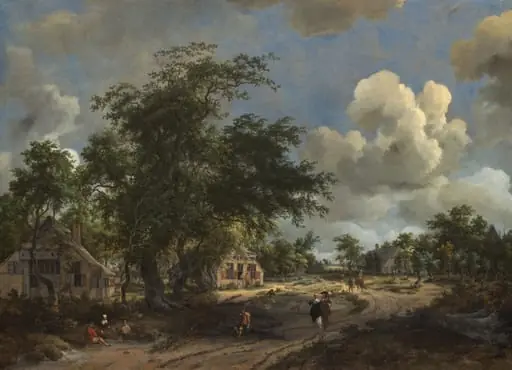
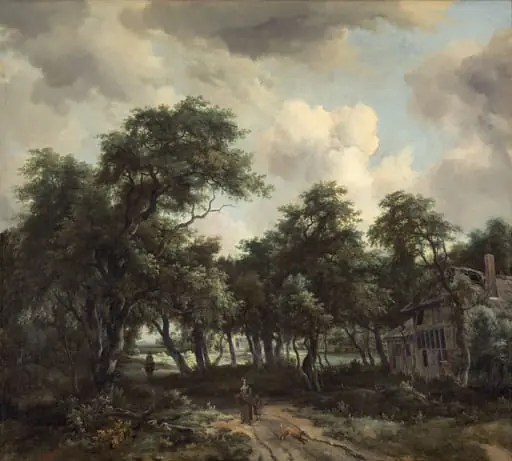
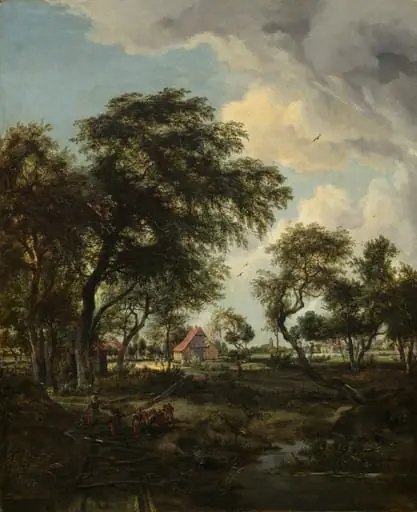
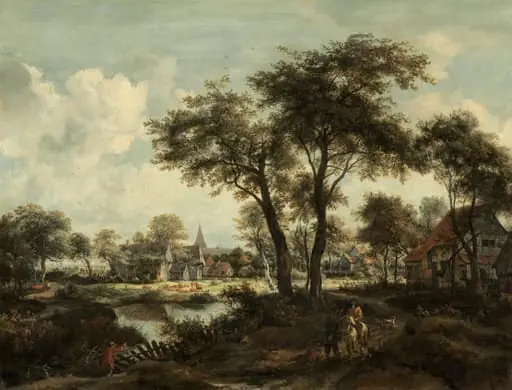
Artwork
The Watermill
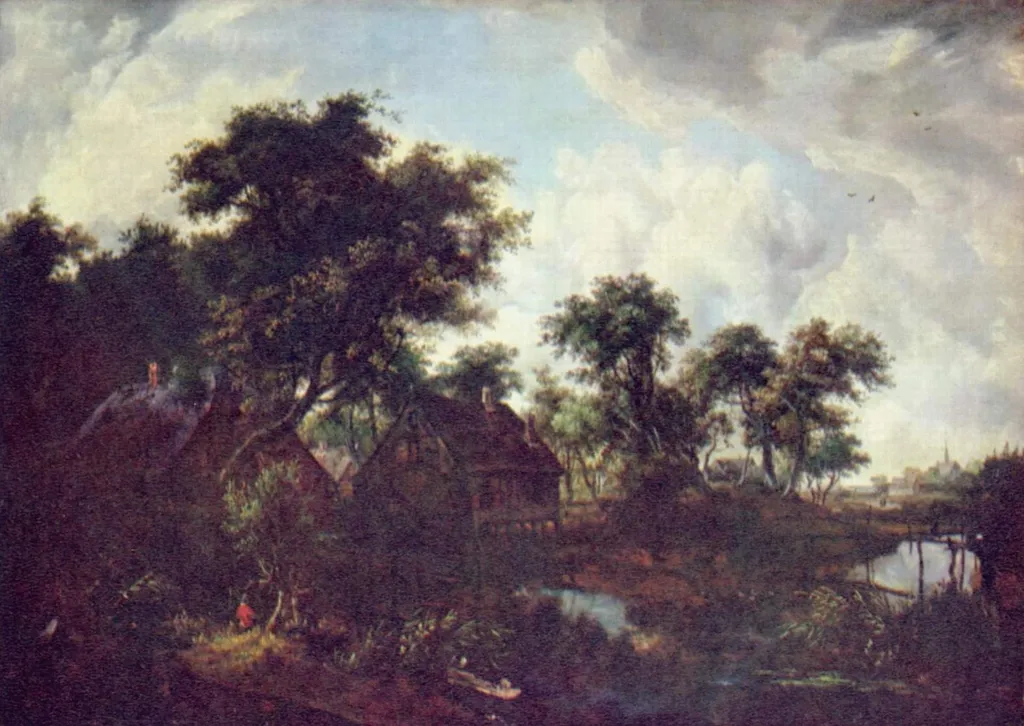
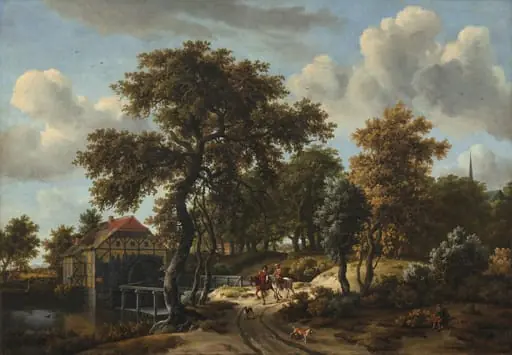
The Watermill is an oil painting by the Dutch Golden Age artist Meindert Hobbema. It dates from 1660 and is held in the collection of the Staatliche Kunstsammlungen Dresden.
About this work
Overview
Painted in 1660, *The Watermill* is an oil-on-canvas landscape by Meindert Hobbema, a Dutch artist known for his quiet, meticulously observed rural scenes.
Painted in 1660, *The Watermill* is an oil-on-canvas landscape by Meindert Hobbema, a Dutch artist known for his quiet, meticulously observed rural scenes. The work exemplifies Hobbema’s mature style, characterized by balanced compositions and a gentle interplay of light and vegetation. It reflects the broader Dutch Golden Age interest in depicting everyday natural environments with quiet dignity, avoiding dramatic narrative in favor of atmospheric presence.
Subject & Meaning
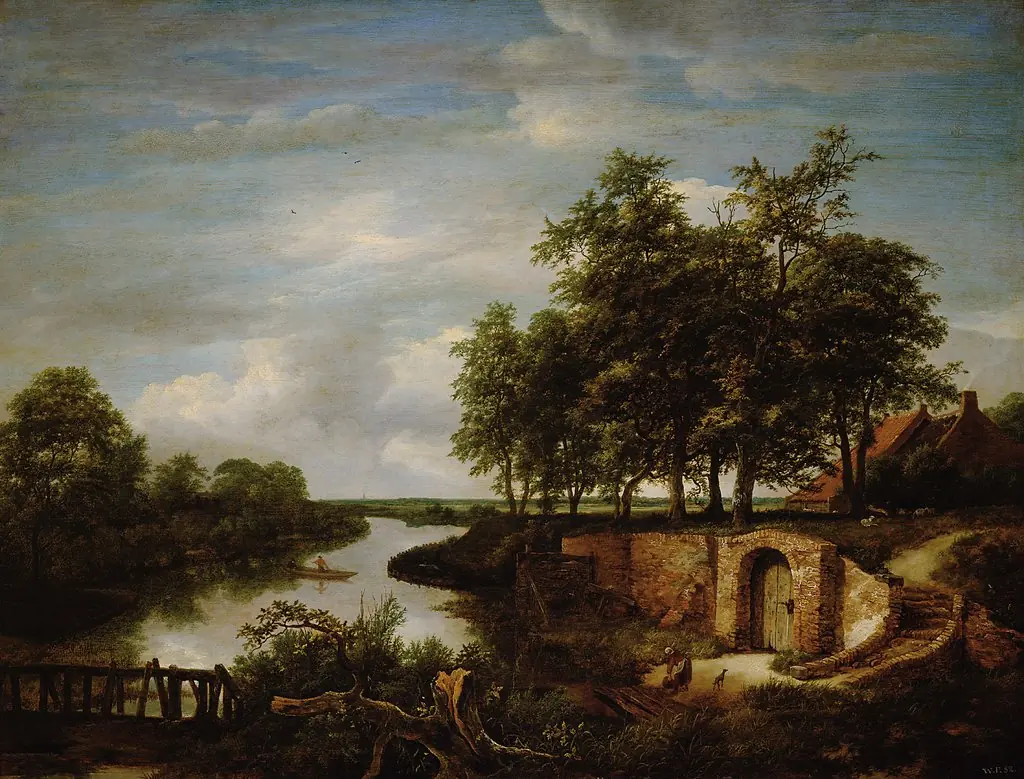
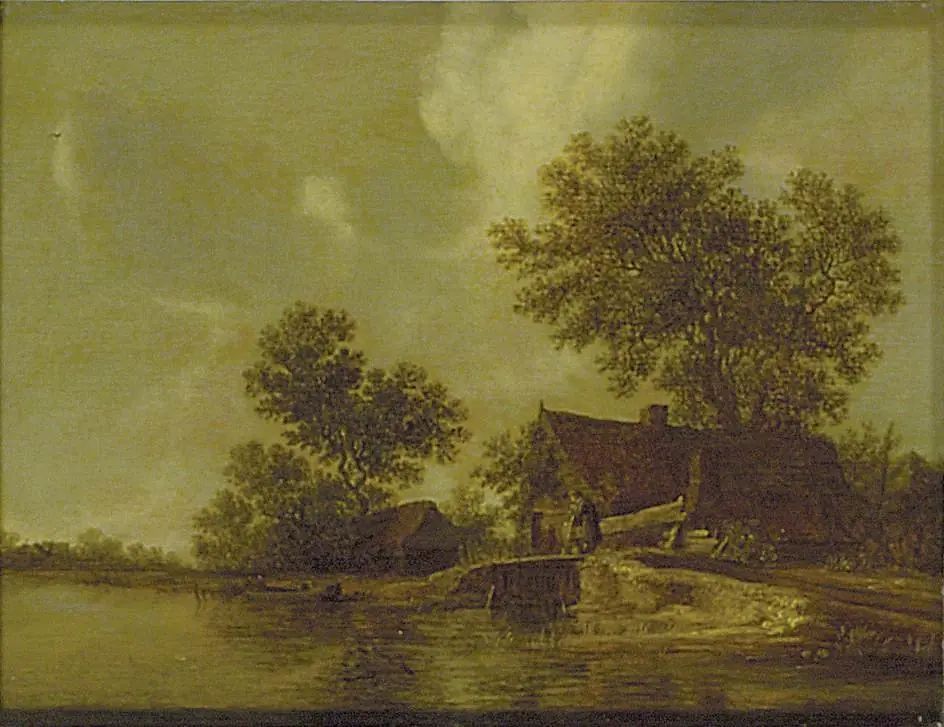
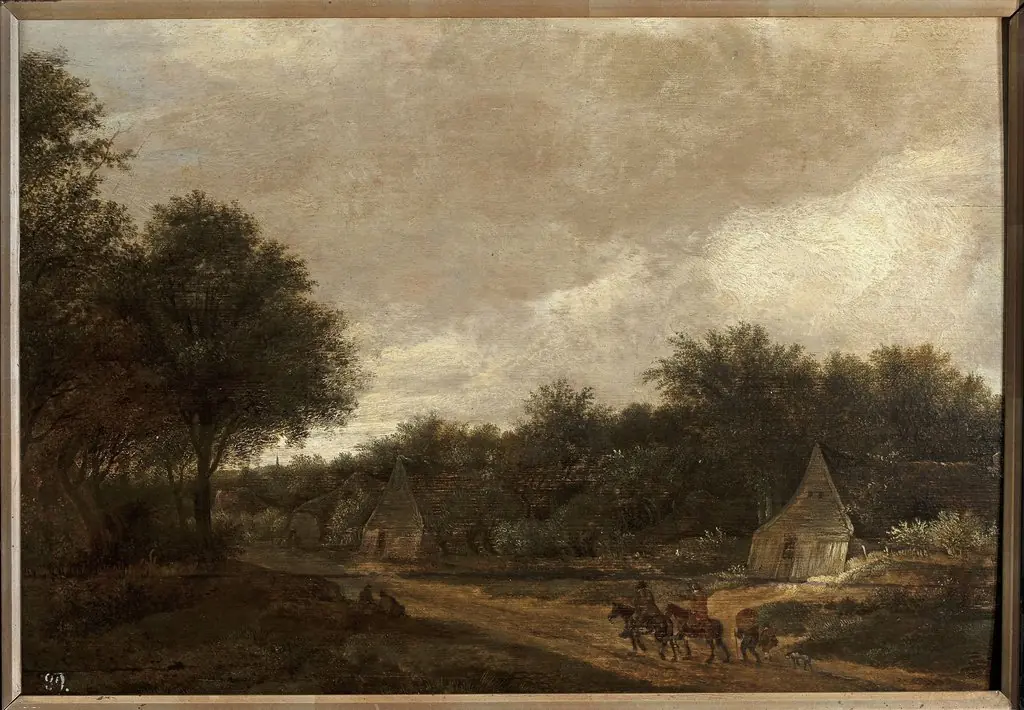
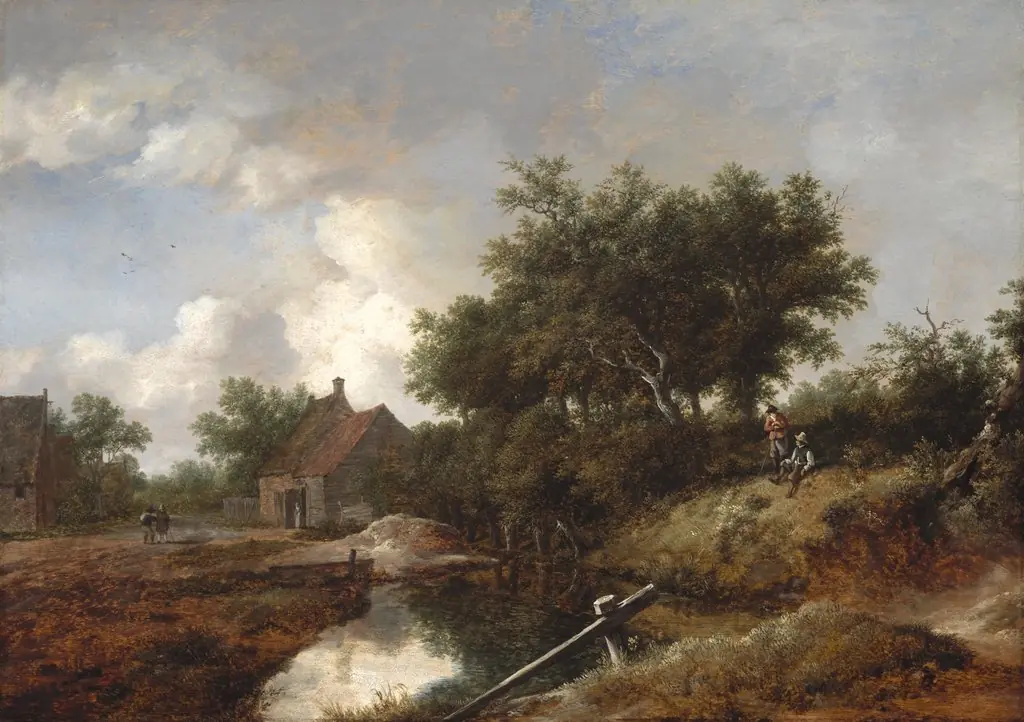
The painting centers on a modest watermill nestled among trees beside a slow-moving stream. The structure, weathered and unadorned, functions as both a working device and a quiet symbol of human harmony with the land. No figures are present, yet the scene implies daily rural life—farming, milling, and water management—rendered without sentimentality. The stillness and order suggest an idealized, enduring relationship between labor and landscape.
Technique & Style
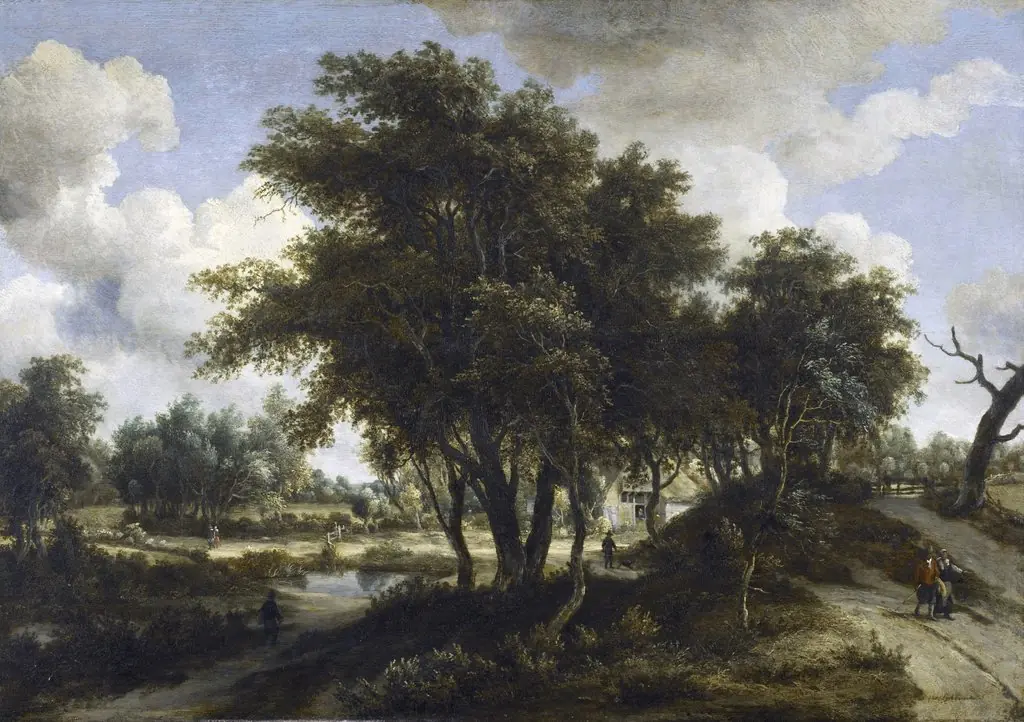
Hobbema employed fine brushwork to render the textures of bark, thatch, and foliage with subtle variation. The light, golden and diffused, casts elongated shadows that anchor the composition and deepen spatial recession. Vertical tree trunks frame the scene, leading the eye toward the mill, while layered greens in the undergrowth create depth without clutter. His technique favors naturalism over idealization, capturing the quiet rhythm of the Dutch countryside with precision.
History & Provenance
The painting entered the Gemäldegalerie Alte Meister in Dresden in the 18th century, likely through the collection of Augustus the Strong. It has remained in the museum’s holdings since, with no documented changes in ownership after its acquisition. Its presence in this major European collection underscores its early recognition among connoisseurs of Dutch landscape painting, though it was never widely reproduced or publicly celebrated in its time.
Context
Hobbema trained under Jacob van Ruisdael, whose influence is evident in the compositional structure and atmospheric treatment. Yet Hobbema’s focus on humble, working landscapes distinguished him from contemporaries who favored grander vistas. In 17th-century Holland, such scenes resonated with a rising middle class that valued domestic tranquility and the economic stability of rural industry, making works like this both familiar and meaningful.
Legacy
Though Hobbema’s reputation faded in the 18th century, *The Watermill* was later rediscovered by 19th-century collectors and artists who admired its restrained beauty. It remains a key example of Dutch landscape painting’s capacity to elevate the ordinary through careful observation. Today, it is studied for its technical subtlety and its quiet reflection of a pre-industrial way of life, valued more for its authenticity than its spectacle.
Artist & collection
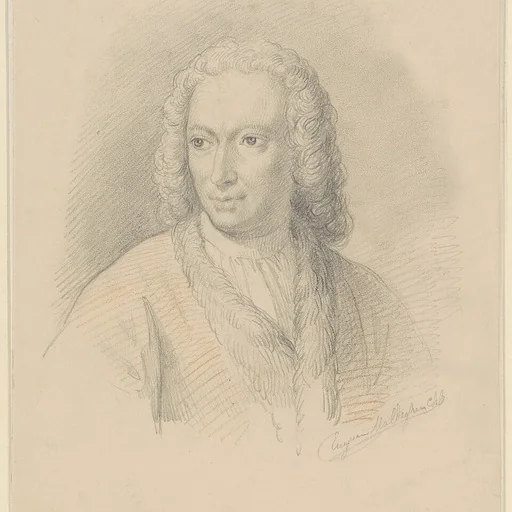
Artist
Meindert Lubbertszoon Hobbema (bapt. 31 October 1638 – 7 December 1709) was a Dutch Golden Age painter of landscapes, specializing in views of woodland, although his most famous painting, The Avenue at Middelharnis…