Artwork
Kirchenväteraltar, Flügelaußenseite: Der Teufel weist dem hl. Augustinus das Buch der Laster vor
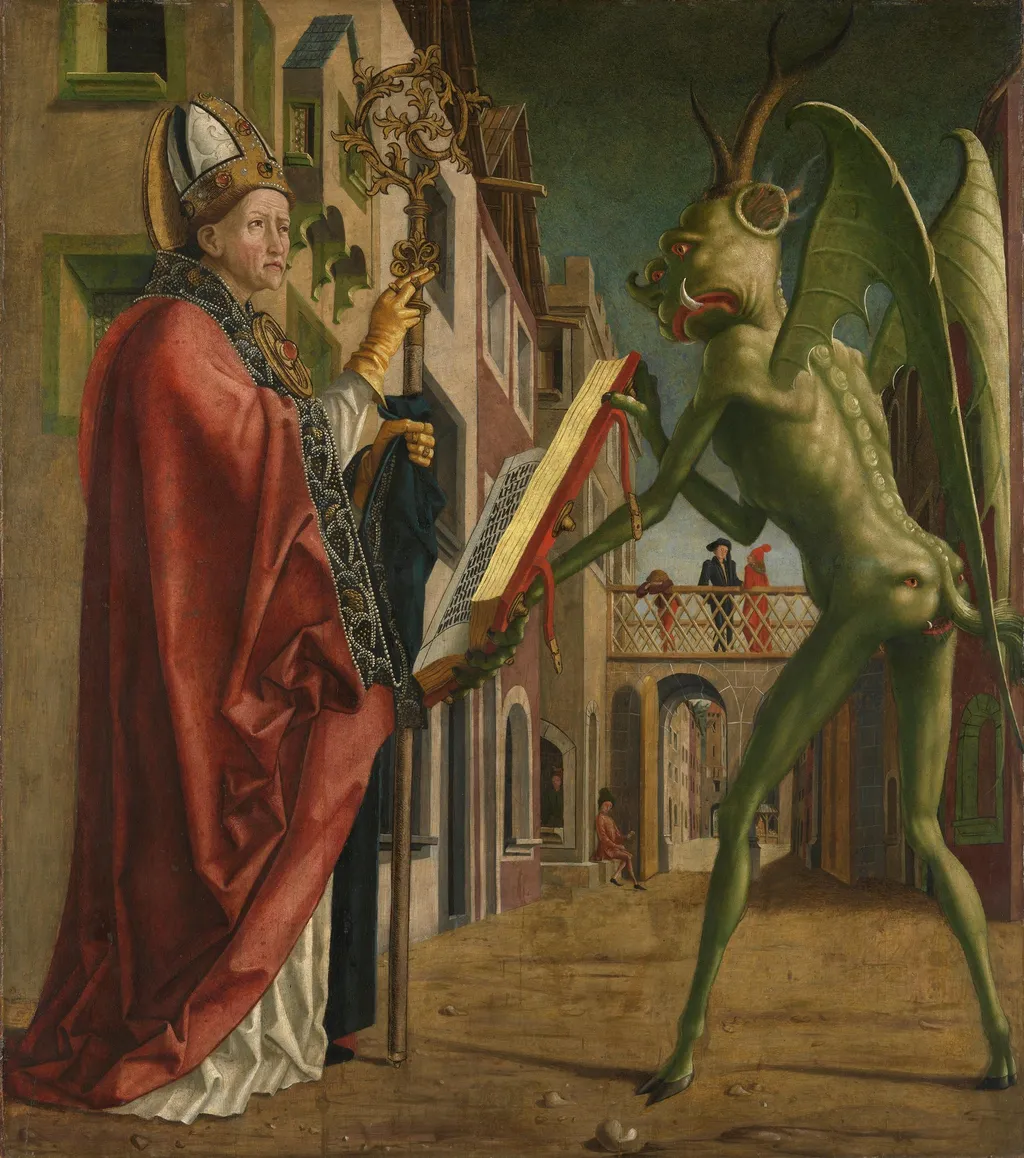
Kirchenväteraltar, Flügelaußenseite: Der Teufel weist dem hl. Augustinus das Buch der Laster vor is an oil painting by the Early Renaissance artist Michael Pacher. It dates from 1471 and is held in the collection of the Bavarian State Painting Collections. The panel titled *Der Teufel weist dem hl.
About this work
Overview
The panel titled *Der Teufel weist dem hl. Augustinus das Buch der Laster vor* forms the outer wing of the Kirchenväteraltar, a wooden altarpiece executed in 1471. It was painted by Michael Pacher, a Tyrolean artist whose career flourished in the latter half of the fifteenth century. The work now belongs to the collection of the Alte Pinakothek in Munich.
Subject & Meaning
In the composition, Saint Augustine of Hippo is confronted by a demonic figure presenting a crimson‑bound volume that enumerates sins. Augustine, dressed in ecclesiastical red and crowned with a mitre, appears solemn, while the horned, winged creature displays an aggressive grin and sharp teeth, emphasizing the moral conflict between temptation and the saint’s theological insight.
Technique & Style
Pacher employed tempera on a carved wooden panel, integrating emerging Renaissance spatial modeling with the lingering Gothic emphasis on narrative detail.
Pacher employed tempera on a carved wooden panel, integrating emerging Renaissance spatial modeling with the lingering Gothic emphasis on narrative detail. The figures are rendered with a careful handling of light and shadow, giving the devil a three‑dimensional presence, while the architectural backdrop—arched structures and a balcony of onlookers—demonstrates a measured use of perspective uncommon in earlier German panel painting.
History & Provenance
Created for the high altar of a regional church, the panel remained in situ until the nineteenth‑century secularization movements led to its removal. It entered the Alte Pinakothek’s holdings during the museum’s acquisition program in the late 1800s, where it has been displayed as part of the larger Kirchenväteraltar ensemble.
Context
The scene reflects Augustinian thought on the nature of sin and divine grace, a theme frequently illustrated in late medieval devotional art. By juxtaposing the saint with a personified catalogue of vices, Pacher aligns his work with contemporary theological debates and the didactic function of altarpieces, which aimed to instruct viewers on moral vigilance.
Own this work as a print
Artist & collection
Artist
Michael Pacher (c. 1435 – August 1498) was a painter and sculptor from Tyrol active during the second half of the fifteenth century. He was one of the earliest artists to introduce the principles of Renaissance painting…
