Artwork
Peisaj de iarnă
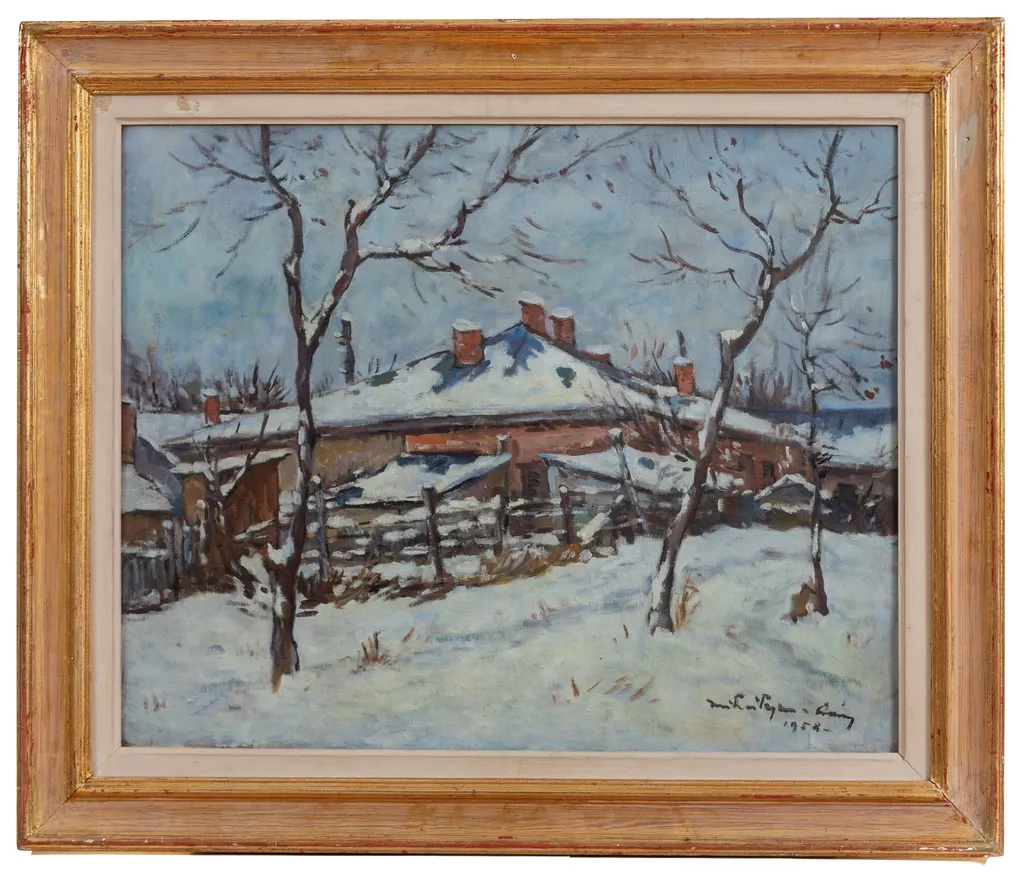
Peisaj de iarnă is a print by Mihăilescu-Craiu Victor. It dates from 1945 and is held in the collection of the Moldova National Museum Complex.
About this work
Overview
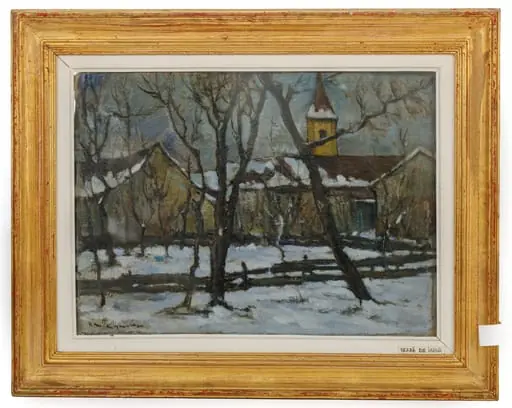
Created around 1945 by Mihăilescu-Craiu Victor, this winter landscape captures a quiet rural scene with minimal human presence.
Created around 1945 by Mihăilescu-Craiu Victor, this winter landscape captures a quiet rural scene with minimal human presence. The composition centers on a modest dwelling surrounded by bare trees, rendered in a loose, immediate manner that suggests spontaneity rather than polished finish. The palette is restrained, dominated by whites, grays, and muted blues, reinforcing the stillness of the season.
Subject & Meaning
The painting presents an unadorned winter scene: a single house with a rusted chimney, snow-laden roofs, and skeletal trees. There is no narrative or symbolic flourish—only the quiet endurance of a domestic structure amid nature’s dormancy. The absence of figures or movement invites contemplation of solitude and the passage of time in a rural setting.
Technique & Style
Brushwork is deliberately uneven and tactile, with visible strokes that suggest rapid application rather than careful blending. Snow is built up in textured patches, avoiding uniformity to mimic natural accumulation. Dark tree limbs contrast sharply against the pale ground, while the chimney’s rust adds a subtle note of decay. The technique prioritizes sensory truth over idealized form.
History & Provenance
The work dates from the mid-1940s, a period of postwar adjustment in Romania. While little is documented about its early ownership, its modest scale and unpretentious subject align with artistic practices of the time that favored everyday observation over grand themes. It likely remained within private or regional collections until its later recognition.
Context
Emerging in the aftermath of World War II, the painting reflects a broader trend among Romanian artists who turned to intimate, local scenes as a response to national upheaval. Rather than engaging with political symbolism, Mihăilescu-Craiu focused on the quiet rhythms of rural life, grounding his work in sensory detail and emotional restraint.
Legacy
Though not widely exhibited, the work contributes to a quieter strand of Romanian modernism that valued direct observation over stylistic innovation. Its unembellished approach to winter light and texture influenced later regional painters seeking authenticity in landscape representation, preserving a sense of place through humble, unpolished means.
Artist & collection
Artist
Victor M. Craiu painted Romanian landscapes and figure scenes using thick, choppy brushstrokes that give his surfaces a restless energy. In prints like *Strămoșul* and *Peisaj urban*, he layered bold autumn greens,…
 Flori de toamnă
 Natură statică
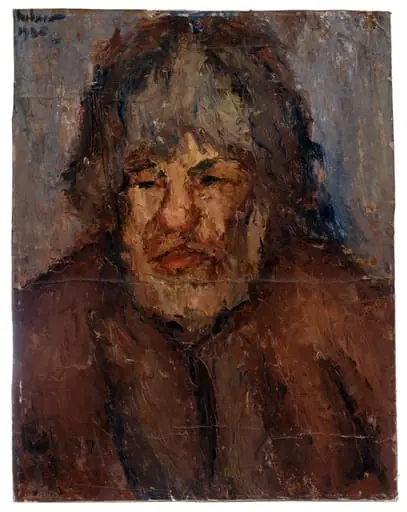 Strămoșul
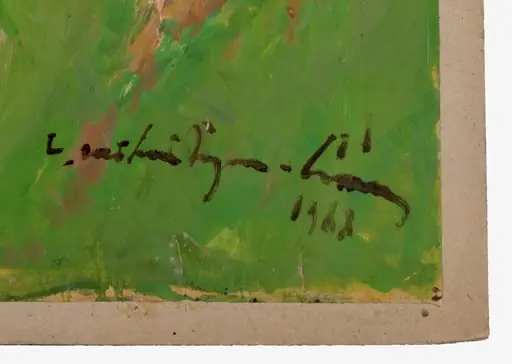 Studiu de peisaj cu un drum pe care merge o căruță trasă de cai. În prim-plan, căruța văzută din spate, dreapta. În căruță, un bărbat cu căciulă neagră și haină gri, o femeie cu batic alb și haină brun-ocru și o fetiță cu batic alb cu verde-roșu, așezată în spatele celor doi, lângă două butoaie. Drumul taie ca o diagonală lucrarea; de-o parte și de alta, iarbă. Linia orizontului foarte ridicată, după care se vede un copac verde, dealul albastru în depărtare și cerul. Semnat și datat cu brun, dreapta jos: V. Mihăilescu Craiu 1968.
 Natură statică cu flori
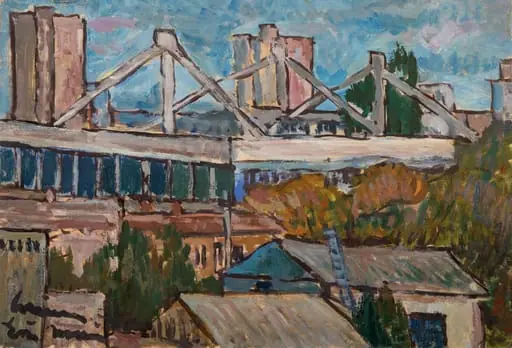 Peisaj urban; în prim-plan, acoperișuri de case și vegetație. În plan îndepărtat, o hală de producție care are pe acoperiș grinzi verticale care susțin alte grinzi de-o parte și de alta, celălalt capăt având punct de sprijin marginile construcției. Două coșuri apar în spatele halei. Colorat în gri. Tușă păstoasă. Semnat cu negru, stânga jos: Craiu.
 Peisaj industrial pe Valea Bistriței
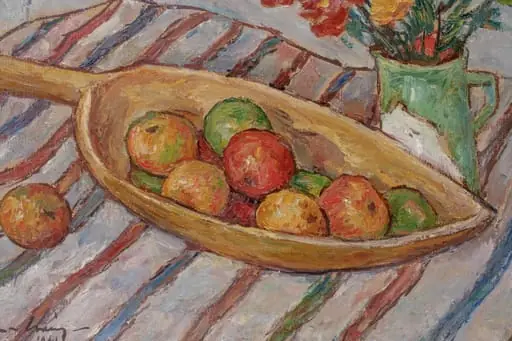 Natură moartă cu mere și flori