Artwork
Portret
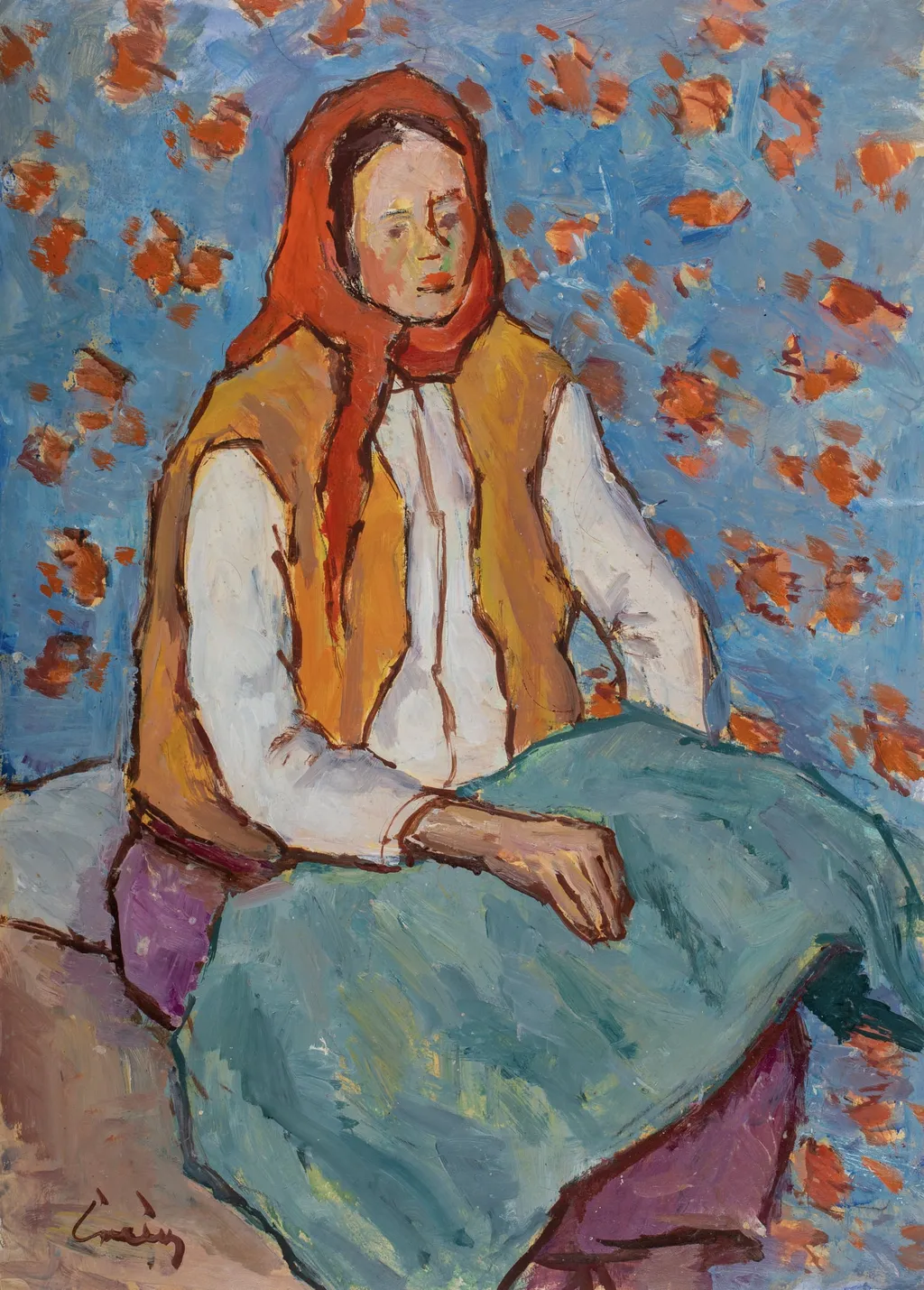
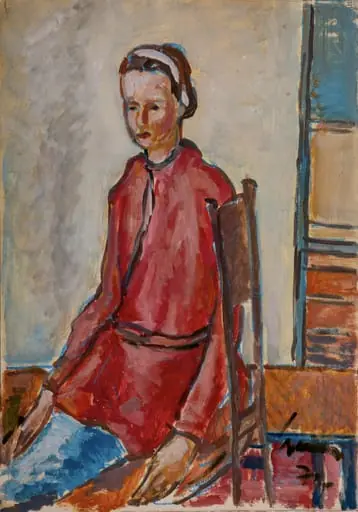
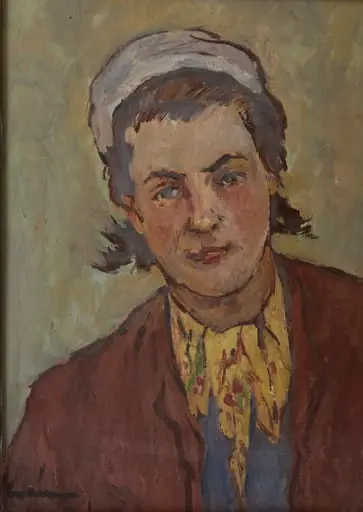
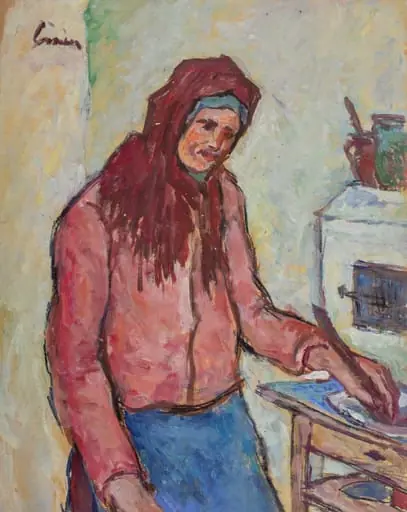
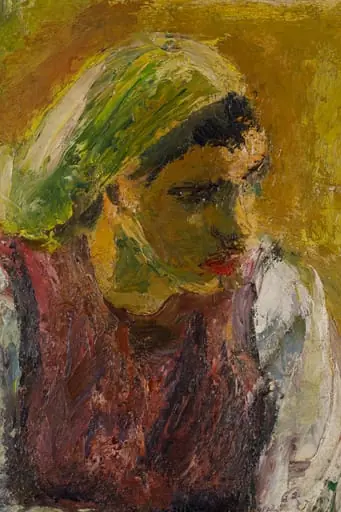
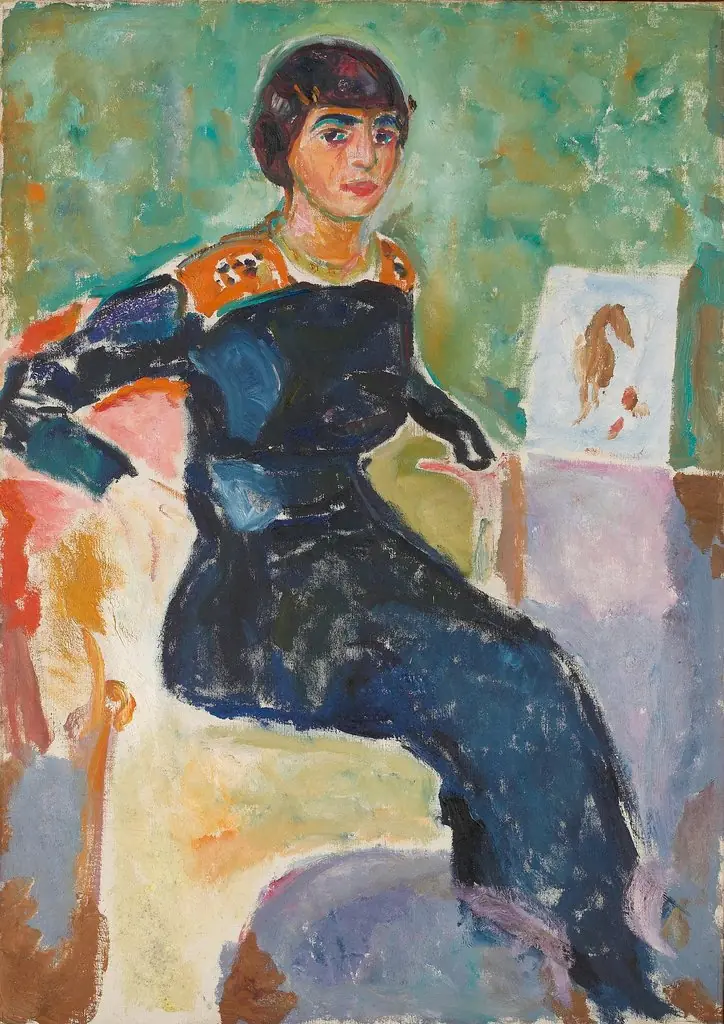
Portret is an unspecified painting by Mihăilescu-Craiu Victor. It dates from 1945 and is held in the collection of the Moldova National Museum Complex.
About this work
Overview
The background and clothing interact dynamically, suggesting movement and emotional tension rather than literal representation.
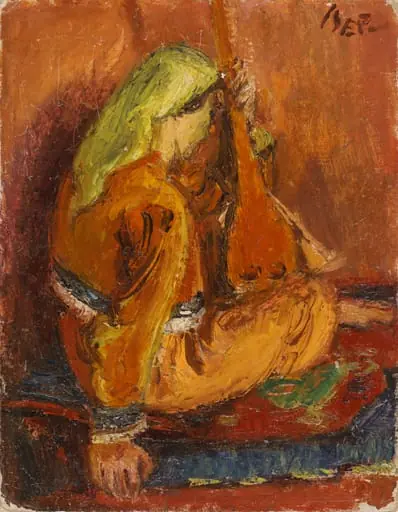
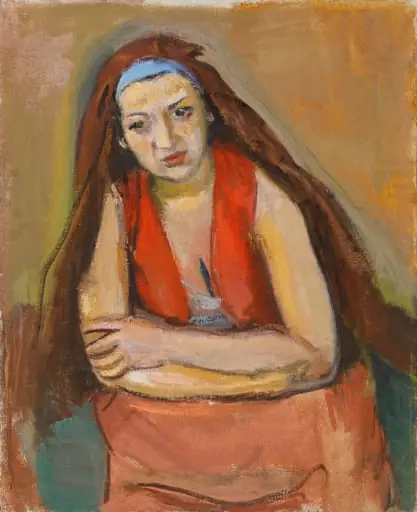
Created around 1945 by Mihăilescu-Craiu Victor, this portrait captures a seated figure in a highly expressive manner. The composition centers on the subject’s form, rendered with energetic brushwork and a limited but intense palette. The background and clothing interact dynamically, suggesting movement and emotional tension rather than literal representation. The work reflects a post-war interest in emotional authenticity over idealized form.
Subject & Meaning
The subject, seated and wrapped in a vivid red shawl and yellow-orange jacket, is rendered with minimal facial detail, emphasizing mood over identity. The clothing’s bold hues and the swirling background imply inner turbulence or psychological depth. The absence of context or environment focuses attention on the figure’s presence, inviting interpretation as a meditation on isolation or resilience during a turbulent historical period.
Technique & Style
Thick, uneven brushstrokes dominate the surface, particularly on the face and fabric, creating a tactile, almost sculptural texture. The impasto technique builds layers of paint that catch light differently, enhancing the sense of physicality. Colors are applied with deliberate contrast—red against blue, yellow against white—producing visual dissonance that heightens emotional intensity rather than harmony.
History & Provenance
The painting was produced in the mid-1940s, a period of political and social upheaval in Romania. While specific ownership history is not documented, its stylistic choices align with broader European tendencies toward expressive abstraction in the aftermath of conflict. The work likely emerged from an artist’s personal response to the era’s instability, rather than official or commercial commission.
Context
Emerging in the shadow of World War II, the painting reflects a shift away from academic realism toward emotionally charged, gestural expression. Though not part of a named movement, its approach echoes contemporaneous trends in Eastern European modernism, where artists used distortion and color to convey inner states. The lack of narrative detail situates it within a broader post-war search for subjective truth.
Legacy
The work remains a quiet example of Romanian modernist portraiture, notable for its raw handling and emotional directness. While not widely exhibited or studied, it contributes to understanding how artists in Eastern Europe navigated personal expression under constrained cultural conditions. Its emphasis on texture and color over detail continues to resonate with viewers drawn to non-idealized human representation.
Artist & collection
Artist
Victor M. Craiu painted Romanian landscapes and figure scenes using thick, choppy brushstrokes that give his surfaces a restless energy. In prints like *Strămoșul* and *Peisaj urban*, he layered bold autumn greens,…
 Flori de toamnă
 Natură statică
 Strămoșul
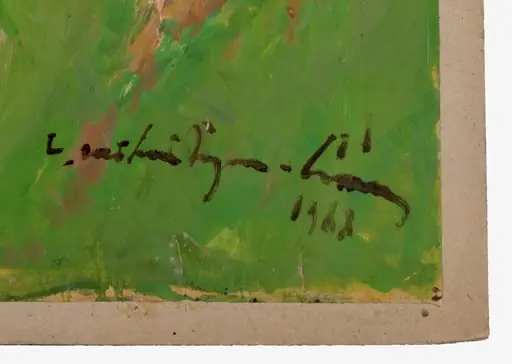 Studiu de peisaj cu un drum pe care merge o căruță trasă de cai. În prim-plan, căruța văzută din spate, dreapta. În căruță, un bărbat cu căciulă neagră și haină gri, o femeie cu batic alb și haină brun-ocru și o fetiță cu batic alb cu verde-roșu, așezată în spatele celor doi, lângă două butoaie. Drumul taie ca o diagonală lucrarea; de-o parte și de alta, iarbă. Linia orizontului foarte ridicată, după care se vede un copac verde, dealul albastru în depărtare și cerul. Semnat și datat cu brun, dreapta jos: V. Mihăilescu Craiu 1968.
 Natură statică cu flori
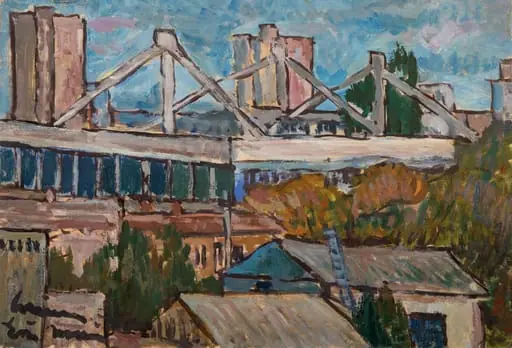 Peisaj urban; în prim-plan, acoperișuri de case și vegetație. În plan îndepărtat, o hală de producție care are pe acoperiș grinzi verticale care susțin alte grinzi de-o parte și de alta, celălalt capăt având punct de sprijin marginile construcției. Două coșuri apar în spatele halei. Colorat în gri. Tușă păstoasă. Semnat cu negru, stânga jos: Craiu.
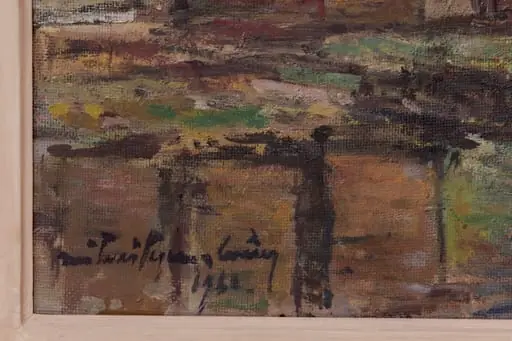 Peisaj industrial pe Valea Bistriței
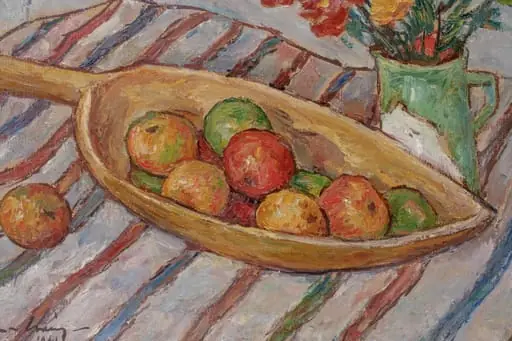 Natură moartă cu mere și flori