Artwork
Blacksmiths
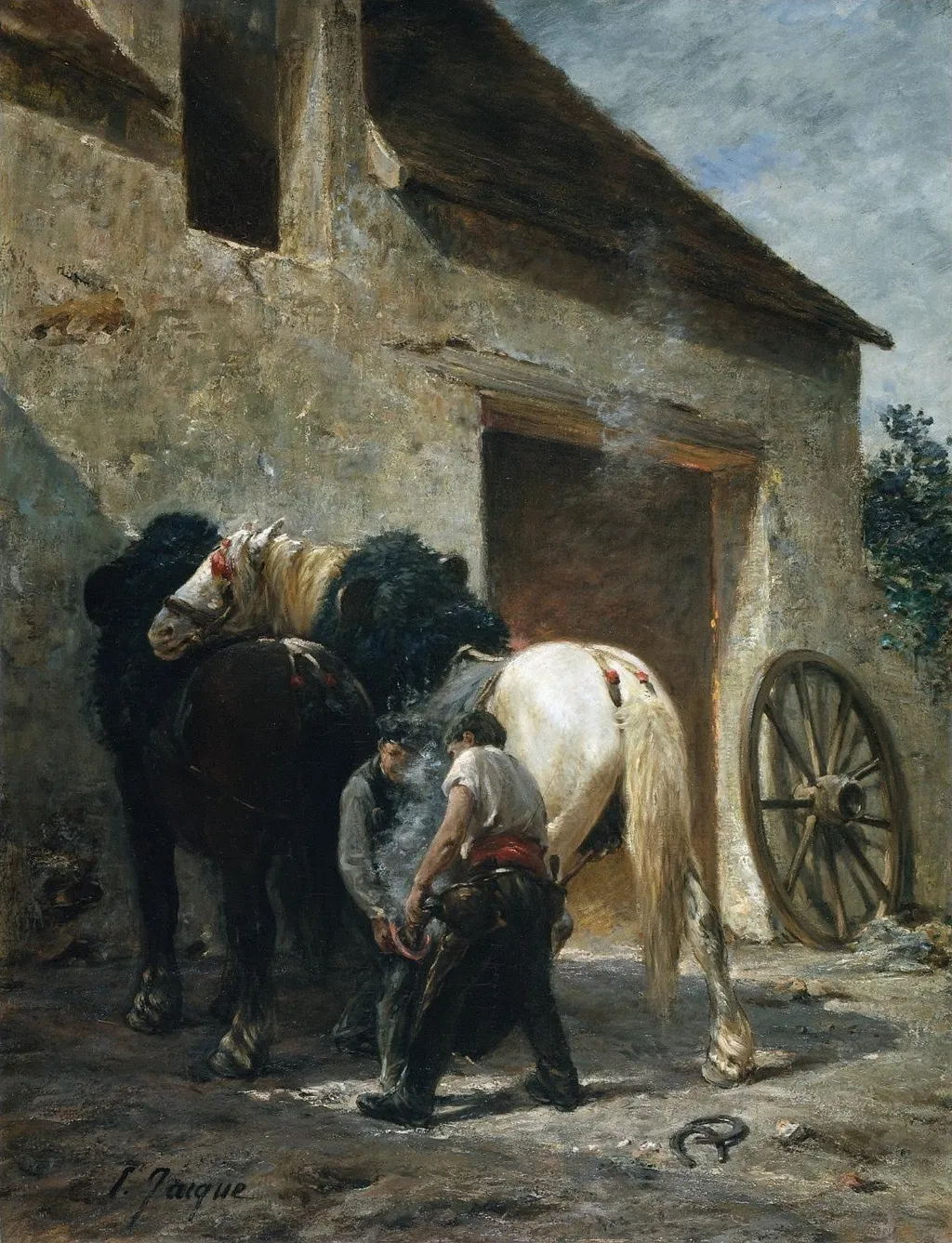
Blacksmiths is an oil painting by the Post-Impressionist artist Jacques-Émile Blanche. It dates from 1896 and is held in the collection of the Cleveland Museum of Art.
About this work
Overview
Created in 1896, *Blacksmiths* is an oil painting that captures a moment of work inside a dimly lit stable. The composition centers on three figures attending to two horses, one white and one dark, while rough stone walls and a wooden wagon wheel frame the scene. The work reflects the post‑impressionist interest in everyday labor and the tactile qualities of paint.
Subject & Meaning
The picture presents a straightforward narrative of rural industry: a man guides a white horse out of a doorway, another restrains a darker horse by its bridle, and a third crouches to rinse the white animal’s legs. The emphasis on the wet legs catching light suggests a focus on the physicality of work and the interaction between human effort and animal strength.
Technique & Style
Jacque employs a post‑impressionist palette and brushwork, using thick applications of paint—impasto—to give texture to the horses’ legs and the stone walls. The heavy strokes create a palpable surface, while the contrast of illuminated wet skin against the shadowy interior heightens the visual drama without relying on precise detail.
History & Provenance
Émile Jacque, a largely self‑taught French painter, built his reputation primarily as a portraitist, dividing his career between London and Paris. Though better known for portraiture, this work demonstrates his broader interest in genre scenes. The painting entered private collections shortly after its exhibition and has since been documented in several European museum inventories.
Artist & collection
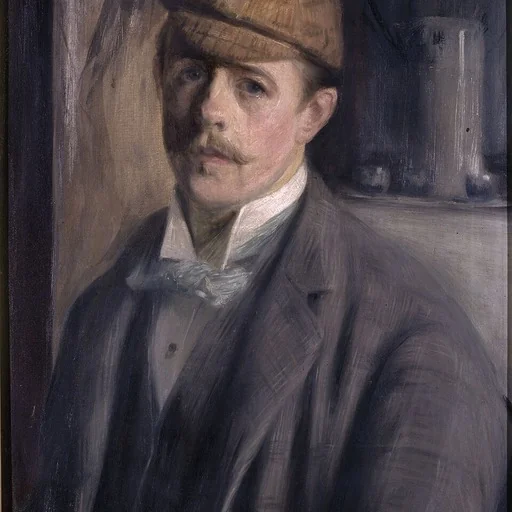
Artist
Jacques-Émile Blanche (French: ; (1 January 1861 – 30 September 1942) was a French artist, largely self-taught, who became a successful portrait painter, working in London and Paris.
