Artwork
One of 235 drawings of architectural subjects in France, Germany, and Italy
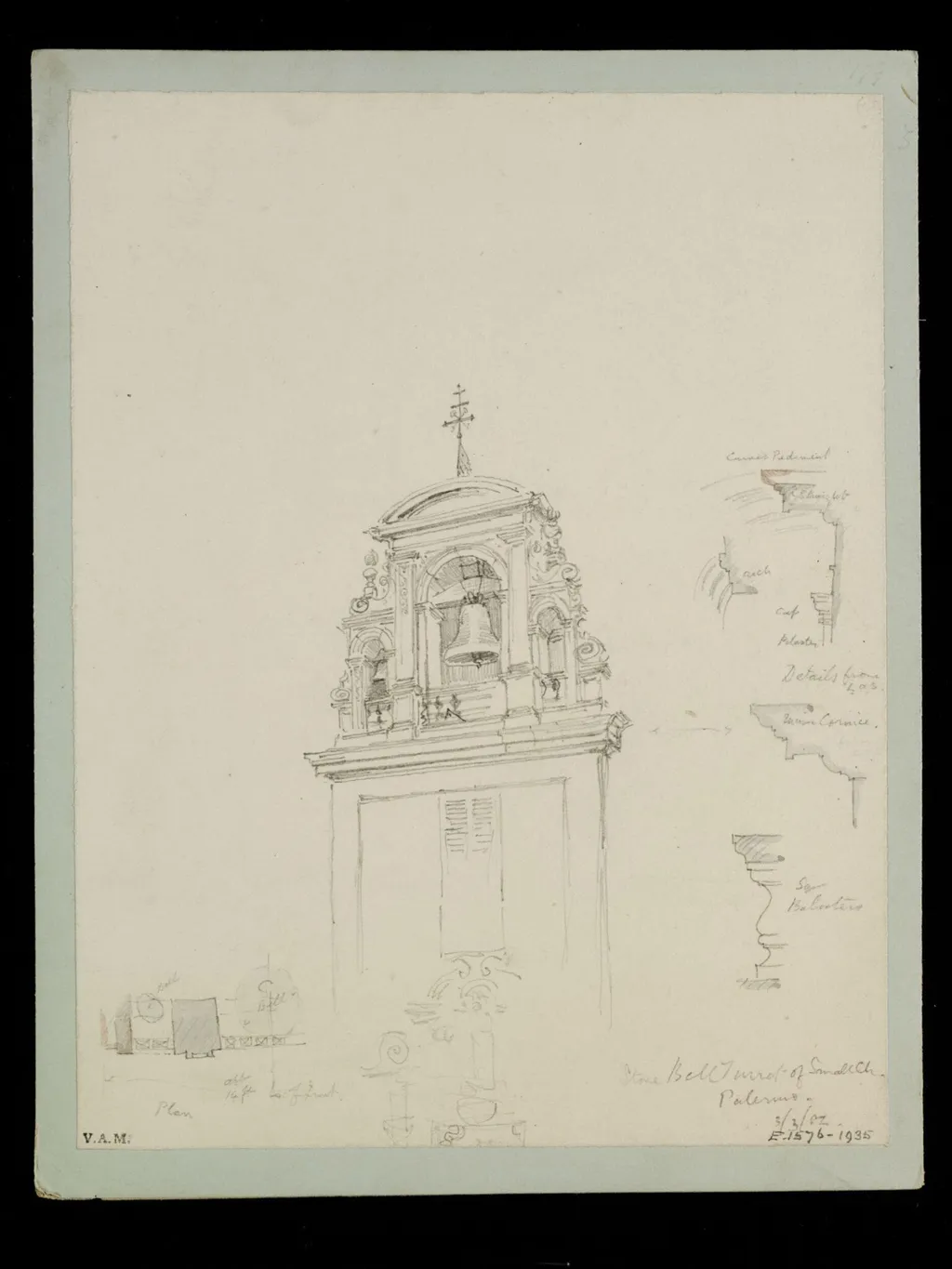
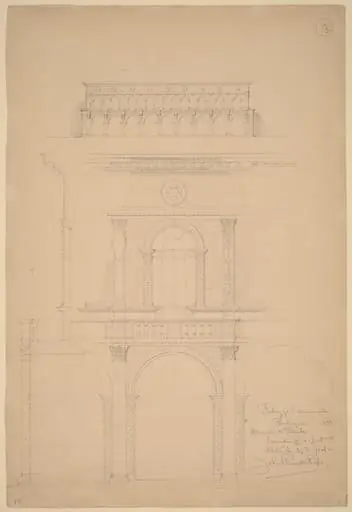
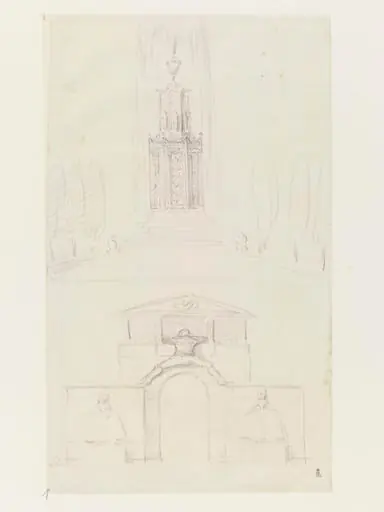
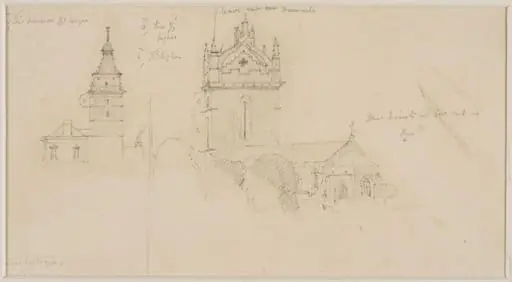
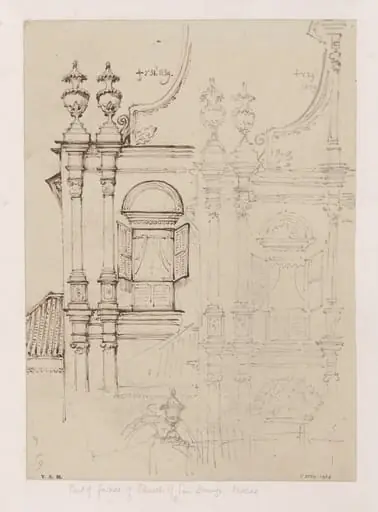
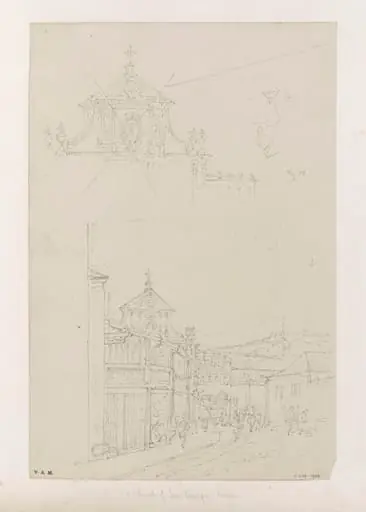
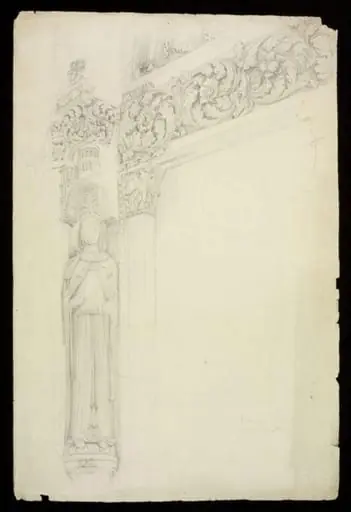
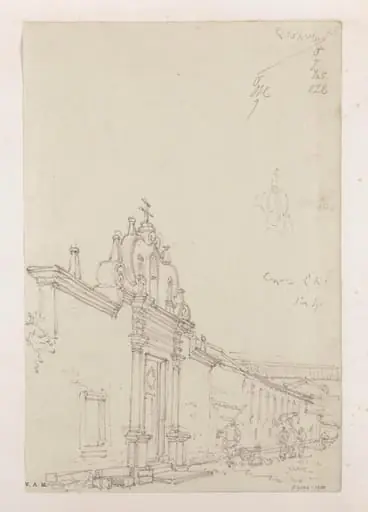
One of 235 drawings of architectural subjects in France, Germany, and Italy is a drawing by the Impressionist artist Walter John Nash Millard. It dates from 3 and is held in the collection of the Victoria and Albert Museum. This drawing records a modest stone bell turret attached to a church in Palermo.
About this work
Overview
This drawing records a modest stone bell turret attached to a church in Palermo. Executed in ink or pencil, it combines an exterior elevation with orthogonal plans and sectional details, transforming a fleeting observation into a precise architectural document. The sheet functions equally as field sketch and analytical study.
Subject & Meaning
The subject is the campanile of an unassuming Sicilian parish church. By isolating the tower from its surroundings and annotating its proportions, the artist foregrounds the interplay of local masonry traditions and classical motifs—columns, cornices, and a segmental pediment—revealing how vernacular builders interpreted inherited forms.
Technique & Style
Rapid, confident strokes capture mass and shadow, while finer hatching defines texture. Orthogonal projections to the right dissect the structure into measurable components, underscoring an empirical approach. Labels and dimensions interspersed among the sketches reinforce the drawing’s dual role as both visual impression and technical inventory.
History & Provenance
Part of a larger series of European architectural studies, this sheet likely originated during a Grand Tour itinerary through southern Italy. Its subsequent inclusion in a public collection preserves it as evidence of eighteenth- or nineteenth-century scholarly travel, when draftsmen systematically recorded regional building practices.
Context
Such drawings reflect the Enlightenment-era fascination with cataloguing built heritage. By documenting minor ecclesiastical structures alongside grand monuments, artists contributed to an expanding visual archive that informed architectural theory, preservation debates, and the dissemination of regional styles across Europe.
Artist & collection
Artist
These are drawings done by an artist on trips through France, Germany, and Italy in 1880 and 1881.

![The New Church of St. Mary - Old Hagerston [sic], July 1827, by T. H. Shepherd](https://artifactworldgallery.com/img/t-h-shepherd--the-new-church-of-st-mary-old-hagerston-sic-july-1827--b5b98602e349ff69-w320.webp)