Artwork
Election Scene, Catonsville, Baltimore County
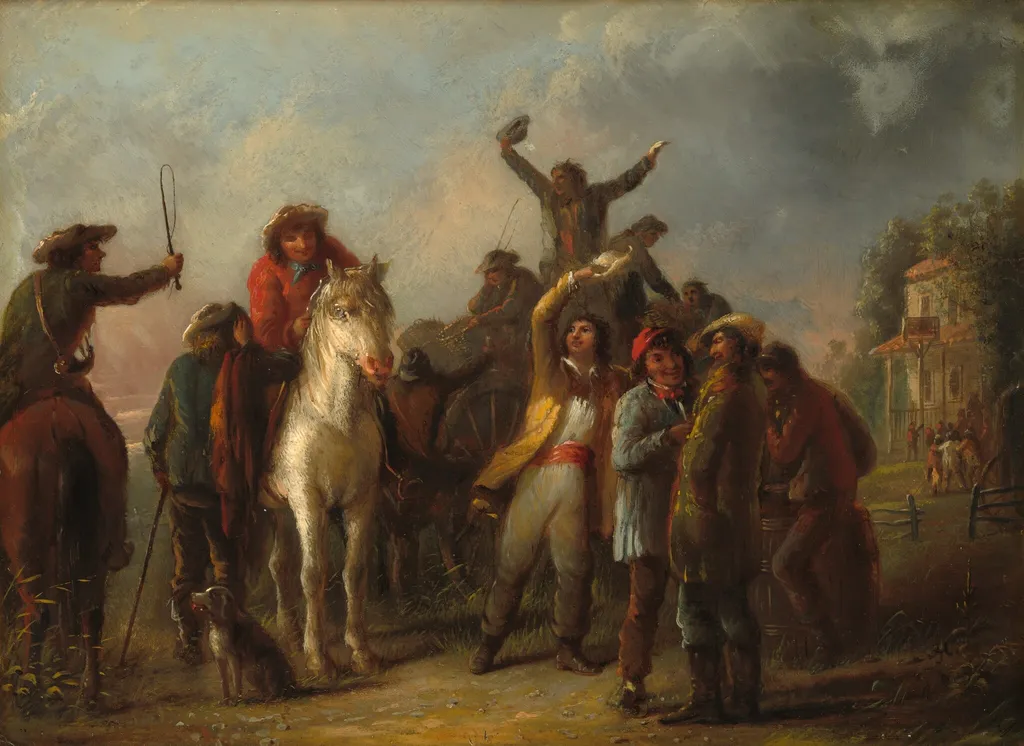
Election Scene, Catonsville, Baltimore County is an oil painting by the Impressionist artist Alfred Jacob Miller. It dates from 1860 and is held in the collection of the National Gallery of Art.
About this work
Overview
Alfred Jacob Miller’s *Election Scene, Catonsville, Baltimore County* (c. 1860) is an oil painting on academy board that records a local voting gathering in mid‑nineteenth‑century Maryland. The work belongs to the realist tradition, emphasizing a straightforward, observational portrayal of everyday public life.
Subject & Meaning
The canvas depicts a bustling outdoor election on a dirt track, where men and women—some on foot, others astride horses—congregate to cast ballots. Casual attire, handheld hats and whips, and the prominent white horse in the center convey the informal, community‑driven nature of the event.
Technique & Style
Miller employed oil on a smooth academy board, allowing fine detail and a muted palette typical of realism. The composition balances figures across the foreground, using light to highlight textures of clothing, horsehair, and the dusty ground, reinforcing a sense of immediacy.
History & Provenance
Created around 1860, the painting reflects Miller’s broader interest in documenting American frontier and regional scenes. Though primarily known for portraits and depictions of trappers and Native Americans, this work illustrates his engagement with civic life in Baltimore and its environs.
Context
During the 1850s‑60s, elections in small towns were social occasions, often held outdoors and attended by a cross‑section of the populace. Miller’s rendering captures this democratic ritual, situating the viewer within the rural‑urban interface of Maryland’s political culture.
Own this work as a print
Artist & collection
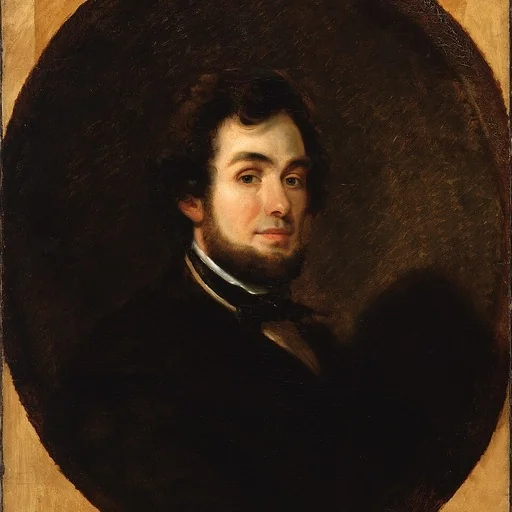
Artist
Alfred Jacob Miller (January 2, 1810 – June 26, 1874) was an American artist best known for his paintings of trappers and Native Americans in the fur trade of the western United States.
