Artwork
The Angel Appearing to Hagar in the Desert (recto)
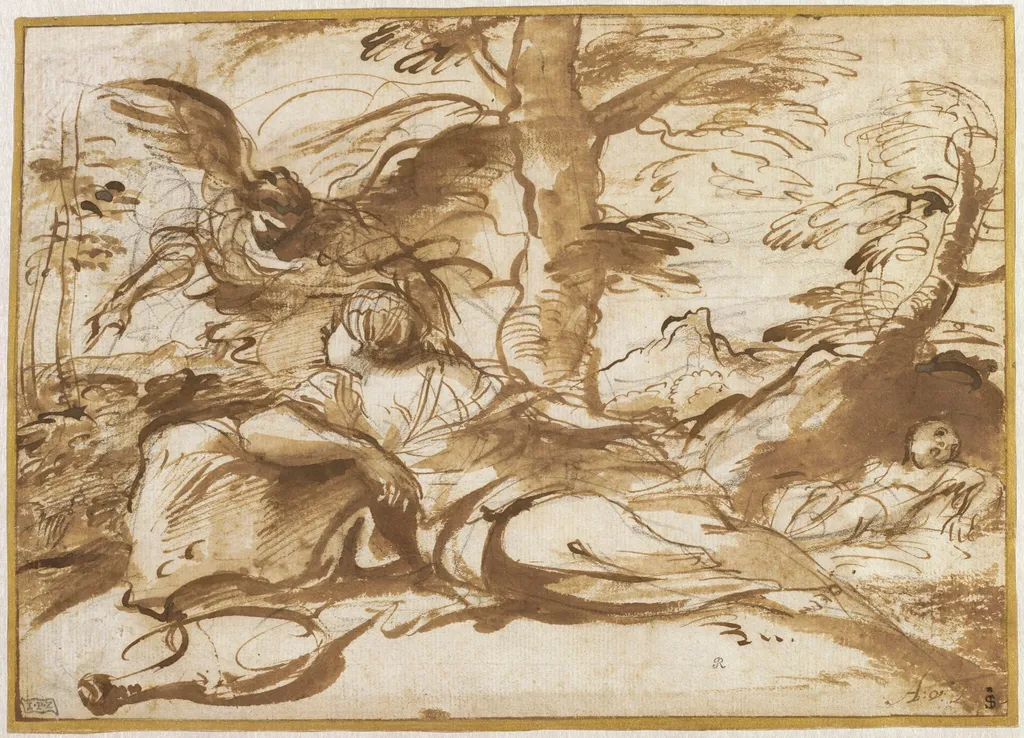
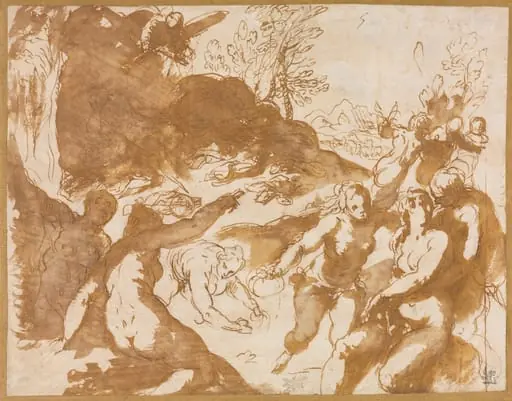
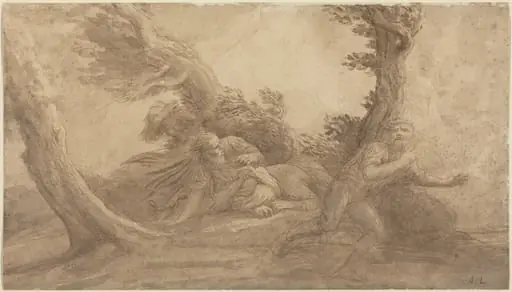
The Angel Appearing to Hagar in the Desert (recto) is an ink drawing by the Baroque artist Pier Francesco Mola. It dates from 1660 and is held in the collection of the National Gallery of Art.
About this work
Overview
Created circa 1660 by the Roman artist Pier Francesco Mola, this drawing captures a moment from the Book of Genesis with brush, pen, and brown ink over black chalk on light beige laid paper. Mola, known for both large frescoes and intimate works, employed a fluid, expressive technique here that prioritizes emotional immediacy over rigid formalism, reflecting his distinctive approach within the High Baroque context.
Subject & Meaning
Hagar, seated and looking upward, reacts with quiet astonishment as the angel, large-winged and poised on the left, delivers divine reassurance.
The scene illustrates the biblical moment when an angel appears to Hagar, the exiled servant of Sarah, in the desert. Hagar, seated and looking upward, reacts with quiet astonishment as the angel, large-winged and poised on the left, delivers divine reassurance. The composition emphasizes solitude and revelation, focusing on the human encounter with the sacred rather than grand narrative spectacle.
Technique & Style
Mola used loose, energetic brushwork and layered washes to suggest texture and atmosphere, with black chalk underdrawing guiding the forms. The wings of the angel are rendered with dynamic, sweeping strokes, while Hagar’s figure is more subdued, creating a visual contrast that heightens the spiritual tension. The minimal background enhances the intimacy of the moment, typical of Mola’s preference for naturalistic effect over idealized grandeur.
History & Provenance
The drawing is one of several surviving preparatory or independent works by Mola from his mature period. While its early ownership is undocumented, it aligns with a group of drawings he produced for personal or collector use, distinct from his commissioned frescoes. Its preservation suggests it was valued within artistic circles for its expressive quality rather than its function as a study.
Context
In mid-17th century Rome, Baroque art often emphasized theatricality and grandeur, yet Mola stood apart by favoring lyrical, atmospheric compositions. His drawings, including this one, reveal a quieter, more introspective strand of the movement—closer to the naturalism of Domenichino or the Caravaggisti than to the monumental style of Pietro da Cortona.
Legacy
Mola’s drawings, including this depiction of Hagar, influenced later generations of draftsmen who valued expressive line and tonal subtlety over rigid academic conventions. Though less celebrated than his frescoes, these works demonstrate his ability to convey profound emotion with economy, securing his reputation as a sensitive observer of human and divine encounter.
Artist & collection

Artist
Pier Francesco Mola, called Il Ticinese was an Italian painter of the High Baroque, mainly active around Rome.

![Biblical Scene [verso], by Sebastiano Ricci](https://artifactworldgallery.com/img/sebastiano-ricci--biblical-scene-verso--d33f1e2abb3d29f7-w320.webp)
![Allegorical Female Figure in a Landscape [recto], by German 17th Century](https://artifactworldgallery.com/img/german-17th-century--allegorical-female-figure-in-a-landscape-recto--0263f304d6fc0dc9-w320.webp)