Artwork
Waterloo Bridge, London, at Dusk
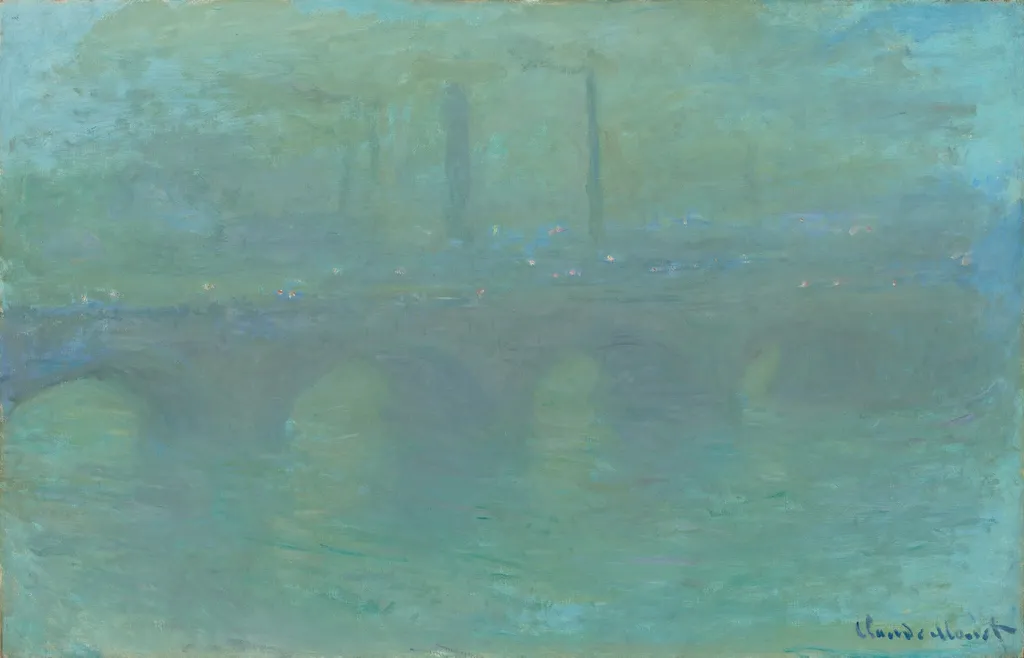
Waterloo Bridge, London, at Dusk is an oil painting by the Impressionist artist Claude Monet. It dates from 1904 and is held in the collection of the National Gallery of Art.
About this work
Overview
Claude Monet's 1904 oil on canvas, Waterloo Bridge, London, at Dusk, captures a hazy, atmospheric view of the iconic London landmark.
Claude Monet's 1904 oil on canvas, Waterloo Bridge, London, at Dusk, captures a hazy, atmospheric view of the iconic London landmark. The painting presents a blue-green tableau where the bridge, with its distinctive arches, spans calm waters. Distant urban elements and trees are softly rendered, almost dissolving into the pervasive fog. This work exemplifies Monet's dedication to depicting transient light and weather conditions.
Subject & Meaning
The central subject is London's Waterloo Bridge, depicted at dusk, with its structural arches visible above the tranquil water. The surface of the Thames reflects the ambient light, mirroring the sky's hues. A defining element is the dense fog, which obscures distant buildings and trees, transforming the urban landscape into an almost abstract composition. This emphasis on atmospheric conditions highlights the ephemeral nature of the scene.
Technique & Style
Monet employed oil paint to achieve a soft, blended quality, creating a sense of atmospheric depth. The palette is dominated by blue-green tones, contributing to the hazy and somewhat indistinct rendering of the scene. This approach prioritizes the capture of fleeting light and its interaction with the environment, rather than precise architectural detail. The overall effect evokes a dreamy, ethereal quality, characteristic of the artist's focus on sensory experience.
Own this work as a print
Artist & collection
Artist
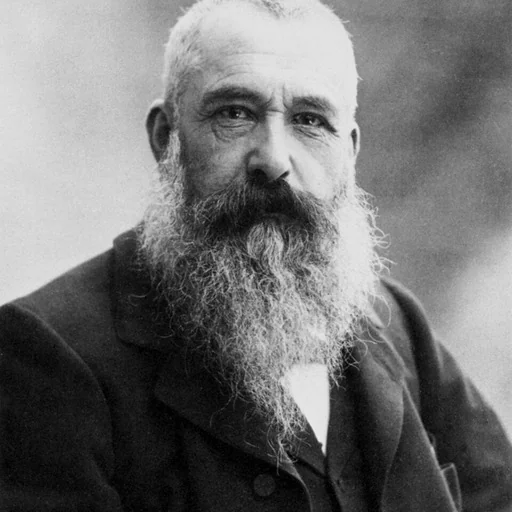
Oscar-Claude Monet was born in Paris on November 14, 1840, and raised from the age of five in Le Havre, where he began selling charcoal caricatures as a teenager.