Artwork
Dream of a Man Fleeing
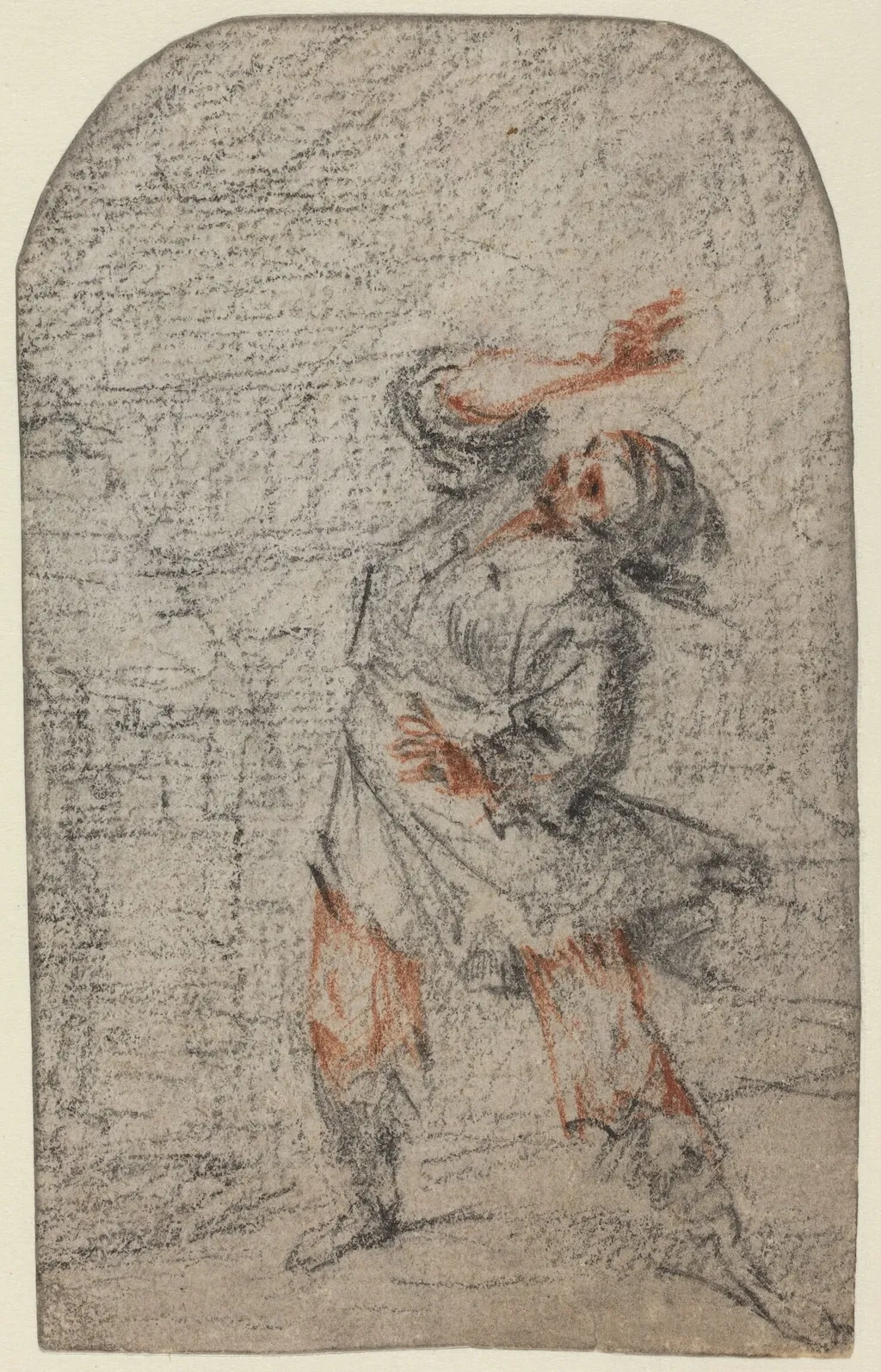
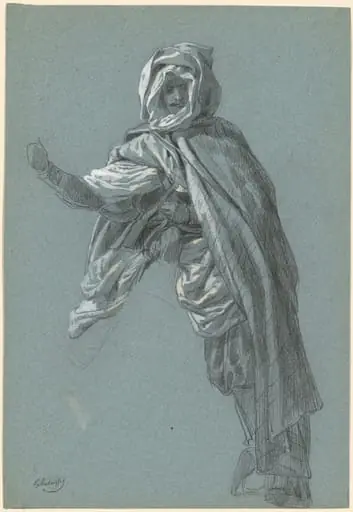
Dream of a Man Fleeing is a chalk drawing by the Baroque artist Francesco Montelatici. It dates from 1634 and is held in the collection of the National Gallery of Art.
About this work
Overview
Created in 1634 by Francesco Montelatici, this drawing captures a solitary figure in motion, rendered in black and red chalk on laid paper. The composition emphasizes urgency and inner turmoil through gestural lines and contrasting tones. The medium’s immediacy enhances the sense of a fleeting, visceral moment, aligning with early Baroque interests in emotional intensity and physical dynamism.
Subject & Meaning
His outstretched arms and contorted expression suggest both desperation and resolve, evoking a psychological state rather than a specific narrative.
The figure, draped in a loose, wind-swept robe, appears to be escaping an unseen threat. His outstretched arms and contorted expression suggest both desperation and resolve, evoking a psychological state rather than a specific narrative. The absence of context invites interpretation as an allegory of inner conflict, spiritual flight, or existential dread, common themes in Counter-Reformation-era art.
Technique & Style
Montelatici employs black chalk for bold contours and shadow, while red chalk adds warmth to the figure’s skin and fabric folds. The rough, uneven texture of the paper mimics the implied stone background, reinforcing the figure’s precarious environment. Rapid, overlapping strokes convey motion and tension, demonstrating a mastery of chalk’s potential for expressive, spontaneous mark-making.
History & Provenance
The drawing is documented as originating in Tuscany during the mid-17th century, likely produced in Florence or Siena. It remained in private collections until the 20th century, with no known public exhibition prior to the 1950s. Its survival is notable given the fragility of chalk on paper and the limited preservation of Montelatici’s graphic works.
Context
Produced during a period when Italian artists were refining expressive figure studies, this work reflects the influence of Caravaggio’s naturalism and the emotional gravity of Bolognese Mannerism. While Montelatici was not a major public figure, his drawings reveal a personal engagement with the Baroque preoccupation with movement, emotion, and the human condition under duress.
Legacy
Though Montelatici’s oeuvre is small and largely overlooked, this drawing stands as a compelling example of intimate Baroque draftsmanship. It contributes to the understanding of how lesser-known artists engaged with dominant visual languages, using minimal means to convey profound psychological states. The work remains a quiet testament to the expressive power of chalk on paper.
Artist & collection


![Man Leaning on a Rail [verso], by Matteo Rosselli](https://artifactworldgallery.com/img/matteo-rosselli--man-leaning-on-a-rail-verso--c9936b6777df930d-w320.webp)