Artwork
A Gentleman in Adoration before the Madonna
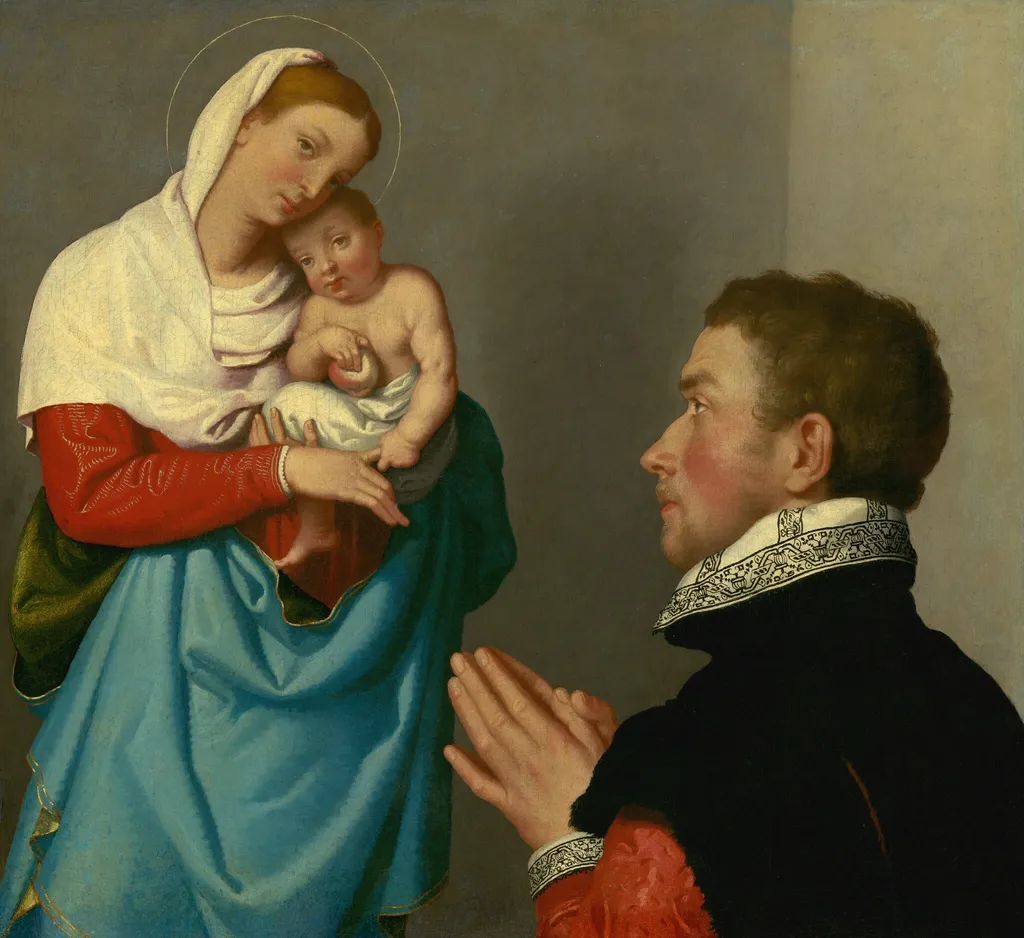
A Gentleman in Adoration before the Madonna is an oil painting by the Mannerist artist Giovanni Battista Moroni. It dates from 1560 and is held in the collection of the National Gallery of Art.
About this work
Overview
A Gentleman in Adoration before the Madonna is an oil on canvas portrait by the Italian Renaissance painter Giovanni Battista Moroni, executed in 1560.
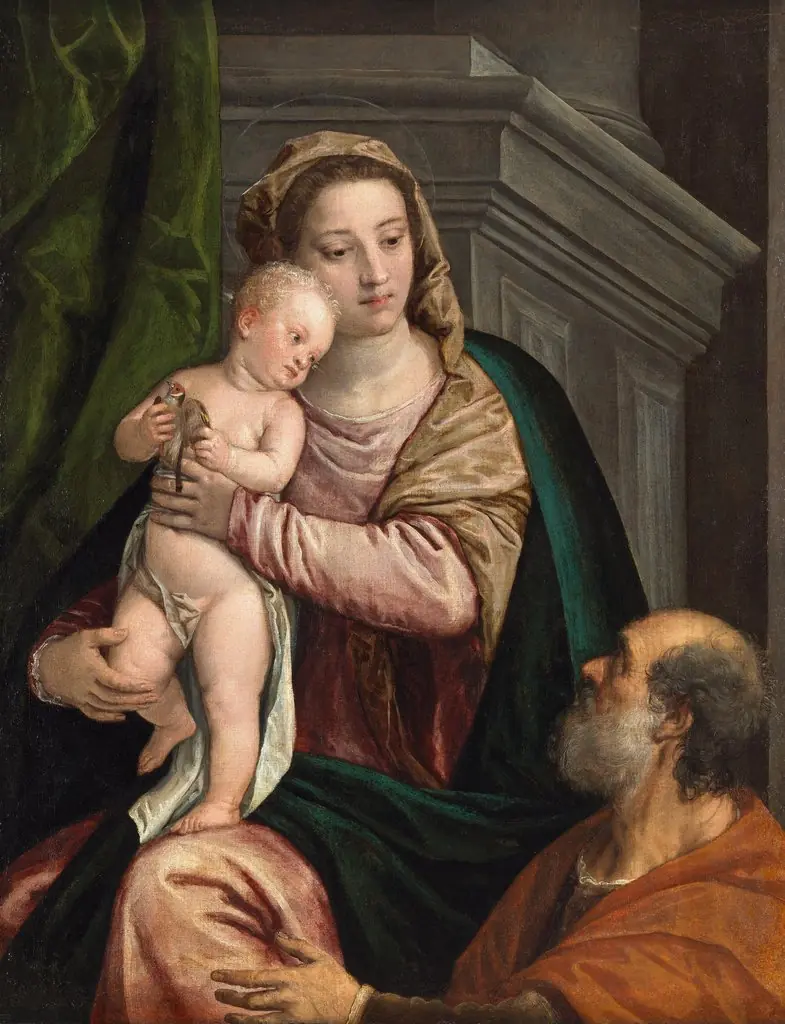
A Gentleman in Adoration before the Madonna is an oil on canvas portrait by the Italian Renaissance painter Giovanni Battista Moroni, executed in 1560. The work depicts a kneeling male figure in profile, his hands clasped in prayer, gazing toward the Virgin Mary and the Christ Child. The gentleman is dressed in a black jacket with red sleeves, adhering to the somber, refined fashion of the mid-sixteenth century. Opposite him, the Virgin wears a white head covering, a red garment, and a blue robe, holding the infant Jesus who bears a halo and clutches an apple, a traditional symbol of original sin and redemption. Moroni, renowned for his psychological depth and precise rendering of contemporary dress, integrates the sacred figures into a composition that emphasizes the devotee's personal piety. This painting exemplifies the artist's ability to merge the formal conventions of religious iconography with the naturalistic portraiture for which he is celebrated, situating the viewer within the intimate space of private devotion.
Subject & Meaning
The composition centers on a kneeling gentleman, his hands clasped in prayer, dressed in a black jacket with contrasting red sleeves and a white collar. He faces the Virgin Mary, who is depicted with a white head covering, a red shirt, and a blue dress, holding the infant Christ. The Christ child, distinguished by a halo, holds an apple, a detail often symbolizing humanity's redemption.
Technique & Style
Executed in oil on canvas, a versatile medium favored during the period, this painting demonstrates characteristics of the Renaissance. Moroni's approach combines detailed portraiture of the donor with the idealized forms of the sacred figures. The work reflects the era's emphasis on both individual piety and the integration of religious narratives within a visually realistic framework, typical of Italian Renaissance art.
Own this work as a print
Artist & collection