Artwork
Talviaamu
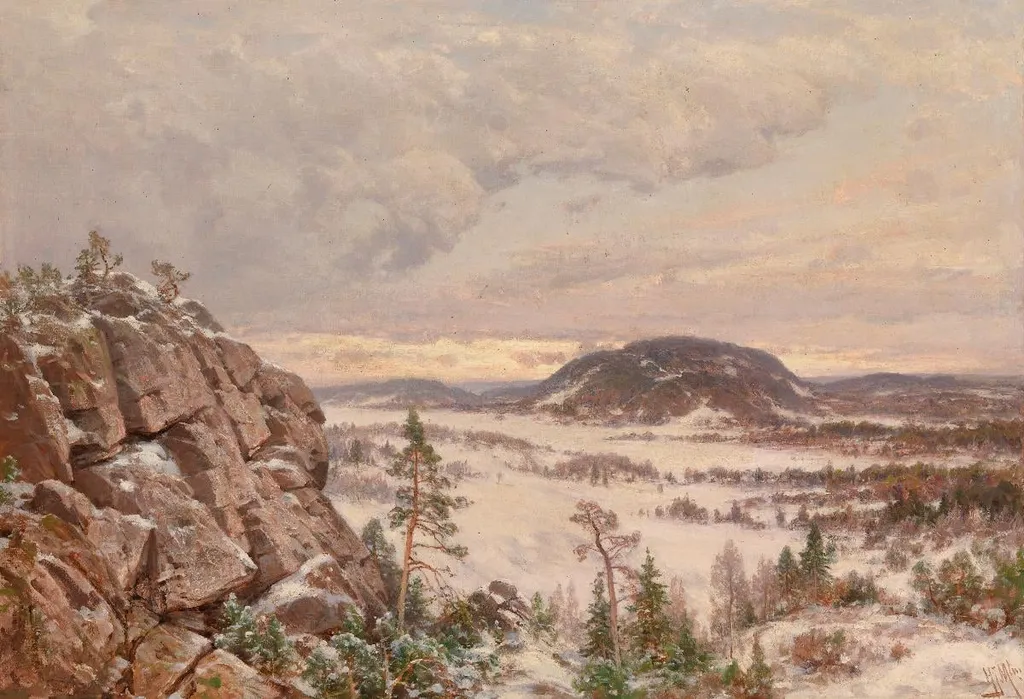
Talviaamu is an unspecified painting by Hjalmar Munsterhjelm. It is held in the collection of the Finnish National Gallery. Painted on cardboard rather than canvas, this oil work captures a winter morning with restrained precision.
About this work
Overview
The surface bears thin, layered pigments that produce a soft, matte finish, avoiding glossy or textured effects.
Painted on cardboard rather than canvas, this oil work captures a winter morning with restrained precision. The surface bears thin, layered pigments that produce a soft, matte finish, avoiding glossy or textured effects. The composition emphasizes stillness, with no dramatic contrasts or movement, reinforcing a sense of quietude. The artist’s choice of support and technique reflects a deliberate focus on atmosphere over spectacle.
Subject & Meaning
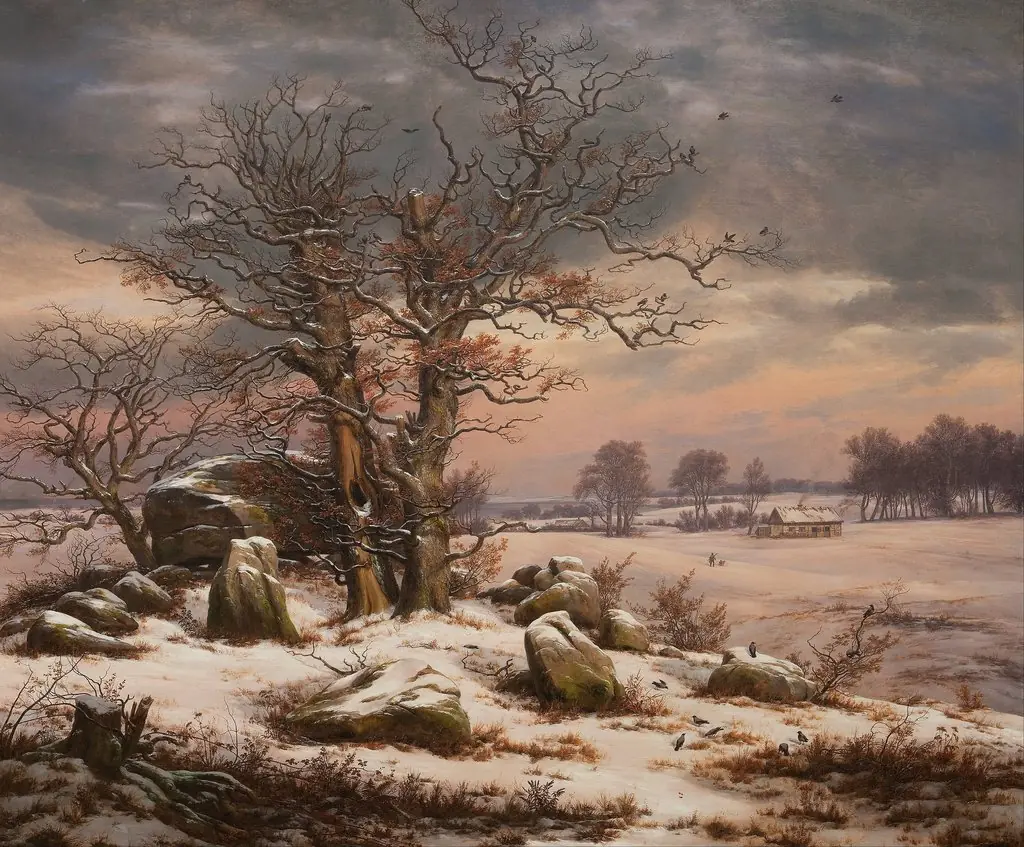
A frozen lake stretches beneath a pale sky, bordered by skeletal trees and a narrow path. Two indistinct figures stand near the shore, their small scale underscoring nature’s dominance. They do not interact, nor do they draw attention; their presence suggests contemplation rather than narrative. The scene conveys solitude not as loneliness, but as an inherent quality of the season and landscape.
Technique & Style
Oil paint is applied in delicate, translucent layers, avoiding impasto or thick brushwork. The surface remains uniformly flat, with light diffused evenly across the scene—no sharp shadows or highlights disrupt the calm. This method creates a hushed tonality, aligning with the subject’s stillness. The cardboard support, though unconventional, holds the paint without warping, contributing to the work’s intimate scale.
History & Provenance
The painting’s origin is tied to an artist who favored rural winter scenes over urban or heroic themes. It was likely completed in the early 20th century, during a period when quiet naturalism gained traction among regional painters. Its survival on cardboard suggests it was not intended for grand display, perhaps made for personal or local circulation rather than institutional acquisition.
Context
In an era dominated by bold expressionism and impressionist light studies, this work stands apart through its restraint. It aligns with a quieter current in Nordic and Baltic art that valued atmospheric precision over emotional intensity. The absence of human drama reflects a broader cultural appreciation for nature’s quiet rhythms, particularly in regions where winter shaped daily life.
Legacy
Though not widely exhibited, the painting contributes to a lesser-known tradition of Nordic landscape minimalism. Its technique and mood influenced later artists seeking to convey stillness through tonal subtlety rather than compositional drama. Today, it is recognized as a quiet testament to the emotional resonance of unadorned natural moments.
Artist & collection