Artwork
The Chair-Mender
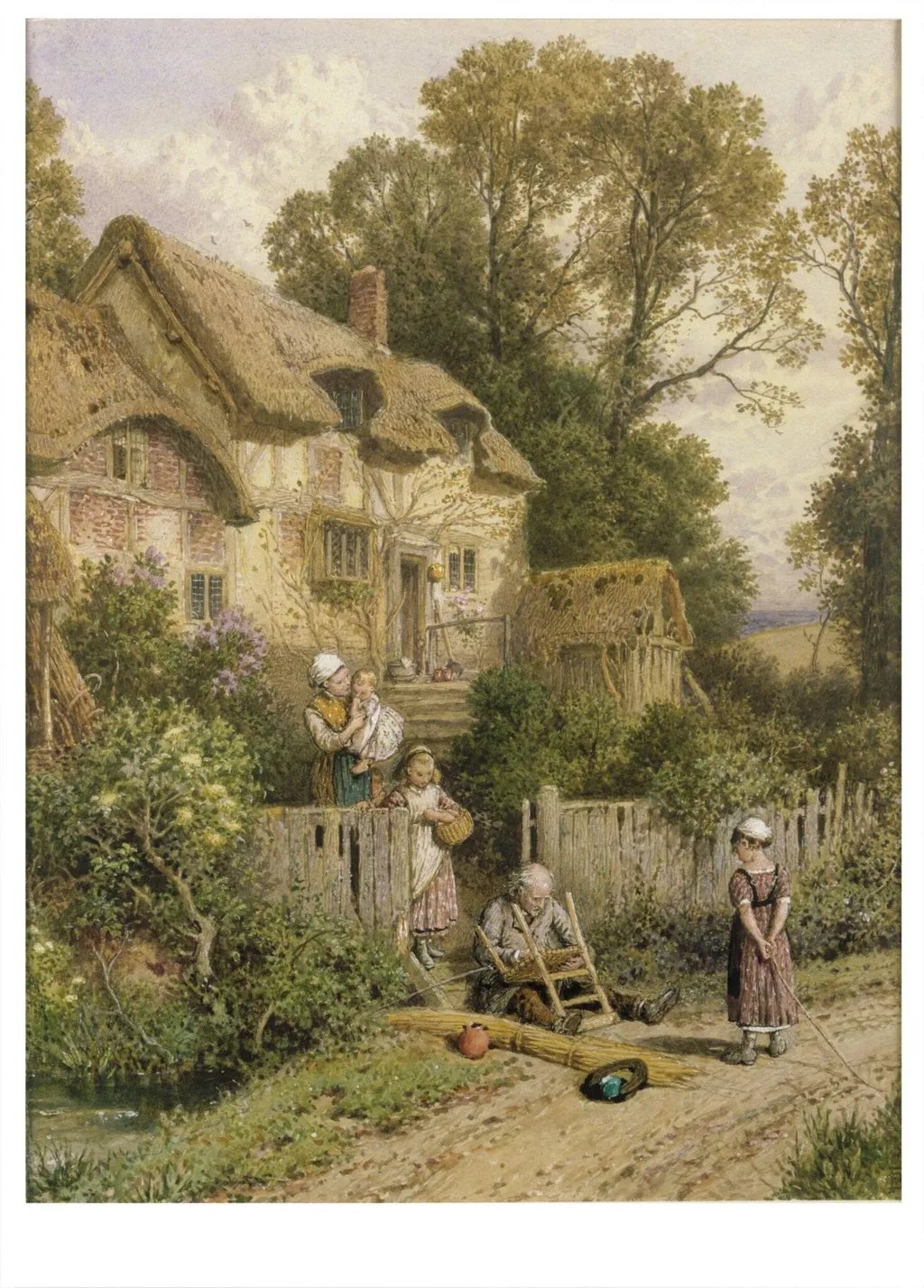
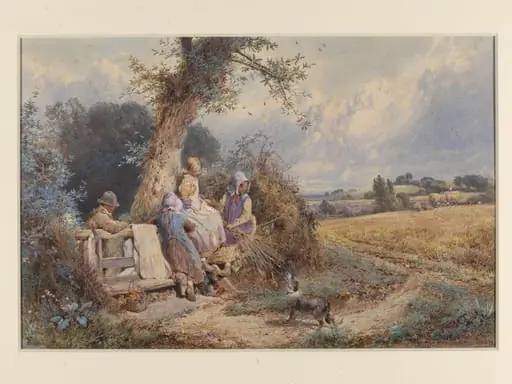
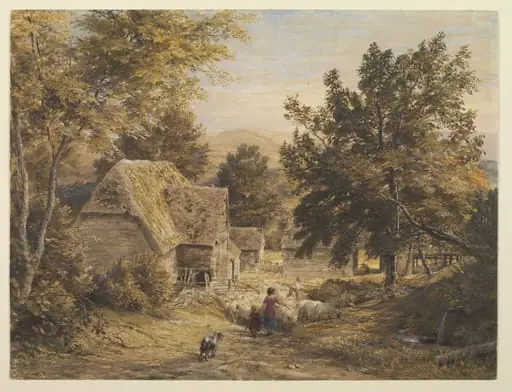
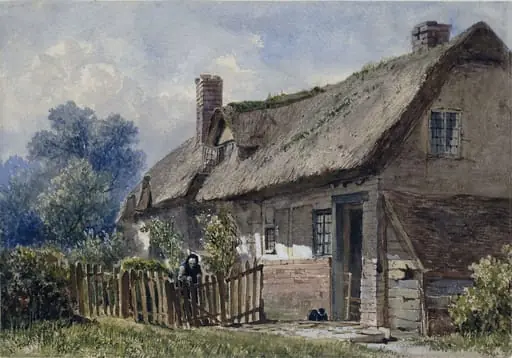
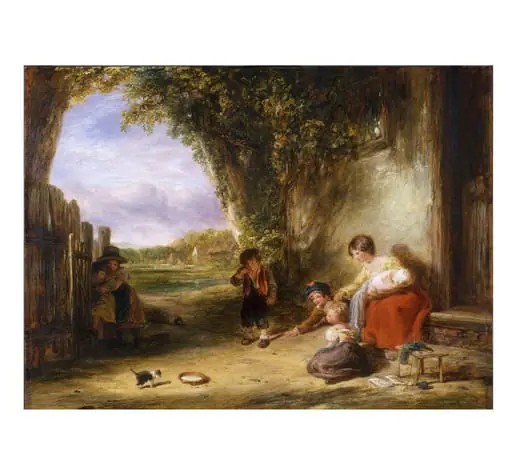
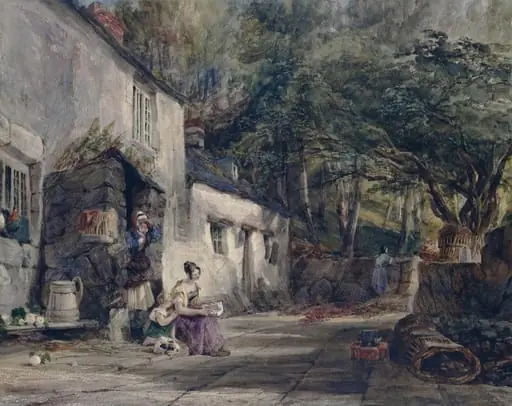
The Chair-Mender is a watercolor work on paper by Myles Birket Foster. It dates from 1850 and is held in the collection of the Victoria and Albert Museum.
About this work
Overview
Signed with the artist’s initials, the piece is a small-scale study in everyday life, rendered in transparent washes that emphasize light and texture.
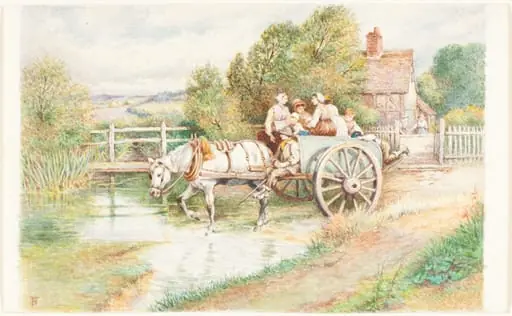
Created in 1850, this watercolour by Myles Birket Foster captures a quiet rural moment with delicate brushwork and muted earth tones. Signed with the artist’s initials, the piece is a small-scale study in everyday life, rendered in transparent washes that emphasize light and texture. The scene unfolds in a domestic setting, framed by natural elements that soften the boundaries between interior and exterior.
Subject & Meaning
The image centers on an elderly craftsman repairing a chair on the ground, his hands engaged in patient labor. A young girl observes him closely, while a woman and two children linger near the cottage doorway. The composition suggests intergenerational continuity and the quiet dignity of manual work, without overt sentimentality. The absence of grandeur reinforces a focus on ordinary, unremarkable routines as worthy of attention.
Technique & Style
Foster employed transparent watercolour to build subtle gradations of green, brown, and beige, creating depth without heavy outlines. The foliage is rendered with loose, fluid strokes, while the figures are simplified yet expressive in posture. The soft focus on background figures and the detailed rendering of the chair-mender’s hands reflect a deliberate hierarchy of attention, guiding the viewer’s eye to the central act of repair.
History & Provenance
The work dates from early in Foster’s career, before his later fame as a prolific illustrator of rural England. Its survival as a standalone watercolour—rather than a preparatory sketch or published print—suggests it was kept as a personal study. No documented ownership history is widely recorded, but its preservation indicates it was valued within private collections.
Context
In mid-19th century Britain, scenes of rural labor gained popularity amid industrialization’s rapid expansion. Foster’s depiction aligns with a broader cultural nostalgia for pre-industrial life, though his approach avoids idealization. The painting reflects contemporary interest in domestic tranquility and artisanal skill, resonating with middle-class audiences seeking reassurance in enduring traditions.
Legacy
Though not among Foster’s most widely reproduced works, this watercolour exemplifies his consistent interest in humble subjects and naturalistic detail. It contributes to a body of work that helped shape Victorian perceptions of rural authenticity. Its quiet observation of labor and family life remains a quiet counterpoint to the grand narratives of the era.
Artist & collection

Artist
Myles Birket Foster (4 February 1825 – 27 March 1899) was a British illustrator, watercolourist and engraver in the Victorian period. His name is also to be found as Myles Birkett Foster.