Artwork
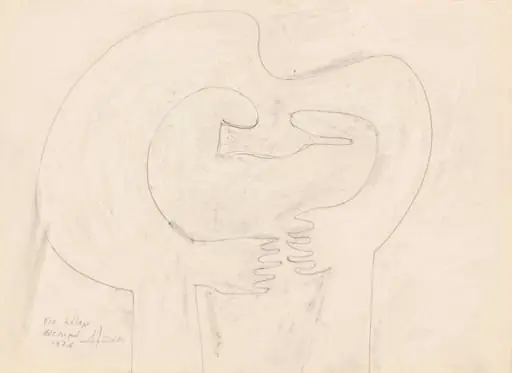
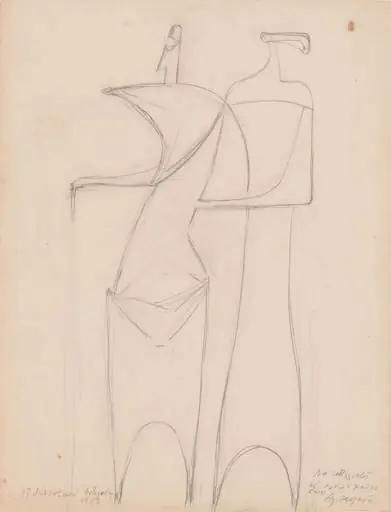
Μελέτη για γλυπτό - Ζευγάρι
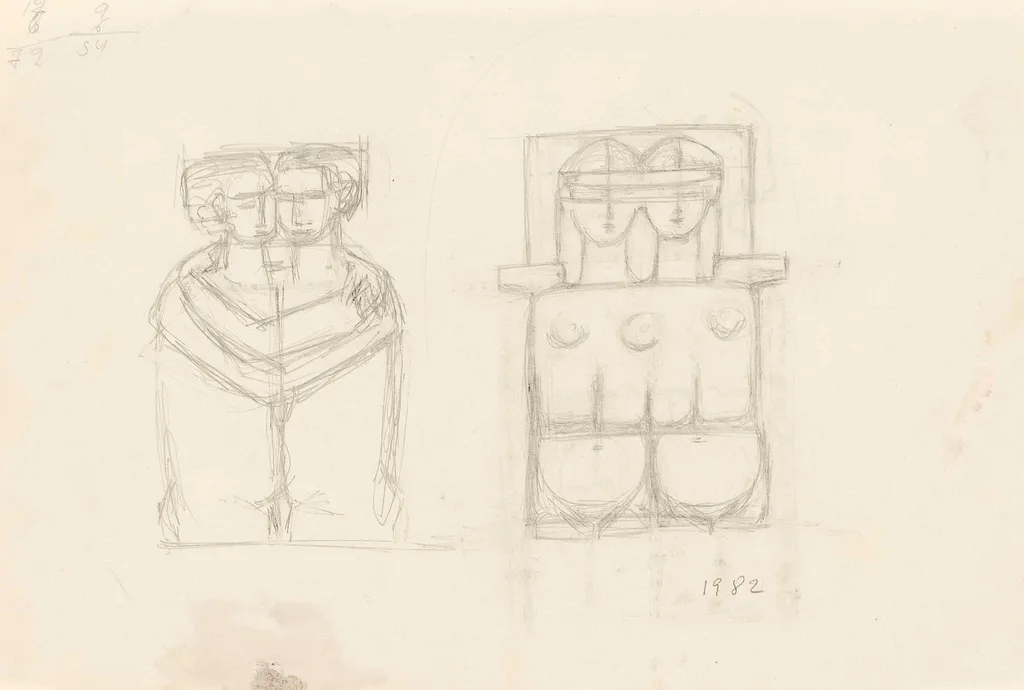
Μελέτη για γλυπτό - Ζευγάρι is a drawing by Alex Mylona. It dates from 1982 and is held in the collection of the Metropolitan Organisation of Museums of Visual Arts of Thessaloniki – MOMus.
About this work
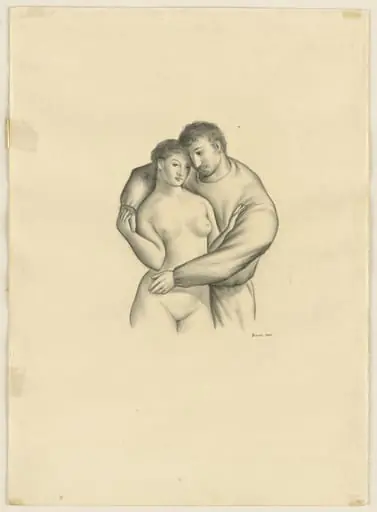
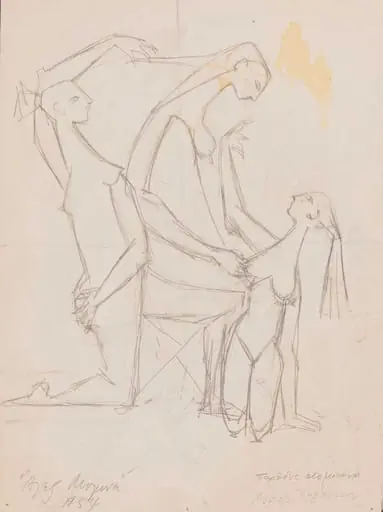
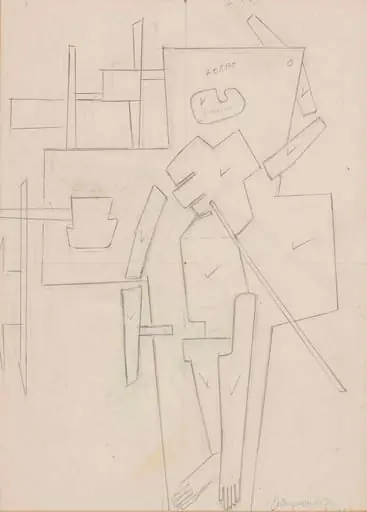
This drawing shows two studies of a couple on paper. The left one has them pressed close, foreheads touching. The right one has them side by side, linked by a single line.
Mylona often drew couples to show touch and closeness. She borrowed Brancusi’s simple shapes here. The lines feel soft, like the figures are melting together.
Want to see more like this? Look up Mylona, Alex (1920-2016).
Overview
The works explore physical and emotional connection through minimal line work, reflecting her sustained interest in human relationships.
Alex Mylona created two pencil studies on paper, each depicting a pair of figures in intimate proximity. The works explore physical and emotional connection through minimal line work, reflecting her sustained interest in human relationships. Both compositions are restrained in detail, emphasizing form and gesture over narrative. The pairings suggest unity without explicit identity, allowing the viewer to focus on the quality of contact between the figures.
Subject & Meaning
The drawings examine intimacy through posture rather than facial expression or clothing. The left panel shows two figures pressed together, foreheads touching—a gesture of quiet communion. The right panel presents them aligned side by side, connected by a single continuous line that merges their forms. These arrangements evoke themes of unity, mutual support, and silent understanding, recurring motifs in Mylona’s exploration of human bonds.
Technique & Style
Mylona employed soft, flowing pencil lines to suggest volume without definition, creating figures that appear to dissolve into one another. The forms are simplified, echoing the streamlined abstractions of Constantin Brancusi, particularly in the reduction of anatomy to essential curves. There is no shading or texture; the emotional weight arises from the closeness of the lines and their gentle continuity, giving the impression of warmth and fluid connection.
History & Provenance
Created during Mylona’s active period as a Greek artist and educator, these studies are part of a broader body of work centered on the human figure and relational dynamics. They were likely made in her studio in Athens, where she produced numerous drawings exploring similar themes. The works remain in private or institutional collections in Greece, with limited public exhibition history, reflecting her preference for quiet, introspective art over public spectacle.
Context
Mylona’s focus on couples emerged in postwar Greece, a time when personal and collective identity were being redefined. Her work responded to both modernist abstraction and enduring cultural values around kinship and connection. While influenced by European modernists like Brancusi, she adapted their language to express intimate, domestic emotions—offering a counterpoint to the era’s more political or monumental art.
Legacy
Mylona’s studies of couples remain significant for their quiet economy and emotional resonance. Though not widely exhibited internationally, they are recognized in Greek art history as subtle yet powerful explorations of human closeness. Her approach—reducing form to its most essential lines—has influenced later generations of Greek artists interested in abstraction and emotional expression through minimal means.
Artist & collection
Artist
Alex Mylona (Athens, 1920 – 2016) was a Greek sculptor, known for her multidimensional and experimental approach to art.
Museum
Metropolitan Organisation of Museums of Visual Arts of Thessaloniki – MOMus
Continue through works from the same source collection.