Artwork
Sculptures at Crystal Palace including Donatello's 'David'
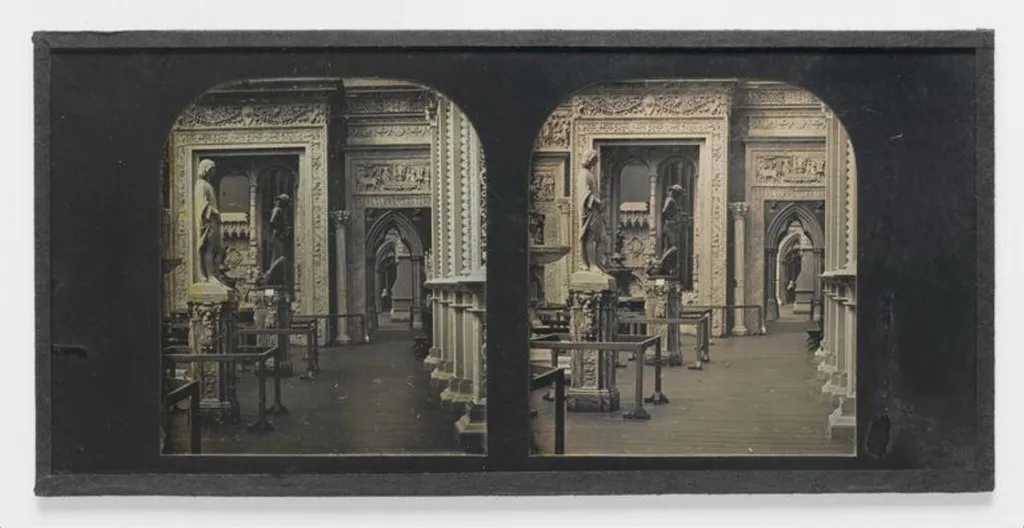
Sculptures at Crystal Palace including Donatello's 'David' is a photographic photography by the Impressionist artist Negretti and Zambra. It dates from 1855 and is held in the collection of the Victoria and Albert Museum.
About this work
Overview
The arrangement of statues and architectural details reflects the institution’s ambition to present art within an immersive, cathedral-like setting.
A stereoscopic daguerreotype from 1855 captures the interior of the Crystal Palace at Sydenham, documenting its sculpture gallery after the building’s relocation from Hyde Park. The image, composed of two aligned plates within a black mount and glazed frame, presents a three-dimensional view of the vast, arched interior. The arrangement of statues and architectural details reflects the institution’s ambition to present art within an immersive, cathedral-like setting.
Subject & Meaning
The photograph centers on Donatello’s bronze David, displayed alongside other classical and Renaissance sculptures. The positioning of the figures on central pedestals suggests an attempt to recreate the spatial logic of historic palaces or churches, rather than a modern museum. The inclusion of such works aimed to educate the public by situating art within an environment evoking cultural continuity and civic grandeur.
Technique & Style
The daguerreotype process, known for its sharp detail and mirror-like surface, was employed here to convey the texture of stone, bronze, and architectural ornamentation. Stereoscopy enhances depth perception, allowing viewers to experience the spatial relationships between columns, arches, and statues as if physically present. Lighting contrasts emphasize sculptural form, with shadows deepening the sense of volume and architectural scale.
History & Provenance
The photograph was taken after the Crystal Palace was moved from London’s Hyde Park to Sydenham in 1854. Donatello’s David, acquired by the British government in 1850, was among the key sculptures installed in the new gallery. The image serves as a record of the palace’s role as a public museum before the establishment of institutions like the Victoria and Albert Museum, which later inherited many of its collections.
Context
In mid-19th century Britain, the Crystal Palace symbolized industrial progress and cultural democratization. By displaying high art in a glass-and-iron structure, organizers sought to merge technological innovation with educational mission. The arrangement of sculptures in simulated architectural settings reflected contemporary ideals of art as both aesthetic and moral instruction for a broad, non-elitist audience.
Legacy
This photograph preserves one of the earliest attempts to exhibit European sculpture in a public, purpose-built space accessible to all classes. It documents a transitional phase in museum practice, before the rise of neutral, white-walled galleries. The image remains a key visual source for understanding how Victorian audiences encountered and interpreted classical art through the lens of industrial modernity.
Artist & collection
Artist

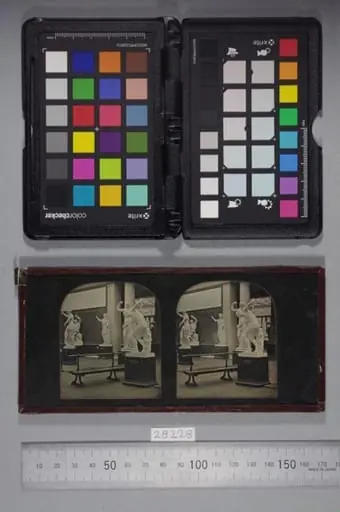 Sculpture Court at Crystal Palace, including the Discobolus
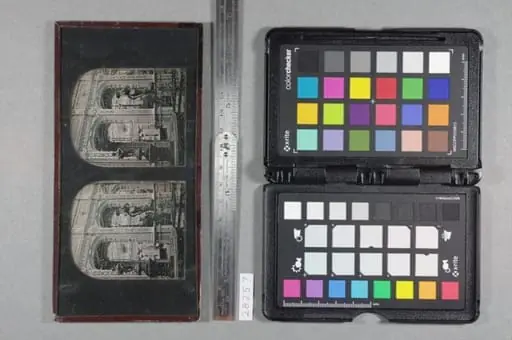 Sculpture Court at Crystal Palace, including Donatello's 'David'
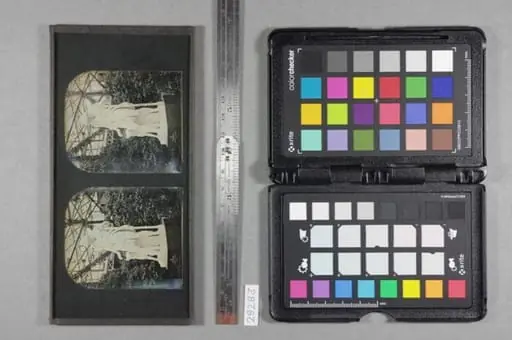 Sculpture of Ulysses at Crystal Palace
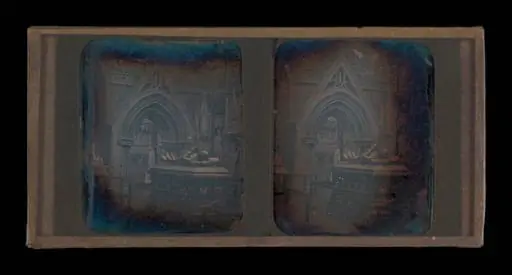 Gothic or Medieval Funerary Statuary
 Guy Little Theatrical Photograph
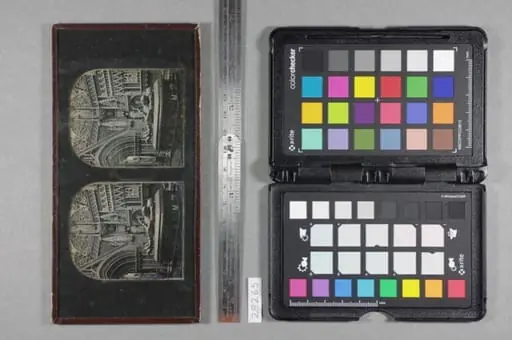 View of Gothic Architecture, Sculpture and Tomb Displayed at Crystal Palace
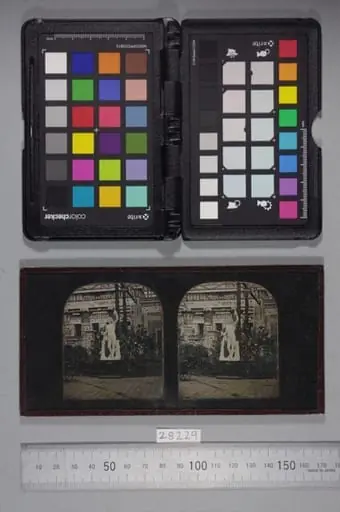 Sculpture of Bacchus at Crystal Palace
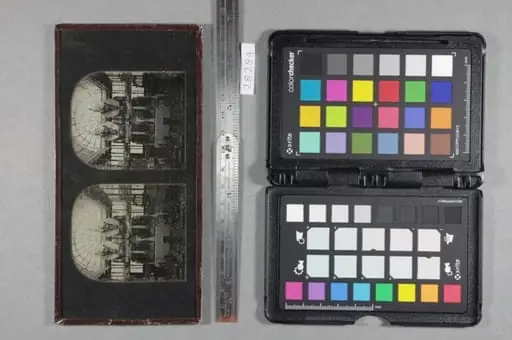 Monumental Egyptian Sculpture at Crystal Palace
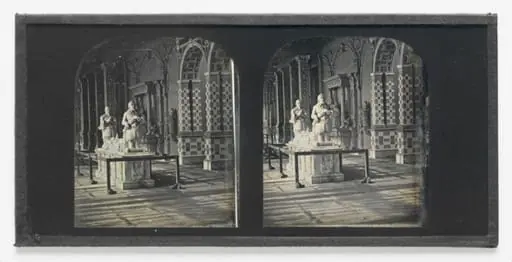 View of Tomb Sculptures at Crystal Palace
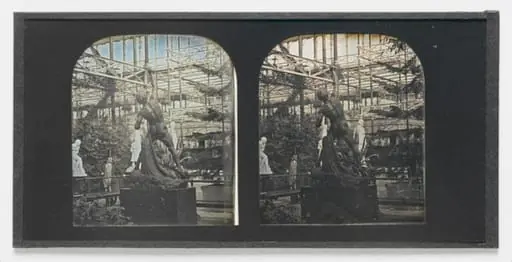 Mannerist Sculpture at Crystal Palace
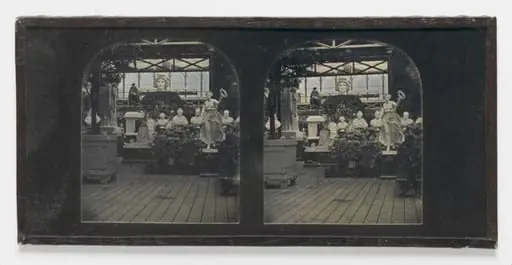 Sculpture Court at Crystal Palace including statue of 'Victory'
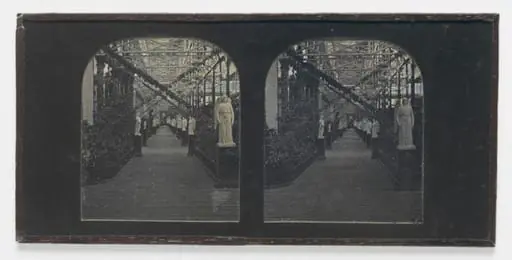 View of Hallway lined with Sculpture at Crystal Palace
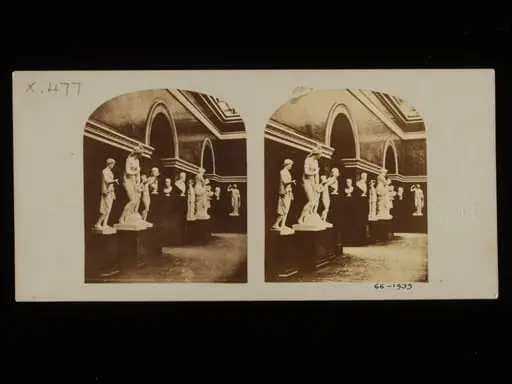 The Gallery of Greek Sculpture at Crystal Palace
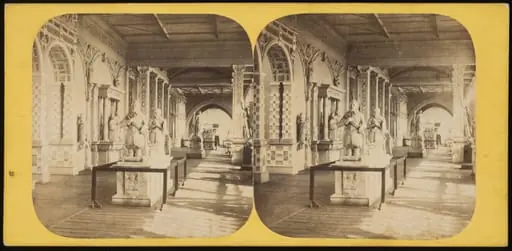 Crystal Palace: the Garden Gallery
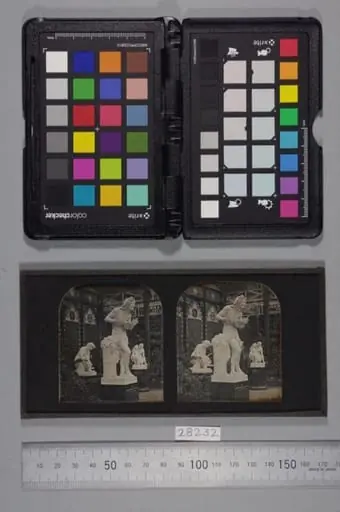 Sculpture Court at Crystal Palace
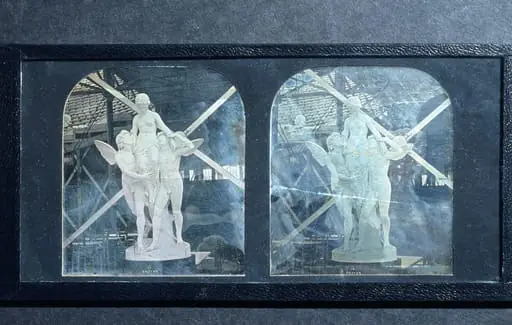 Stereoscopic daguerreotype depicting a sculptural group entitled 'Psyche' at Crystal Palace
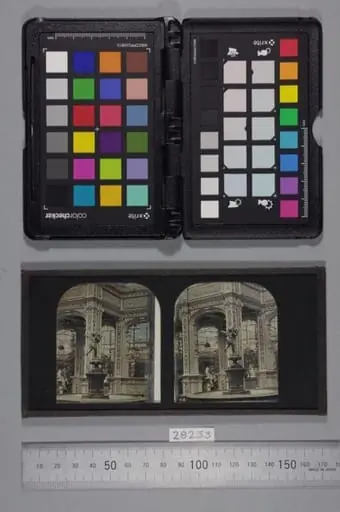 Crystal Palace Interior